West Valley City, UT
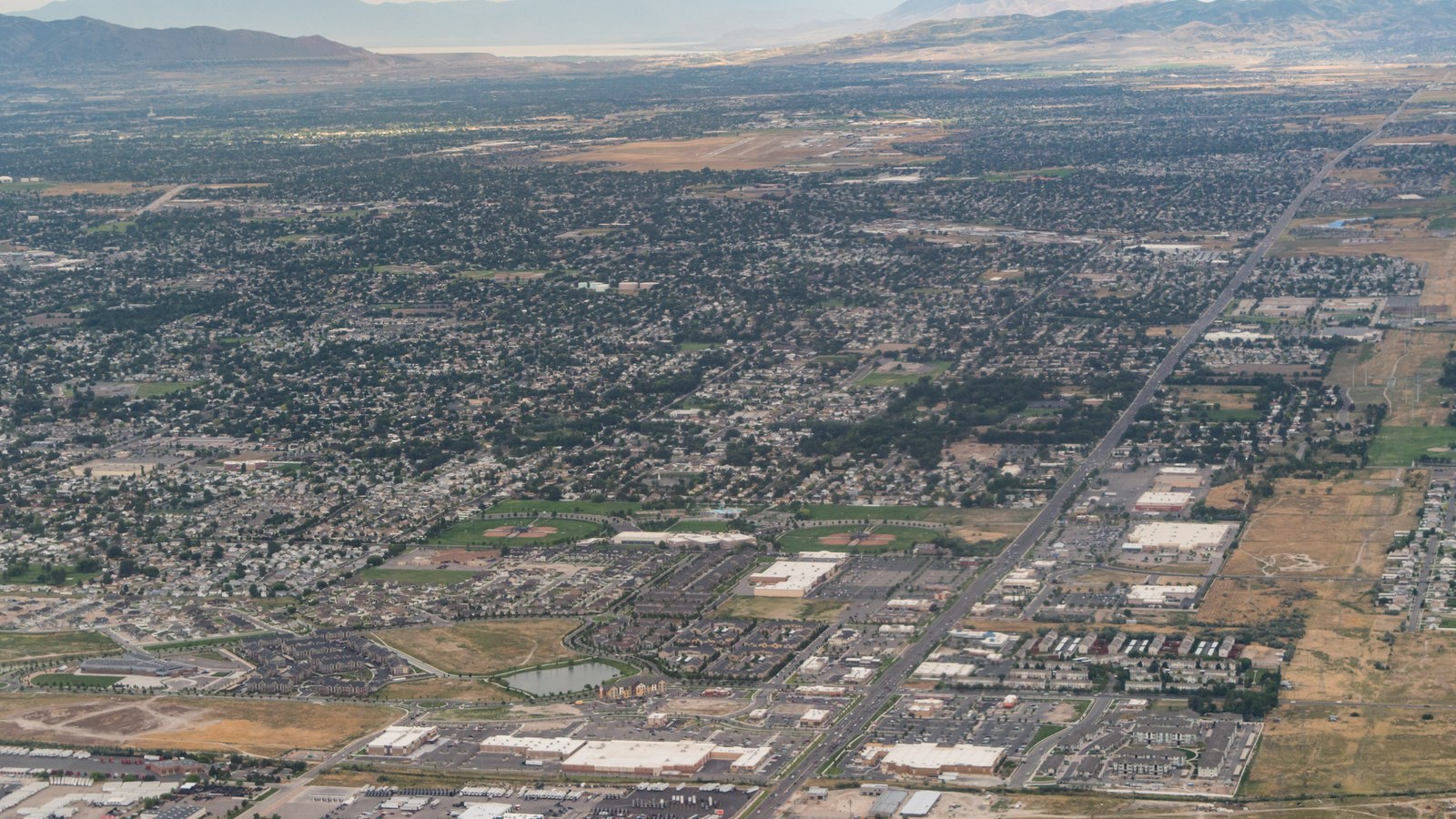

What West Valley City is actually like
Joseph Harker and his family crossed the Jordan River and settled the area in 1848, and the pioneer farming communities that followed -- Granger, Hunter, Redwood, and Chesterfield -- built out their own infrastructure over the next century rather than one unified town: a paved 3500 South by 1918, the Granger-Hunter Improvement District in 1949, a local bank in 1956, Granger High School in 1958, and a chamber of commerce in 1961 (West Valley City).
Those four communities officially joined together and incorporated as a single city, West Valley City, in 1980 -- and grew fast enough afterward to become Utah's second-most-populous city, behind only Salt Lake City itself (Wikipedia). The city's defining civic landmark arrived with the Maverik Center (opened as the E Center), which hosted men's and women's ice hockey during the 2002 Salt Lake City Winter Olympics -- still the anchor of a city-owned entertainment district that also includes the Utah Cultural Celebration Center, Rocky Mountain Raceways, and USANA Amphitheatre (Wikipedia).
West Valley City's population reached an estimated 137,491 as of July 1, 2025 (U.S. Census Bureau), with a 2020 Census demographic profile that's genuinely mixed by Utah standards: 49.5% White, 39.4% Hispanic or Latino, 5.7% Asian, 4.6% Native Hawaiian and Pacific Islander, and 2.8% Black (Wikipedia). UTA's TRAX Green Line, which opened August 7, 2011, gives the city direct light-rail service to both Salt Lake City International Airport and downtown Salt Lake City (Wikipedia).
Home values in West Valley City
Zillow's Home Value Index for West Valley City was $465,915 as of August 31, 2026, up 0.4% year-over-year (Zillow). Utah taxes income at a flat 4.45% rate for every individual filer (Tax Foundation), on top of which the state levies a 6.10% sales tax with an average combined state-and-local rate of 7.19% statewide -- though Salt Lake County's own combined rate runs slightly above that average, at 7.45% (4.85% state plus a 2.6% county-and-local add-on) (Avalara). Property taxes work differently than in most states: Utah's constitution shields 45% of a primary, owner-occupied home's fair market value from taxation entirely, so only 55% of assessed value is actually taxed -- a structural exemption open to any qualifying primary residence, not tied to the owner's age or income, administered through a one-time Residential Property Declaration filed with the county assessor (Utah State Tax Commission). That exemption helps keep Utah's statewide average effective property tax rate low -- the Tax Foundation puts it at roughly 0.48% of home value, a separate AskDoss analysis at roughly 0.55%, both well under the national average near 0.9% (AskDoss).
Evenings and weekends
West Valley City doesn't have a dedicated bar-and-restaurant strip, and local coverage of its newest addition has said so directly: when Squatters opened a Corner Pub inside Valley Fair Mall (3555 Constitution Blvd) in January 2025, the write-up described the west side of the county as long underserved for exactly this kind of place (The Salt Lake Tribune). Most evenings otherwise run through what's booked at the Maverik Center -- Utah Grizzlies hockey in winter, touring concerts other nights -- or the outdoor Utah First Credit Union Amphitheatre (formerly USANA) each summer, both drawing a crowd for a specific show rather than a walkable night out. The Utah Cultural Celebration Center adds recurring festival nights, including the Wasatch International Food Festival and a Día de los Muertos celebration. The Thursday farmers market at Centennial Park (5405 W 3100 South) runs June through October with live music and food trucks. Outside an event night, this is a quiet, early-closing city; people wanting a bar scene drive to Sugar House or Downtown Salt Lake City.
Getting around
West Valley City's own Walk Score, 43 on its dedicated page, puts it squarely in "Car-Dependent" territory -- most errands still mean a car or an EMBARK-style UTA bus. The real exception is the TRAX Green Line's four in-city stations, which give residents near West Valley Central, Redwood Junction, Decker Lake, or River Trail a genuine car-free ride to downtown Salt Lake City or the airport.
West Valley City FAQ
Is West Valley City walkable?
Not especially -- Walk Score's own dedicated page scores it 43 ("Car-Dependent"), with a 35 Transit Score and 45 Bike Score. The TRAX Green Line's four in-city stations are the real exception, giving residents near them a direct, car-free ride to downtown Salt Lake City or the airport.
How did four different town names end up as one city?
Granger, Hunter, Redwood, and Chesterfield were separate pioneer farming communities that built out their own infrastructure -- roads, a bank, a high school -- over roughly a century before officially incorporating together as West Valley City in 1980. It's now Utah's second-most-populous city.
Is West Valley City really where the 2002 Olympics happened?
Yes -- the arena now known as the Maverik Center (originally the E Center) hosted men's and women's ice hockey during the 2002 Salt Lake City Winter Olympics, and remains the anchor of the city's own entertainment district today.
Does West Valley City flood?
The Jordan River runs along part of the city's eastern edge, so river-adjacent parcels there do carry floodplain designations, but the more structural, citywide risk across this part of the Salt Lake Valley is earthquake and liquefaction exposure from the Wasatch Fault, not river flooding.
What school district serves West Valley City?
Granite School District, Utah's third-largest, with 21 elementary schools, four junior highs, and two high schools -- Granger (1958) and Hunter (1990) -- serving the city. Confirm the specific zoned school for an address via Granite's own attendance-boundary maps.
Who lives in West Valley City?
An estimated 137,491 residents as of mid-2025, with a genuinely mixed 2020 Census demographic profile -- 49.5% White, 39.4% Hispanic or Latino, 5.7% Asian, 4.6% Native Hawaiian/Pacific Islander, and 2.8% Black -- among the most diverse populations in the state.
Nearby alternatives*We're not ranking these — every place has real trade-offs, and which ones matter is up to you.
West Jordan
A few miles south via Bangerter Highway or Redwood Road -- Utah's third-largest city, sharing a similar farm-town-to-suburb history and a JVWCD-sourced water supply.
Downtown & Central City
The TRAX Green Line's direct, car-free connection from West Valley Central Station -- the metro's job center and where the Green Line terminates on its other end.
South Jordan
Several miles south along the Jordan River corridor -- a faster-growing, higher-priced city built around the Daybreak master-planned community.
See what makes Salt Lake City stand out — verified, named medical, dietary, sports, and other specialty resources you won't find in most metros.
Explore Specialty Resources →