West Jordan, UT
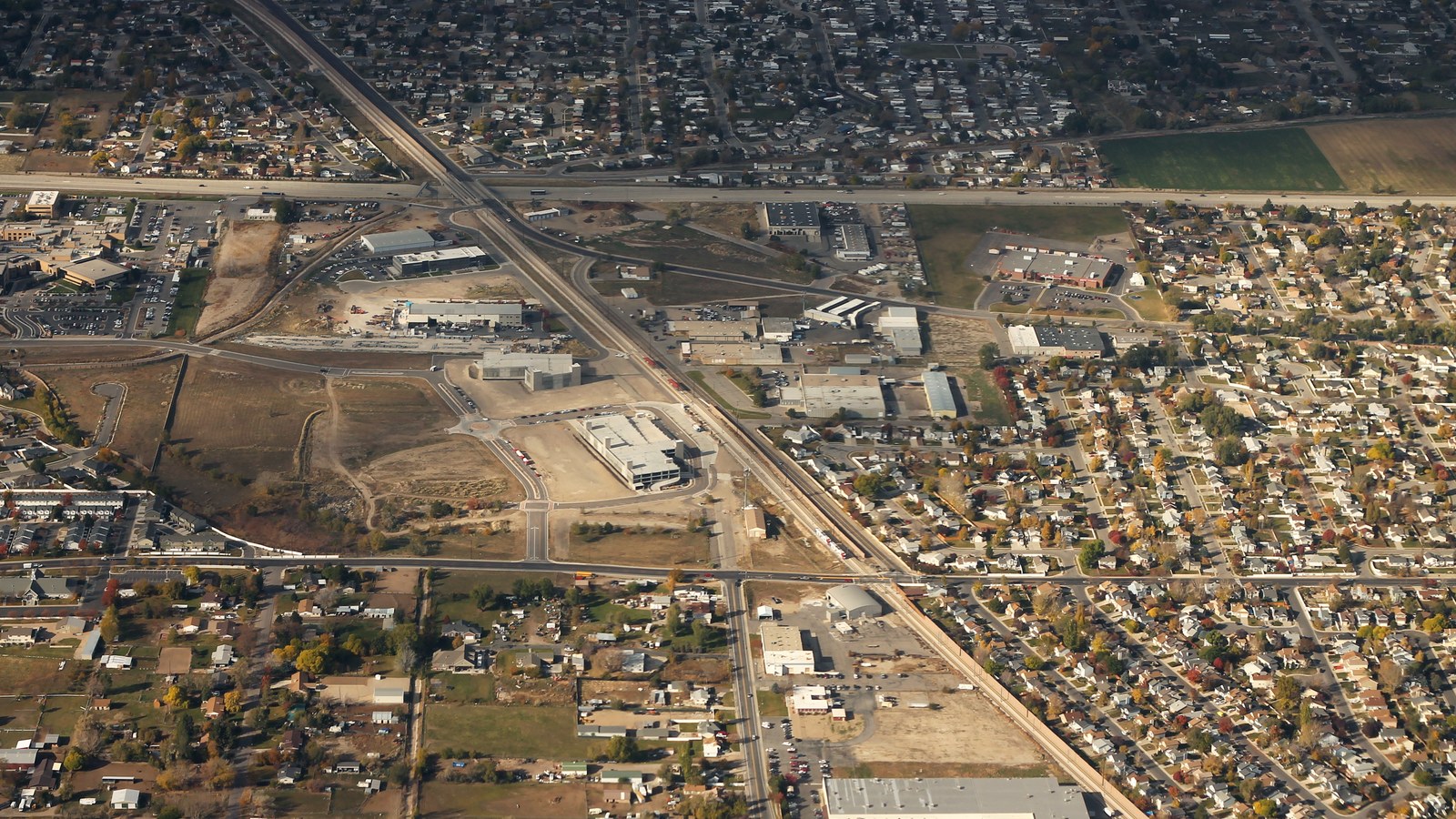

What West Jordan is actually like
Mormon settlers led by Brigham Young reached the Salt Lake Valley in 1847 and named the river running through it after the biblical Jordan; West Jordan itself was founded around 1849 on that river's western bank. Archibald Gardner built one of the area's first sawmills there in 1850, and the settlement built what's described as the first leather tannery west of the Mississippi River in 1851 -- an early manufacturing identity that outlasted the farm-town phase most of this cluster shares (Wikipedia).
West Jordan incorporated as a city on January 10, 1941, but its real growth spike came decades later: population jumped 544.2% between 1970 and 1980 alone as the broader Salt Lake Valley suburbanized (Wikipedia). Gardner's original mill site and surrounding historic structures were preserved and renovated into Gardner Village, a specialty shopping district that remains the clearest physical link between the city's pioneer-era manufacturing history and its present-day retail identity.
West Jordan's population reached an estimated 116,812 as of July 1, 2025 (U.S. Census Bureau), making it the third-most-populous city in Utah, behind only Salt Lake City and West Valley City (Wikipedia). UTA's TRAX Red Line, which opened August 7, 2011, reaches two stations inside city limits -- West Jordan City Center and Jordan Valley -- giving the city direct light-rail access toward both downtown Salt Lake City and Daybreak in South Jordan (Wikipedia).
Home values in West Jordan
Zillow's Home Value Index for West Jordan was $561,312 as of July 31, 2026, up 1.5% year-over-year (Zillow). Utah taxes income at a flat 4.45% rate for every individual filer (Tax Foundation), on top of which the state levies a 6.10% sales tax with an average combined state-and-local rate of 7.19% statewide -- though Salt Lake County's own combined rate runs slightly above that average, at 7.45% (4.85% state plus a 2.6% county-and-local add-on) (Avalara). Property taxes work differently than in most states: Utah's constitution shields 45% of a primary, owner-occupied home's fair market value from taxation entirely, so only 55% of assessed value is actually taxed -- a structural exemption open to any qualifying primary residence, not tied to the owner's age or income, administered through a one-time Residential Property Declaration filed with the county assessor (Utah State Tax Commission). That exemption helps keep Utah's statewide average effective property tax rate low -- the Tax Foundation puts it at roughly 0.48% of home value, a separate AskDoss analysis at roughly 0.55%, both well under the national average near 0.9% (AskDoss).
Evenings and weekends
West Jordan's evenings split between two poles. Gardner Village (1100 W 7800 South), the preserved 1850s mill site, anchors one: Archibald's Restaurant, inside the restored 1877 flour mill itself, serves dinner until 8pm most nights -- a dinner-not-drinks crowd, gone by closing. Jordan Landing, the big-box retail center a few miles south, runs later: Cinemark's 24-screen theater with XD keeps foot traffic going past 10pm, and a Bout Time Pub & Grub sports bar (7211 W Plaza Center Dr) stays open to 1am, with roughly 30 TVs and a heated patio drawing a game-day, 21-and-over crowd rather than a date-night one (Bout Time Pub & Grub). Outside those two nodes, West Jordan goes quiet early -- there's no walkable bar row here. People looking for that kind of night drive north into Sugar House or downtown Salt Lake City, or east to Sandy.
Getting around
West Jordan's 28 Walk Score means most day-to-day errands require a car, though the TRAX Red Line's two in-city stations -- West Jordan City Center and Jordan Valley -- give residents near either one direct rail access toward downtown Salt Lake City or south toward Daybreak, without needing to drive the whole way.
West Jordan FAQ
Is West Jordan walkable?
Not especially -- Walk Score's statewide Utah city list scores it 28, car-dependent. The TRAX Red Line's two in-city stations, West Jordan City Center and Jordan Valley, give residents near either one a direct rail option, but most errands still mean a car.
Why is Gardner Village called that?
Archibald Gardner built one of the area's first sawmills on the site in 1850. The historic mill buildings and surrounding structures were later preserved and renovated into Gardner Village, a specialty shopping district that's now the clearest physical link to the city's pioneer-era history.
How big is West Jordan compared to other Utah cities?
It's Utah's third-most-populous city, at an estimated 116,812 residents as of mid-2025, behind only Salt Lake City and West Valley City -- despite not incorporating until 1941 and not seeing its real growth spike until the 1970s and 80s.
Does West Jordan flood?
The city was founded directly on the Jordan River's west bank, and river-adjacent parcels near the Jordan River Parkway Trail do carry real floodplain designations. The larger, more structural risk across this part of the valley, though, is earthquake exposure from the Wasatch Fault.
What hospital serves West Jordan?
Holy Cross Hospital-Jordan Valley, at 3580 West 9000 South, a 172-bed CommonSpirit Health facility inside city limits -- distinct from the similarly named Holy Cross Hospital-West Valley a few miles north.
What school district is West Jordan in?
Mostly Jordan School District, which lists West Jordan among the cities it serves directly, though two small sections along the city's northern border fall instead within Granite School District. Confirm the specific zoned school for an address via the relevant district's attendance-boundary maps.
Nearby alternatives*We're not ranking these — every place has real trade-offs, and which ones matter is up to you.
South Jordan
Immediately south along the Jordan River and the TRAX Red Line -- higher-priced and faster-growing, built around the Daybreak master-planned community.
West Valley City
A few miles north via Bangerter Highway or Redwood Road -- Utah's second-largest city, sharing a similar JVWCD-sourced water supply and TRAX access, though on the Green Line rather than the Red Line.
Sandy
East across the valley -- a larger, more established Salt Lake County suburb with its own long TRAX history, reachable via I-215.
See what makes Salt Lake City stand out — verified, named medical, dietary, sports, and other specialty resources you won't find in most metros.
Explore Specialty Resources →