Downtown & Central City, Salt Lake City, UT
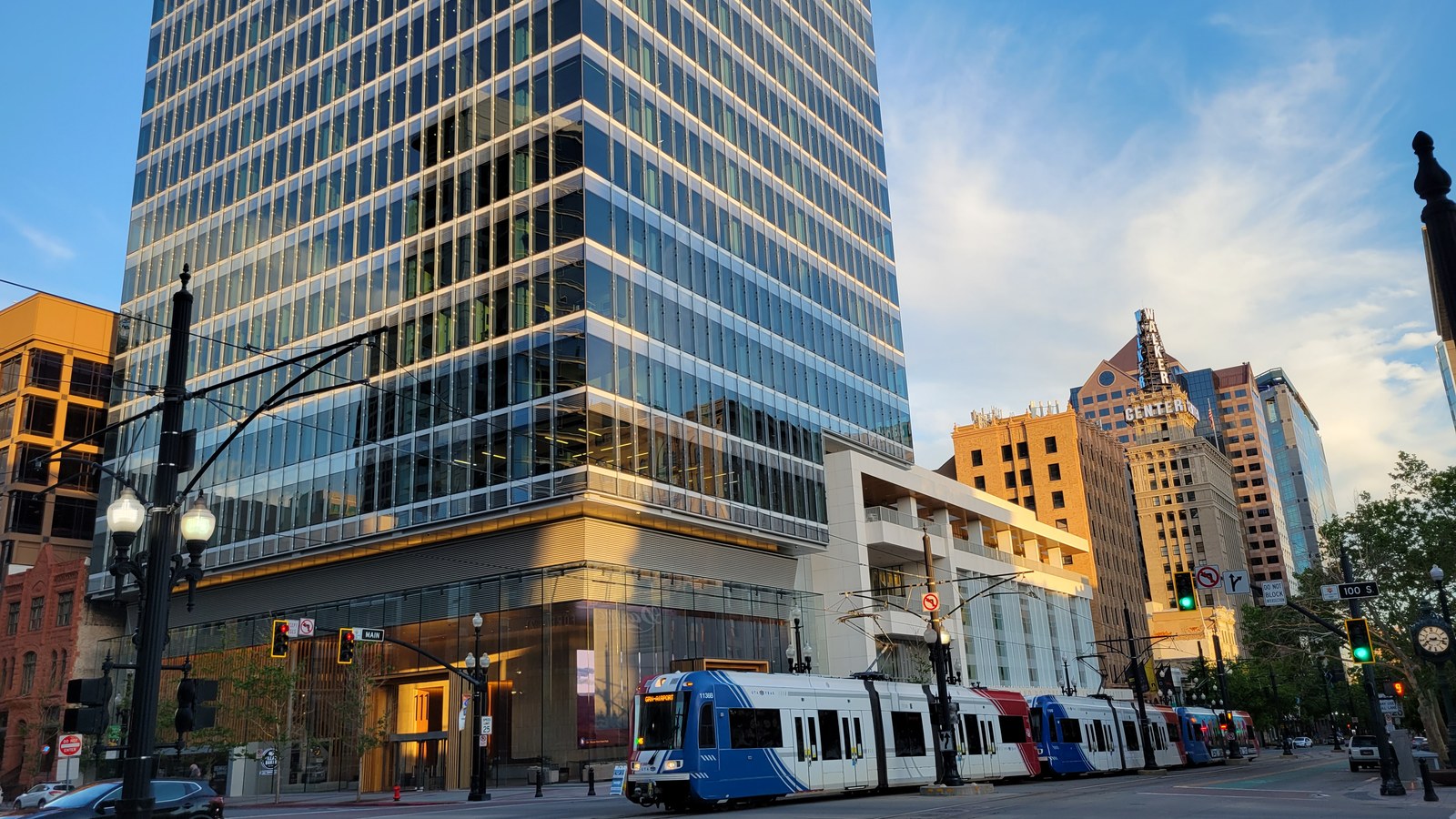

What Downtown & Central City is actually like
Downtown Salt Lake City exists because of a single day's decision: Brigham Young led an advance party of Mormon pioneers into the Salt Lake Valley on July 24, 1847, and within days the settlers surveyed a grid known as the Plat of Zion, radiating out from a point just northwest of what's now Temple Square -- the origin point for the entire street-numbering system Salt Lake City and much of Utah still use today (History.com). Temple Square itself, the walled 10-acre block containing the Salt Lake Temple and Tabernacle, has anchored the district ever since and remains one of Utah's most-visited sites, run by The Church of Jesus Christ of Latter-day Saints (Wikipedia).
The defining recent event for downtown's built environment was a single mixed-use project: City Creek Center, a 23-acre, 890,000-square-foot open-air shopping, office, and residential development built by the LDS Church (through City Creek Reserve, Inc.) in partnership with Simon Property Group and Taubman Centers, at a reported cost between $1.5 and $2 billion. It opened March 22, 2012, replacing two aging downtown malls with a recreated 1,200-foot stream, a 320,000-pound retractable-roof skybridge over Main Street, and roughly 700 residential units -- while remaining closed on Sundays, an unusual policy among American malls tied directly to its owner (Wikipedia). A few blocks away, the city's Main Library -- designed by architect Moshe Safdie with VCBO Architecture and opened in February 2003 -- added a second landmark: a six-story curved glass-and-steel wall wrapping a public plaza, 240,000 square feet, and a rooftop terrace with beehives kept by the Salt Lake City Beekeeper (Salt Lake City Public Library).
Salt Lake City's population reached an estimated 218,428 as of July 1, 2025 (U.S. Census Bureau), and downtown's own arena has gone through five names since opening October 9, 1991 -- Delta Center, EnergySolutions Arena, Vivint Smart Home Arena, Vivint Arena, and, since a 2023 naming-rights deal with Delta Air Lines, Delta Center again, home to the Utah Jazz at 301 W. South Temple (Wikipedia). The Gallivan Center, a 3.65-acre plaza named for longtime Salt Lake Tribune publisher John W. Gallivan and completed in 1998 on a former surface-parking block, now hosts the city's First Night celebration and a seasonal ice rink a few blocks southeast (Wikipedia).
Home values in Downtown & Central City
Zillow's Home Value Index for ZIP 84101, covering downtown and the immediately surrounding core, was $496,316 as of August 31, 2026, up 0.4% year-over-year (Zillow). Walk Score separately identifies ZIP 84111, the block immediately east covering much of the Central Business District, as the single most walkable ZIP code in Salt Lake City at an 86 Walk Score (Walk Score). Utah levies a flat 4.45% individual income tax rate on all residents regardless of income level, plus a 6.10% state sales tax rate that combines with local option taxes for a statewide average combined rate of 7.19% (Tax Foundation) -- the actual rate paid at the register varies by city and county. Property taxes run the other direction and carry Utah's signature structural break for owner-occupants: the state's constitutional primary residential exemption shields 45% of a primary, owner-occupied home's fair market value from taxation entirely, so only 55% of assessed value is actually taxed -- automatic for most owner-occupied homes, with no age or income requirement attached, though a Residential Property Declaration must be filed within 90 days of a county assessor's notice to keep it (Utah State Tax Commission). That exemption is a structural reason Utah's statewide average effective property tax rate runs low even before any single homeowner does anything: Tax Foundation puts it at 0.48% of home value, AskDoss's own homeowner-facing guide puts it at roughly 0.55% -- both well below the national average, with the small gap ordinary source-to-source variance rather than a real disagreement about the underlying rate (Tax Foundation, AskDoss). Rocky Mountain Power, a division of PacifiCorp, is the dominant electric utility across the Salt Lake Valley and most of the Wasatch Front, serving more than 1.2 million customers combined across Utah, Wyoming, and Idaho, with Utah its largest single-state customer base (Rocky Mountain Power).
Evenings and weekends
Downtown is the one place in this cluster with an actual bar-and-restaurant district rather than a few scattered spots. Main Street between roughly 200 South and 400 South carries the density: Whiskey Street (323 S Main) and Felt Bar & Eatery (341 S Main) anchor one block, Beer Bar (161 E 200 South) and Repeal (19 E 200 South), which runs live jazz nightly, sit a few doors east, and Van Ryder's heated rooftop patio (131 S 300 West) and Salt Lake Brewing Co's historic taproom (147 W Broadway) extend things west toward the Gateway (Gastronomic SLC). The crowd skews toward downtown's own office workers, conventioneers, and Delta Center concert and Jazz-game crowds rather than one age group. The Gateway itself is mid-sale to a new owner as of early 2026 but still roughly 90% leased, not emptying out (Deseret News). The Downtown Farmers Market fills Pioneer Park every Saturday, June through October, 8 a.m. to 2 p.m. (Visit Utah). Office-tower blocks go dark by early evening; Main Street and Broadway don't.
Getting around
Downtown is the one genuinely car-optional place in this metro -- ZIP 84111's 86 Walk Score is Walk Score's own pick for the most walkable ZIP anywhere in Salt Lake City, well above the citywide 59, and three TRAX lines plus FrontRunner and Amtrak all converge within the fare-free downtown zone. The Salt Lake Valley sits in a bowl ringed by mountains, and several times most winters cold air near the surface gets trapped under a warmer layer aloft -- a temperature inversion that concentrates PM2.5 pollution for days at a stretch instead of letting it disperse. In mid-January 2026, PurpleAir sensors recorded PM2.5 readings above 35.5 micrograms per cubic meter (the "unhealthy for sensitive groups" threshold), Salt Lake City posted the worst air-quality ranking in the country on January 13 with an AQI of 123, and the state issued mandatory no-burn restrictions through the following weekend (TownLift). Outside the free-fare core, a car or a TRAX/bus combination becomes standard, the same as most of the rest of the valley.
Downtown & Central City FAQ
Is downtown Salt Lake City walkable?
Yes -- ZIP 84111, covering much of the Central Business District, scores 86 on Walk Score, the single most walkable ZIP code anywhere in Salt Lake City, well above the citywide average of 59. Three TRAX light-rail lines and FrontRunner commuter rail all converge downtown as well.
What's the story behind the Delta Center's name changes?
The arena at 301 W. South Temple has carried five names since opening in 1991: Delta Center, EnergySolutions Arena (2006), Vivint Smart Home Arena (2015), Vivint Arena (2020), and Delta Center again since a 2023 naming-rights deal with Delta Air Lines -- the same original name, restored.
Does downtown Salt Lake City flood?
Not under normal conditions -- City Creek runs through downtown in an underground culvert today. But in 1983, after record snowpack and rain, the creek rose enough that the city converted State Street itself into a sandbagged channel to route the water south, an event still referenced when Salt Lakers talk about flood risk near Temple Square.
What is City Creek Center?
A 23-acre, 890,000-square-foot open-air shopping, office, and residential development built by the LDS Church with Simon Property Group and Taubman Centers, opened in March 2012 at a reported cost of $1.5-2 billion. It's anchored by Nordstrom and Macy's, includes a recreated stream through the retail core, and is closed on Sundays.
Is the Wasatch Fault a real concern for downtown?
Yes -- it's an active, well-studied fault running the length of the valley, with a widely cited 43% chance of a magnitude 6.75-or-greater earthquake somewhere along the Wasatch Front in the next 50 years. The Utah State Capitol's own 2004-2008 renovation added a seismic base-isolation system specifically because of this risk.
Who lives downtown, and how many people live in Salt Lake City overall?
Salt Lake City's population reached an estimated 218,428 as of July 1, 2025, per the U.S. Census Bureau. Downtown's own ZIP 84111 counts a smaller, denser population of 10,648, reflecting its role as the metro's commercial and civic center more than a large residential neighborhood.
Nearby alternatives*We're not ranking these — every place has real trade-offs, and which ones matter is up to you.
The Avenues & Capitol Hill
Immediately north and northeast -- the Utah State Capitol sits about a mile from Temple Square, and City Creek Canyon, the source of downtown's 1983 flood, runs along the Avenues' eastern edge.
Sugar House
About 4 miles southeast via 1300 East or the TRAX Red Line and S-Line streetcar transfer -- a lower-rise, more residential commercial district with its own separate identity.
Murray
About 8 miles south via TRAX or I-15 -- home to Intermountain Medical Center, this cluster's largest hospital, and Murray Central Station, where TRAX meets FrontRunner.
See what makes Salt Lake City stand out — verified, named medical, dietary, sports, and other specialty resources you won't find in most metros.
Explore Specialty Resources →