Park City, UT
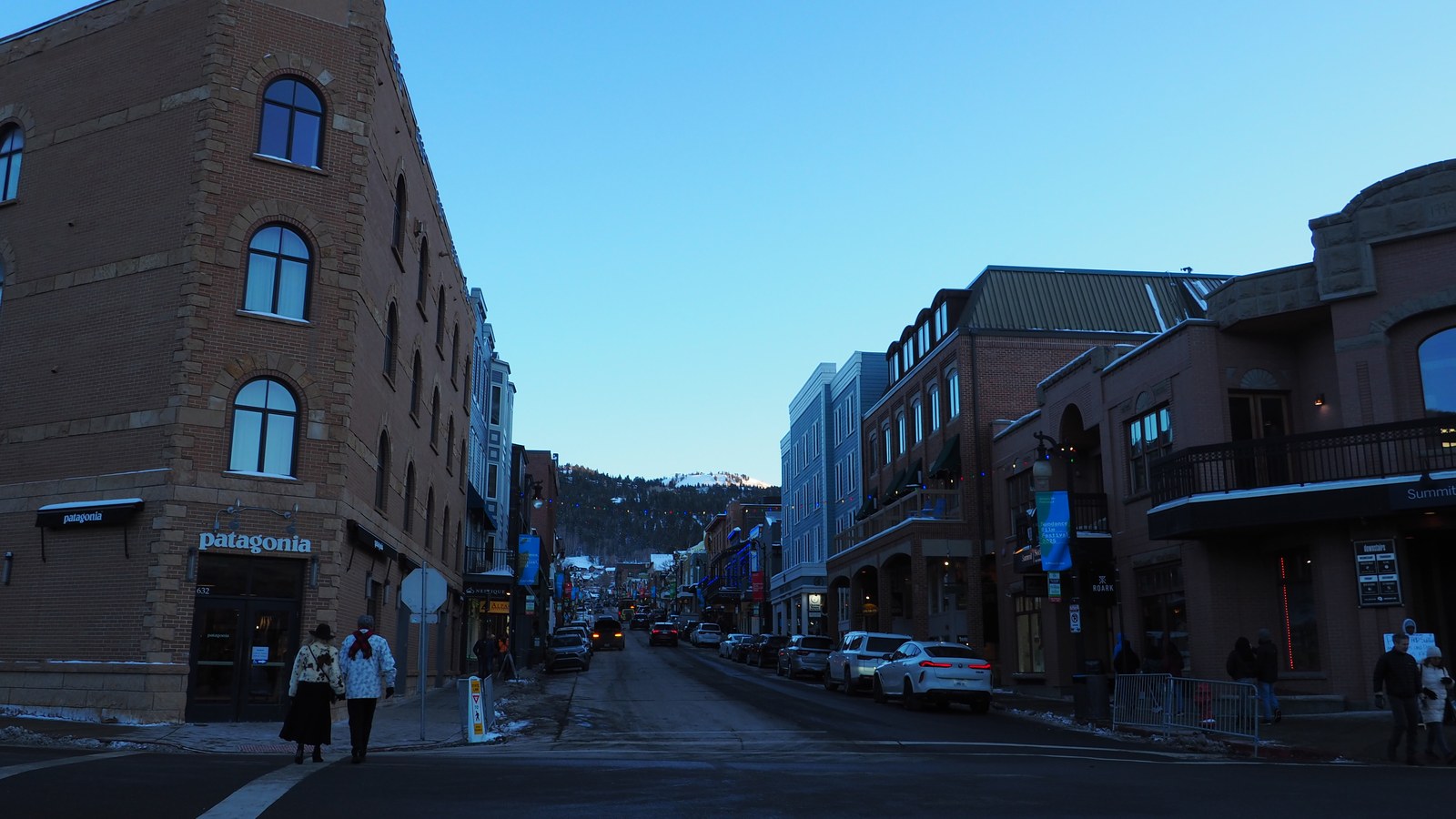

What Park City is actually like
Park City exists because of silver, not skiing. Prospectors found ore in the surrounding mountains starting in 1868, and by the 1880s and 1890s mines including the Ontario and Silver King were among the richest producers in the American West, drawing a boomtown population that dwarfed the roughly 8,600 residents Park City counts today. A fire tore through much of Main Street's original wood-frame buildings in 1898, and the district rebuilt largely in brick and stone -- the buildings that still define Main Street's historic core (Wikipedia).
Mining declined through most of the 20th century, and the old claims found a second life as ski terrain: Treasure Mountains resort opened on the mountainside above town in 1963, later renamed Park City Mountain Resort as it expanded (Wikipedia). The Sundance Film Festival, founded in Salt Lake City in 1978, moved its screenings to Park City's Main Street venues in 1981 and has run there every January since, turning a former mining town into one of the film industry's most recognizable annual gathering points. Vail Resorts merged Park City Mountain with the adjacent Canyons Resort in 2015, connecting the two via the Quicksilver Gondola into a single 7,300-acre, 43-lift ski area -- one of the largest in the United States -- while Deer Valley, a separate, skiers-only resort a few miles away, more than doubled its own terrain in 2025 with a 3,700-acre East Village expansion (Visit Utah).
Park City Mountain and Deer Valley's slopes hosted alpine and other events during the 2002 Salt Lake City Winter Olympics, and Utah Olympic Park, just north of town, remains an active U.S. Olympic training facility open for public bobsled rides and museum tours (Visit Utah). Salt Lake City-Utah was awarded the 2034 Winter Olympics, putting Park City back in a Winter Games host rotation it hasn't occupied in more than three decades. The city's own population estimates diverge depending on source and moment measured: the Census Bureau's July 2025 vintage estimate puts it at 8,587 residents (U.S. Census Bureau), while a University of Utah Kem C. Gardner Policy Institute study reported by the Park Record in 2026 found the population actually declined slightly over the same year, by 56 residents to 8,284 -- both real counts, reflecting different measurement methods rather than a contradiction (Park Record).
Home values in Park City
Zillow's Home Value Index for Park City was $1,607,176 as of August 31, 2026, up 5.0% over the past year -- roughly four times Ogden's figure a few dozen miles northwest, and the clearest illustration in this market of how far a resort economy can separate one city's housing market from its neighbors' (Zillow). The Census Bureau's own five-year median for owner-occupied homes, $1,757,800 (2020-2024 American Community Survey), runs even higher than the current Zillow figure, consistent with a market where second-home and luxury purchases pull the distribution's tail up. Utah's income tax is a flat 4.45% on all taxable income -- no brackets, same rate whether a household earns $40,000 or $400,000 -- and the state sales tax rate is 6.10% (including a mandatory 1.25% local add-on), with a statewide average combined rate of 7.19% once ordinary city, county, and special-district add-ons are folded in (Tax Foundation). The actual combined rate at a specific address runs higher than that statewide average in some cities, particularly resort communities that layer additional mass-transit, recreation, or transient-room taxes on top of the base rate -- confirm the exact combined rate for an address via the Utah State Tax Commission's own published rate charts rather than treating one statewide number as what shows up on a receipt. Property taxes work differently from most of the country: Utah's constitution exempts 45% of a primary, owner-occupied home's fair market value from taxation outright, so only 55% of assessed value is actually taxed -- an automatic, structural discount that doesn't depend on the owner's age or income, unlike many other states' homestead exemptions. That exemption, combined with strong assessed-value growth, keeps Utah's effective property tax rate low by national standards: Tax Foundation puts the statewide average at 0.48% of home value, while a second tally from PropertyTaxByState.com puts it slightly higher, at 0.52% -- both real, sourced figures reflecting ordinary variance in methodology rather than a contradiction (PropertyTaxByState.com). County-level effective rates in this cluster vary more than that statewide spread suggests: PropertyTaxByState.com puts Weber County at 0.60%, Davis County at 0.53%, Wasatch County at 0.46%, and Summit County -- Park City's county -- at just 0.35%, the lowest of the four and among the lowest in the state. Summit County's low 0.35% effective property tax rate is a genuinely different story from a typical low-tax county, though: it isn't that the county collects less overall, but that its assessed tax base -- swollen by thousands of high-value second homes and resort-commercial property -- is so large that the same total levy spreads across far more taxable value per full-time resident, letting the county set proportionally lower rates than a county without that resort tax base.
Evenings and weekends
Main Street is Park City's evening core, a dense run of bars and restaurants from the Egyptian Theatre (328 Main Street) up through Old Town. No Name Saloon (447 Main Street), with its rooftop patio, is the long-running local anchor; High West Distillery & Saloon (703 Park Avenue), Utah's first legally licensed distillery since Prohibition ended, draws a whiskey-and-dinner crowd a block over; The Spur Bar & Grill (352 Main Street) runs live music most nights. The scene has a real seasonal rhythm: winter weekends bring an après-ski crowd straight off the mountain, while local businesses themselves describe spring and fall as a genuine lull between ski season and summer. Summer Sundays add the Park Silly Sunday Market, a Main Street street fair that's run for close to two decades. Kimball Junction, a few miles north, is comparatively quiet at night -- built for shopping and chain restaurants, not a bar scene.
Getting around
Main Street and Old Town are genuinely walkable -- a 73 Walk Score is real, not an outlier -- and both Park City Transit's free in-town routes and High Valley Transit's regional network mean a car isn't strictly necessary for getting between Old Town, Deer Valley, and Park City Mountain Resort. Kimball Junction and the outlying Snyderville Basin neighborhoods are a different story: they're built at a more suburban, car-oriented scale, and bus frequency there is lower than on the free in-town Main Street routes.
Park City FAQ
Is Park City walkable?
Main Street and Old Town genuinely are -- a 73 Walk Score is real, not an outlier -- and the free Park City Transit and High Valley Transit bus systems cover most other in-town destinations without a car. Kimball Junction and outlying Snyderville Basin neighborhoods are built at a more car-oriented, suburban scale.
Why are Park City home prices so much higher than the rest of this market?
Zillow's Home Value Index for Park City was $1,607,176 as of August 31, 2026 -- roughly four times Ogden's figure a few dozen miles northwest. The resort and second-home economy, plus a limited buildable land base, drives that gap; Summit County's own property tax rate is actually the lowest of the four counties in this market, at 0.35%, because that same high-value tax base spreads the levy across more taxable value per resident.
Is Park City hosting the Olympics again?
Park City Mountain and Deer Valley's slopes already hosted events during the 2002 Salt Lake City Winter Olympics, and Salt Lake City-Utah was awarded the 2034 Winter Olympics, which will put the area back in a host rotation it hasn't occupied in more than three decades. Utah Olympic Park, just north of downtown, remains an active Olympic training facility open to the public year-round.
Does Park City have the same earthquake risk as Ogden and Layton?
No -- Park City sits on the east side of the Wasatch Range, away from the Wasatch Fault's main, most closely studied trace through Salt Lake and Weber counties. The more locally relevant hazards here are wildfire and wildland-urban interface exposure given the surrounding national forest, plus backcountry avalanche terrain outside resort boundaries in winter.
What's the difference between Park City Transit and High Valley Transit?
Park City Transit is the city's own free bus system, running since 1975 across 13 routes inside town (Old Town, Deer Valley, Park City Mountain Resort). High Valley Transit is a newer regional system, launched in 2021, that's also fare-free and connects Park City out to Kimball Junction, Kamas, and Heber City, plus a direct commuter route to Salt Lake City Central.
What hospital serves Park City?
Park City Hospital, at 900 Round Valley Drive, is a full-service community hospital run by Intermountain Healthcare, open in its current building since September 2009, with a 24-hour emergency department, ICU, cardiology, and obstetrics.
Nearby alternatives*We're not ranking these — every place has real trade-offs, and which ones matter is up to you.
Heber City
About 20 minutes east via U.S. 40 -- the more affordable side of the same Wasatch Back recreation economy, over Jordanelle Reservoir from Park City proper.
Ogden
A different world across the Wasatch Range, roughly 45 minutes by car -- Weber County's seat, with home values running a fraction of Park City's own.
Downtown & Central City
Roughly 32 miles west via I-80 and Parleys Canyon, or a High Valley Transit Route 107 commuter bus -- the metro's primary job center.
See what makes Salt Lake City stand out — verified, named medical, dietary, sports, and other specialty resources you won't find in most metros.
Explore Specialty Resources →