Heber City, UT
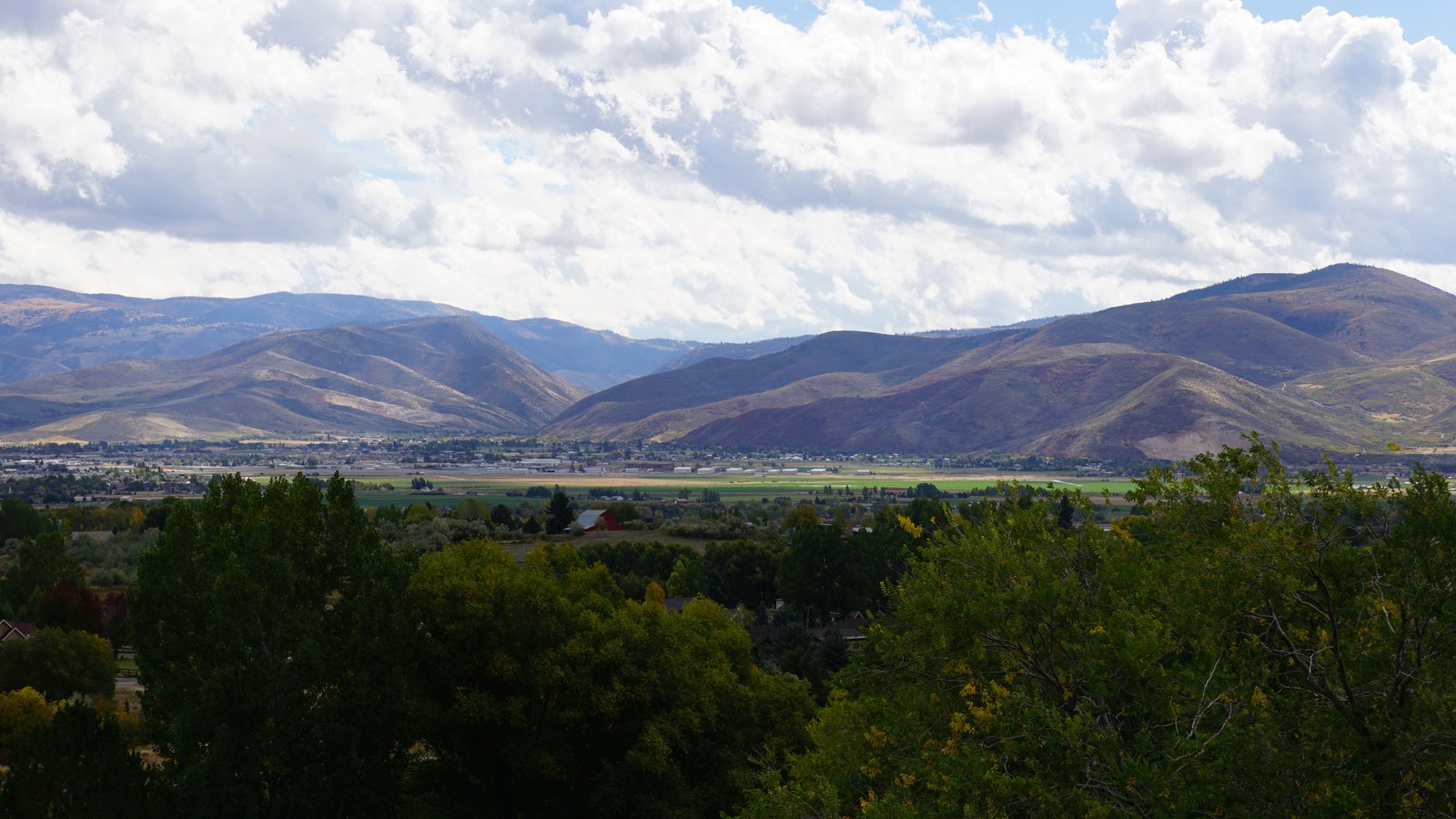

What Heber City is actually like
Heber City was settled in 1859 by a company of Latter-day Saint pioneers from Provo, including Robert Broadhead, James Davis, and James Gurr, who moved into the Heber Valley on the east side of the Wasatch Range -- named for Heber C. Kimball, a senior church leader (Wikipedia).
A rail line connecting Heber City to Provo was completed in 1899, opening the valley to outside commerce; that same 32-mile line survives today as the Heber Valley Railroad, a heritage tourist line nicknamed the 'Heber Creeper' for how slowly the original steam trains climbed the grade out of the valley (Wikipedia). Heber City stayed a modest agricultural county seat for most of the 20th century, but growth accelerated sharply once Park City's resort economy began pushing east over Jordanelle Reservoir: the city's population grew 55.8% between 2000 and 2010 alone, and average home prices doubled between 2002 and 2008 even as population grew a comparatively modest 25% over those same years (Wikipedia).
The Census Bureau's July 2025 vintage estimate puts Heber City's population at 19,651, up 16.1% from the 2020 census count of 16,856, with a median household income of $110,339 (U.S. Census Bureau). A separate University of Utah Kem C. Gardner Policy Institute study, reported by the Park Record in 2026, put the city's one-year growth even higher -- 697 new residents in 2025 alone, reaching 20,811 and ranking Heber City the fourth-fastest-growing city in its population bracket statewide (Park Record). Both counts describe the same underlying story: Heber City is absorbing much of the growth Park City's own home prices have priced out, positioned roughly 20 minutes from Park City's Main Street and 45 minutes from downtown Salt Lake City.
Home values in Heber City
Zillow's Home Value Index for Heber City was $813,512 as of July 31, 2026, up a modest 0.3% year-over-year (Zillow) -- roughly half of Park City's figure a few miles west, though still well above Ogden's or Layton's, a mid-market position consistent with local real-estate coverage describing spring 2026 Heber City home values in the low-$800,000s (Homie). Utah's income tax is a flat 4.45% on all taxable income -- no brackets, same rate whether a household earns $40,000 or $400,000 -- and the state sales tax rate is 6.10% (including a mandatory 1.25% local add-on), with a statewide average combined rate of 7.19% once ordinary city, county, and special-district add-ons are folded in (Tax Foundation). The actual combined rate at a specific address runs higher than that statewide average in some cities, particularly resort communities that layer additional mass-transit, recreation, or transient-room taxes on top of the base rate -- confirm the exact combined rate for an address via the Utah State Tax Commission's own published rate charts rather than treating one statewide number as what shows up on a receipt. Property taxes work differently from most of the country: Utah's constitution exempts 45% of a primary, owner-occupied home's fair market value from taxation outright, so only 55% of assessed value is actually taxed -- an automatic, structural discount that doesn't depend on the owner's age or income, unlike many other states' homestead exemptions. That exemption, combined with strong assessed-value growth, keeps Utah's effective property tax rate low by national standards: Tax Foundation puts the statewide average at 0.48% of home value, while a second tally from PropertyTaxByState.com puts it slightly higher, at 0.52% -- both real, sourced figures reflecting ordinary variance in methodology rather than a contradiction (PropertyTaxByState.com). County-level effective rates in this cluster vary more than that statewide spread suggests: PropertyTaxByState.com puts Weber County at 0.60%, Davis County at 0.53%, Wasatch County at 0.46%, and Summit County -- Park City's county -- at just 0.35%, the lowest of the four and among the lowest in the state. Wasatch County's own effective property tax rate runs low even by Utah standards, at 0.46%, though not as low as neighboring Summit County's 0.35% -- Heber City's tax base includes fewer ultra-high-value second homes than Park City's, even as land prices east of Jordanelle Reservoir have climbed as Park City's own market pushes development this direction.
Evenings and weekends
Heber City's evening options are real but modest next to Park City, 20 minutes west. Dairy Keen (199 S Main Street), a hamburger stand built around a running miniature train, closes at 10 p.m. and skews toward families rather than a bar crowd. Melvin's Public House (139 N Main Street), a sports pub, runs live music on Fridays and is the closest thing downtown to a bar-and-band night out. Holiday Lanes (565 N Main Street), open since 1962, is a genuine local fixture for a night out, retro lanes and all. Heber Market on Main sets up weekly through the summer at Main Street Park (250 S Main Street) with food trucks and live entertainment. There's no dense restaurant-and-bar strip here -- Heber City functions more as a pass-through to Park City's Main Street than a nightlife destination in its own right, and people looking for a fuller night out typically drive west into Park City or north to Provo.
Getting around
Downtown Heber City, around Main Street, is walkable in its own right -- an 86 Walk Score is a genuinely strong number. High Valley Transit's fare-free regional routes connect Heber City to Park City and Kamas without a car, but most of the surrounding valley, including newer subdivisions pushing toward Jordanelle Reservoir, is built at suburban scale and requires one.
Heber City FAQ
Is Heber City more affordable than Park City?
Yes, notably -- Zillow's Home Value Index for Heber City was $813,512 as of July 31, 2026, roughly half of Park City's $1,607,176 the same season, even as both markets sit within the same 20-minute drive of each other.
How far is Heber City from Park City and Salt Lake City?
Park City's Main Street is roughly 20 minutes west via U.S. 40 and UT-248; downtown Salt Lake City is roughly 45 minutes northwest. High Valley Transit's fare-free regional buses cover the Heber-to-Park City leg without a car.
What is the Heber Creeper?
The nickname for the Heber Valley Railroad, a heritage tourist line running on a restored portion of the original 32-mile Heber City-to-Provo rail line completed in 1899. The name comes from how slowly the original steam trains climbed the grade out of the valley.
Is Heber City growing fast?
Yes -- the Census Bureau's 2025 vintage estimate puts the population at 19,651, up 16.1% since the 2020 census, while a separate University of Utah study found an even sharper one-year jump, ranking Heber City the fourth-fastest-growing city in its population bracket statewide.
Does Heber City have the same earthquake risk as Ogden?
No -- Heber Valley sits on the Wasatch Range's east side, the same side as Park City, away from the Wasatch Fault's main trace through Salt Lake and Weber counties. Wildfire risk from the surrounding forested terrain is the more locally relevant hazard here.
What school district serves Heber City?
Wasatch County School District, established in 1898. It's actively expanding to keep pace with growth, including a second high school, Deer Creek High School, opening for the 2026-2027 school year, and is currently redrawing attendance boundaries -- confirm the zoned school for a specific address via the district's own maps.
Nearby alternatives*We're not ranking these — every place has real trade-offs, and which ones matter is up to you.
Park City
About 20 minutes west via U.S. 40, over Jordanelle Reservoir -- the pricier, resort-core side of the same Wasatch Back recreation economy.
Ogden
Across the Wasatch Range on the Weber County side -- a Wasatch Front city with a rail-junction history rather than a ski-resort one, roughly an hour away by car.
Downtown & Central City
Roughly 45 minutes northwest by car -- the metro's primary job center.
See what makes Salt Lake City stand out — verified, named medical, dietary, sports, and other specialty resources you won't find in most metros.
Explore Specialty Resources →