Ogden, UT
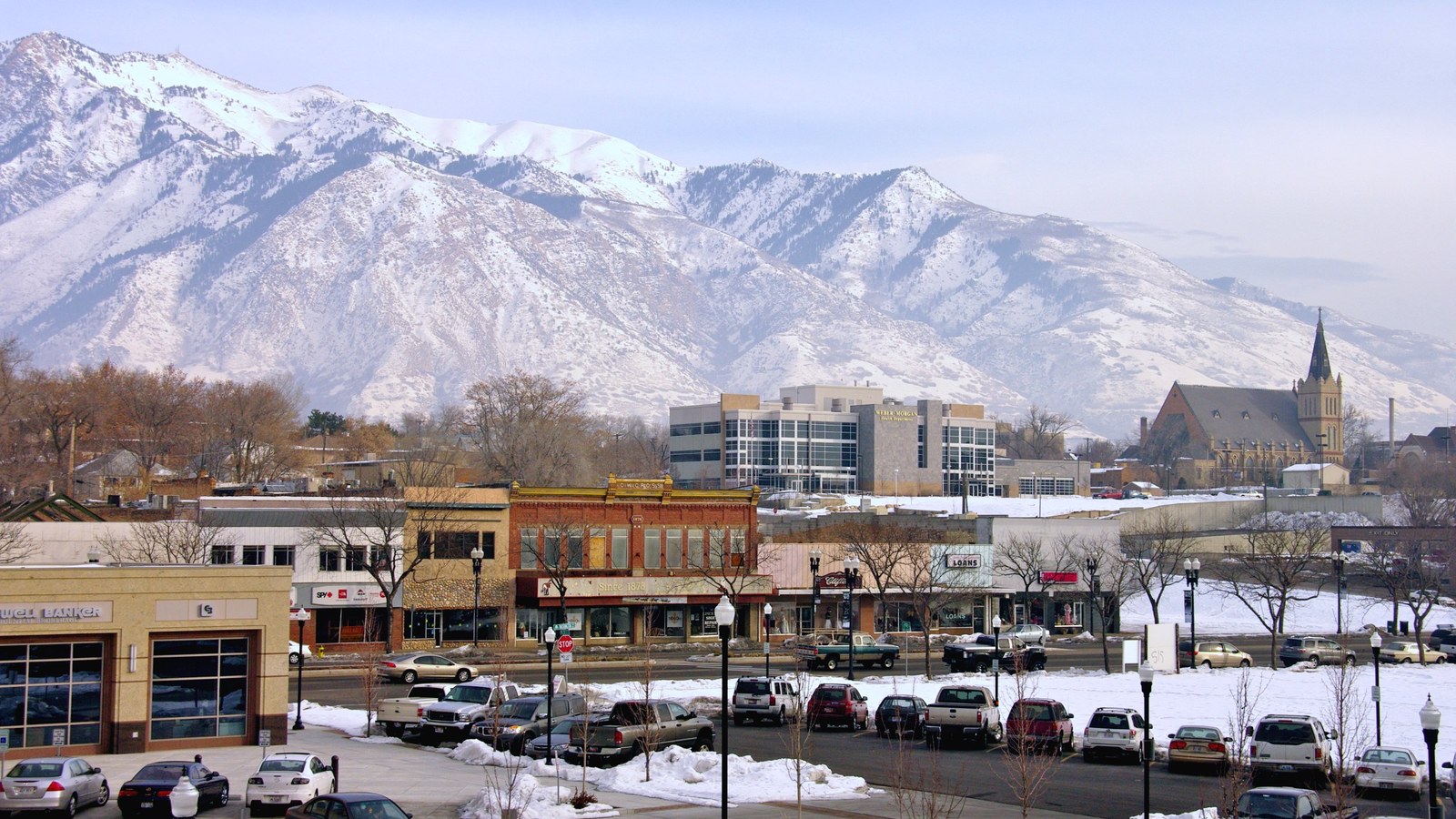

What Ogden is actually like
Fur trapper Miles Goodyear built a way station on the Weber River in 1845 -- among the first non-Native settlements in the future Utah, arriving before Brigham Young's pioneer company reached the Salt Lake Valley in 1847. Mormon settlers bought out Goodyear's post, and James Brown renamed the resulting settlement from Brownsville to Ogden, after Hudson's Bay Company trapper Peter Skene Ogden, who had worked the surrounding river valleys in the 1820s (Wikipedia).
Ogden's defining moment came on May 10, 1869, when the transcontinental railroad's Union Pacific and Central Pacific lines met at Promontory Summit, roughly 55 miles northwest -- and Ogden, not Salt Lake City, became the operational junction where that east-west line met the north-south route down the Wasatch Front, a role that earned the city its long-running 'Junction City' nickname. Union Station, at the foot of 25th Street, became the city's civic anchor and remains a downtown landmark today (City of Ogden), and 25th Street itself -- running straight from the depot into downtown -- grew into the commercial corridor that generations of rail passengers, crews, and miners passed through, a history its historic storefronts (now restaurants, shops, and galleries) still trade on.
Ogden's population reached an estimated 89,510 as of July 1, 2025, with a median household income of $72,575 (U.S. Census Bureau). Weber State University's campus sits on the city's east bench, a public university whose Wildcats compete in NCAA Division I's Big Sky Conference, and Ogden's outdoor-recreation identity isn't marketing gloss: Ogden Canyon, running east out of the city, is the literal access road to both Snowbasin Resort and Powder Mountain, full-scale ski areas roughly 30-40 minutes from 25th Street by car, alongside the paved Ogden River Parkway trail threading through the city itself.
Home values in Ogden
Zillow's Home Value Index for Ogden was $399,733 as of July 31, 2026, up a modest 0.1% year-over-year (Zillow). The Census Bureau's own five-year median for owner-occupied homes runs somewhat lower, at $355,600 (2020-2024 American Community Survey) -- a gap consistent with a market that's kept appreciating since that five-year survey window closed. Utah's income tax is a flat 4.45% on all taxable income -- no brackets, same rate whether a household earns $40,000 or $400,000 -- and the state sales tax rate is 6.10% (including a mandatory 1.25% local add-on), with a statewide average combined rate of 7.19% once ordinary city, county, and special-district add-ons are folded in (Tax Foundation). The actual combined rate at a specific address runs higher than that statewide average in some cities, particularly resort communities that layer additional mass-transit, recreation, or transient-room taxes on top of the base rate -- confirm the exact combined rate for an address via the Utah State Tax Commission's own published rate charts rather than treating one statewide number as what shows up on a receipt. Property taxes work differently from most of the country: Utah's constitution exempts 45% of a primary, owner-occupied home's fair market value from taxation outright, so only 55% of assessed value is actually taxed -- an automatic, structural discount that doesn't depend on the owner's age or income, unlike many other states' homestead exemptions. That exemption, combined with strong assessed-value growth, keeps Utah's effective property tax rate low by national standards: Tax Foundation puts the statewide average at 0.48% of home value, while a second tally from PropertyTaxByState.com puts it slightly higher, at 0.52% -- both real, sourced figures reflecting ordinary variance in methodology rather than a contradiction (PropertyTaxByState.com). County-level effective rates in this cluster vary more than that statewide spread suggests: PropertyTaxByState.com puts Weber County at 0.60%, Davis County at 0.53%, Wasatch County at 0.46%, and Summit County -- Park City's county -- at just 0.35%, the lowest of the four and among the lowest in the state. Weber County's own effective property tax rate runs a bit above the statewide average, at 0.60%.
Evenings and weekends
Historic 25th Street is Ogden's evening anchor, its restored storefronts running from Union Station up toward Washington Boulevard. Roosters Brewing Co. (253 25th Street), open since 1995, draws a dinner-and-drinks crowd that runs into the evening; a block down, Brewski's (244 25th Street) keeps pool tables and live rock going most weekend nights, buzzing later than the restaurants around it. Farmers Market Ogden sets up on 25th Street on summer Saturdays from Memorial Day weekend through September, and the Ogden Downtown Alliance's First Friday Art Stroll opens the district's galleries after hours on the first Friday of each month. The crowd skews mixed rather than collegiate -- Weber State's campus sits a couple miles up on the East Bench and doesn't spill directly into 25th Street's bar traffic. Weeknights go quiet once the restaurants close; there's no dense, multi-block bar strip here the way Salt Lake City's Downtown has, and a fuller night out usually means the 35-mile drive south.
Getting around
Ogden's historic downtown grid, especially along 25th Street and the blocks around Union Station, is genuinely walkable by Walk Score's own measure -- an 83 is a real number, not an outlier for a single well-placed address. FrontRunner and the free OGX bus-rapid-transit line extend that car-free radius out to Weber State University and McKay-Dee Hospital. Beyond that core, though, greater Ogden -- like most of the Wasatch Front outside downtown Salt Lake City -- is built for cars, and reaching Snowbasin, Powder Mountain, or most East Bench residential neighborhoods means driving.
Ogden FAQ
Is Ogden walkable?
Downtown is -- a location near 25th Street and Washington Boulevard scores 83 on Walk Score ('Very Walkable'), with a 54 Transit Score, well above what most Wasatch Front cities post. That's a downtown-corridor figure, not a citywide one; East Bench and outlying neighborhoods are more car-dependent.
Why is Ogden called 'Junction City'?
The transcontinental railroad's Union Pacific and Central Pacific lines met at nearby Promontory Summit on May 10, 1869, and Ogden became the operational junction where that east-west line met the north-south route down the Wasatch Front -- a role the city still leans on in its identity, with Union Station and historic 25th Street as the physical legacy.
How close is Ogden to skiing?
Genuinely close: Ogden Canyon, running east out of the city, is the direct access road to both Snowbasin Resort and Powder Mountain, full-scale ski areas roughly 30-40 minutes from 25th Street by car.
Does Ogden have earthquake risk?
Yes -- Ogden sits directly on the Wasatch Fault's Weber segment, one of the fault's independently active segments along the Wasatch Front. Research cited by Envision Utah and the Utah Division of Emergency Management puts the odds of a magnitude 6.75+ earthquake somewhere along the Wasatch Front at 43% over the next 50 years.
What hospital serves Ogden?
McKay-Dee Hospital, at 3939 Harrison Boulevard, is a 310-bed, Level II trauma center run by Intermountain Healthcare on a campus that opened in its current location in March 2002.
How much do homes cost in Ogden?
Zillow's Home Value Index for Ogden was $399,733 as of July 31, 2026, up 0.1% year-over-year -- among the more affordable home values in this Salt Lake City-Provo CSA build, roughly a quarter of Park City's figure a few dozen miles east.
Nearby alternatives*We're not ranking these — every place has real trade-offs, and which ones matter is up to you.
Layton
About 20 minutes south via I-15 or the same FrontRunner line -- Davis County's largest city, with Hill Air Force Base's economic footprint as the defining difference from Ogden's rail-and-university identity.
Park City
A different world over the Wasatch Range, roughly 45 minutes southeast by car -- a resort economy with home values running several times Ogden's, on the opposite side of the same mountains Ogden Canyon climbs into.
Downtown & Central City
The metro's primary job center, a roughly 35-mile FrontRunner ride or I-15 drive south.
See what makes Salt Lake City stand out — verified, named medical, dietary, sports, and other specialty resources you won't find in most metros.
Explore Specialty Resources →