Layton, UT
.jpg)
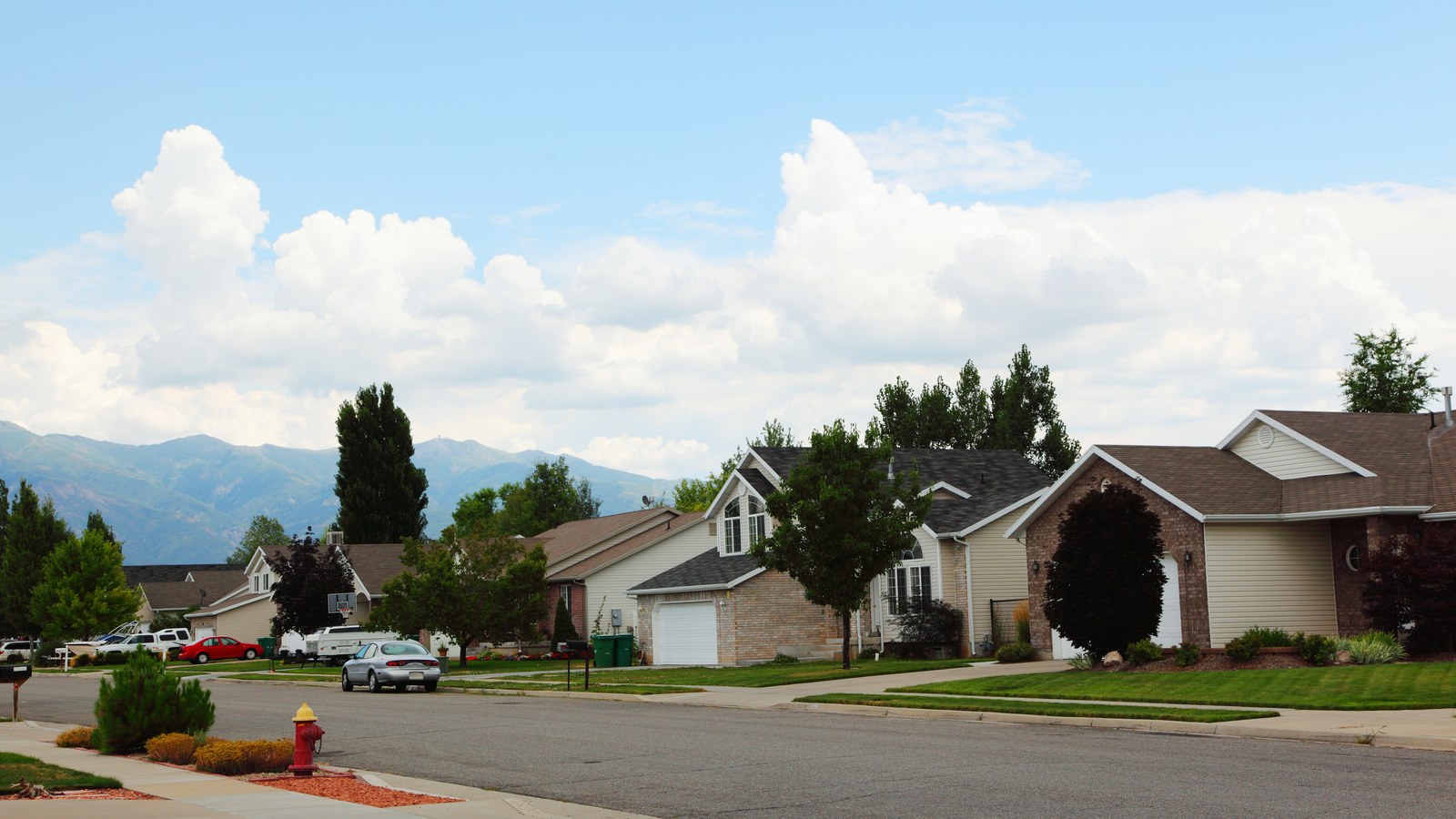
What Layton is actually like
Layton grew out of Kaysville as settlers moved onto the surrounding farmland beginning in the 1850s, and its independence from its parent city wasn't automatic: an 1894 territorial Supreme Court case, Linford v. Ellison, settled a boundary dispute in local residents' favor before Layton became its own unincorporated precinct in 1902 and an incorporated town in 1920. The city's name honors Christopher Layton, a Latter-day Saint settler and local church leader (Wikipedia).
Layton's defining transformation came in 1940, when the U.S. Army Air Corps established what's now Hill Air Force Base on farmland at the city's southern edge. The base didn't just add jobs -- it rewrote the town's population trajectory outright: Layton's 1950 census count of 3,456 residents was a 435% jump from just 646 people a decade earlier, converting what had been a farming community into a base town almost overnight (Wikipedia). Hill Air Force Base remains one of Utah's largest employers today and houses the Air Force's Ogden Air Logistics Complex, which handles depot-level maintenance work; confirm current civilian and military employment totals directly via the base's own public affairs office, since those figures shift with defense budgets and contract cycles.
Layton's population reached an estimated 85,308 as of July 1, 2025, making it Davis County's largest city, with a median household income of $102,480 (U.S. Census Bureau). Retail is a real economic pillar alongside the base: the city generated $1.34 billion in retail sales activity in 2014 alone, anchored by Layton Hills Mall on the city's north side (Wikipedia).
Home values in Layton
Zillow's Home Value Index for Layton was $527,627 as of July 31, 2026, up 2.8% year-over-year (Zillow). The Census Bureau's own five-year median for owner-occupied homes was $477,700 (2020-2024 American Community Survey), with a 72.5% owner-occupied rate. Utah's income tax is a flat 4.45% on all taxable income -- no brackets, same rate whether a household earns $40,000 or $400,000 -- and the state sales tax rate is 6.10% (including a mandatory 1.25% local add-on), with a statewide average combined rate of 7.19% once ordinary city, county, and special-district add-ons are folded in (Tax Foundation). The actual combined rate at a specific address runs higher than that statewide average in some cities, particularly resort communities that layer additional mass-transit, recreation, or transient-room taxes on top of the base rate -- confirm the exact combined rate for an address via the Utah State Tax Commission's own published rate charts rather than treating one statewide number as what shows up on a receipt. Property taxes work differently from most of the country: Utah's constitution exempts 45% of a primary, owner-occupied home's fair market value from taxation outright, so only 55% of assessed value is actually taxed -- an automatic, structural discount that doesn't depend on the owner's age or income, unlike many other states' homestead exemptions. That exemption, combined with strong assessed-value growth, keeps Utah's effective property tax rate low by national standards: Tax Foundation puts the statewide average at 0.48% of home value, while a second tally from PropertyTaxByState.com puts it slightly higher, at 0.52% -- both real, sourced figures reflecting ordinary variance in methodology rather than a contradiction (PropertyTaxByState.com). County-level effective rates in this cluster vary more than that statewide spread suggests: PropertyTaxByState.com puts Weber County at 0.60%, Davis County at 0.53%, Wasatch County at 0.46%, and Summit County -- Park City's county -- at just 0.35%, the lowest of the four and among the lowest in the state. Davis County's own effective property tax rate is close to the statewide average, at 0.53%.
Evenings and weekends
Layton doesn't have one walkable evening district the way Ogden's 25th Street does; what's here is spread along Main Street and the Heritage Park retail corridor rather than concentrated in a compact core. Roosters Brewing Co. (748 Heritage Park Boulevard), Davis County's first microbrewery, and Stockman's Bar (80 N Main Street), a sports bar near the historic Main Street core, are the closest things to evening anchors, both drawing a casual, local crowd rather than a late-night one. Main Street Arcade (1095 N Main Street) leans toward families. Layton FEST brings farmers, food trucks, and live entertainment to Commons Park on Friday evenings each July and August, the city's one recurring after-work gathering. For a denser night out, with more restaurants and bars within walking distance of each other, people typically drive the roughly 10 minutes south to Station Park, an outdoor retail-and-dining development in neighboring Farmington, or further to Ogden or Salt Lake City.
Getting around
FrontRunner's Layton stop is a genuine car-free commute option toward Salt Lake City and Ogden, but Walk Score's 57 for the area right around the station reflects a fairly car-oriented suburban layout even there. Most of Layton, especially residential neighborhoods away from Main Street and the FrontRunner corridor, requires a car for daily errands.
Layton FAQ
Is Layton a good commute to Salt Lake City?
FrontRunner's Layton station puts Salt Lake City within a one-seat commuter-rail ride along Utah Transit Authority's Ogden-to-Provo line, with fares capped at $9.70 one-way or a $198 monthly pass. By car it's roughly 25 miles south via I-15.
What is Hill Air Force Base's role in Layton's economy?
The base, established in 1940, transformed Layton almost overnight -- its 1950 population was a 435% jump from a decade earlier -- and remains one of Utah's largest employers today, housing the Air Force's Ogden Air Logistics Complex. Confirm current employment totals directly via the base's public affairs office.
Is Layton walkable?
The area right around the FrontRunner station and historic Main Street scores 57 on Walk Score ('Somewhat Walkable'), with a 38 Transit Score. Most of the rest of the city is built at a car-oriented suburban scale.
Does Layton have earthquake risk?
Yes -- Layton sits along the same Wasatch Front corridor as Ogden, within reach of the Wasatch Fault's mapped active segments. Research cited by Envision Utah and the Utah Division of Emergency Management puts the odds of a magnitude 6.75+ earthquake somewhere along the Wasatch Front at 43% over the next 50 years.
What hospital serves Layton?
The nearest major hospital is McKay-Dee Hospital in Ogden, a 310-bed, Level II trauma center roughly 10 miles north. Confirm the closest in-network emergency facility for a specific address.
How much do homes cost in Layton?
Zillow's Home Value Index for Layton was $527,627 as of July 31, 2026, up 2.8% year-over-year -- notably higher than Ogden's figure a few miles north, consistent with Davis County's generally higher household incomes.
Nearby alternatives*We're not ranking these — every place has real trade-offs, and which ones matter is up to you.
Ogden
About 20 minutes north via I-15 or the same FrontRunner line -- Weber County's seat, with McKay-Dee Hospital as Layton's own nearest major hospital.
Downtown & Central City
Roughly 25 miles south via I-15 or a FrontRunner ride -- the metro's primary job center.
Park City
A genuinely different market over the Wasatch Range, with resort-driven home values several times Layton's own -- a useful contrast for buyers weighing this CSA's Wasatch Front side against its mountain-resort side.
See what makes Salt Lake City stand out — verified, named medical, dietary, sports, and other specialty resources you won't find in most metros.
Explore Specialty Resources →