Town of Palm Beach, FL
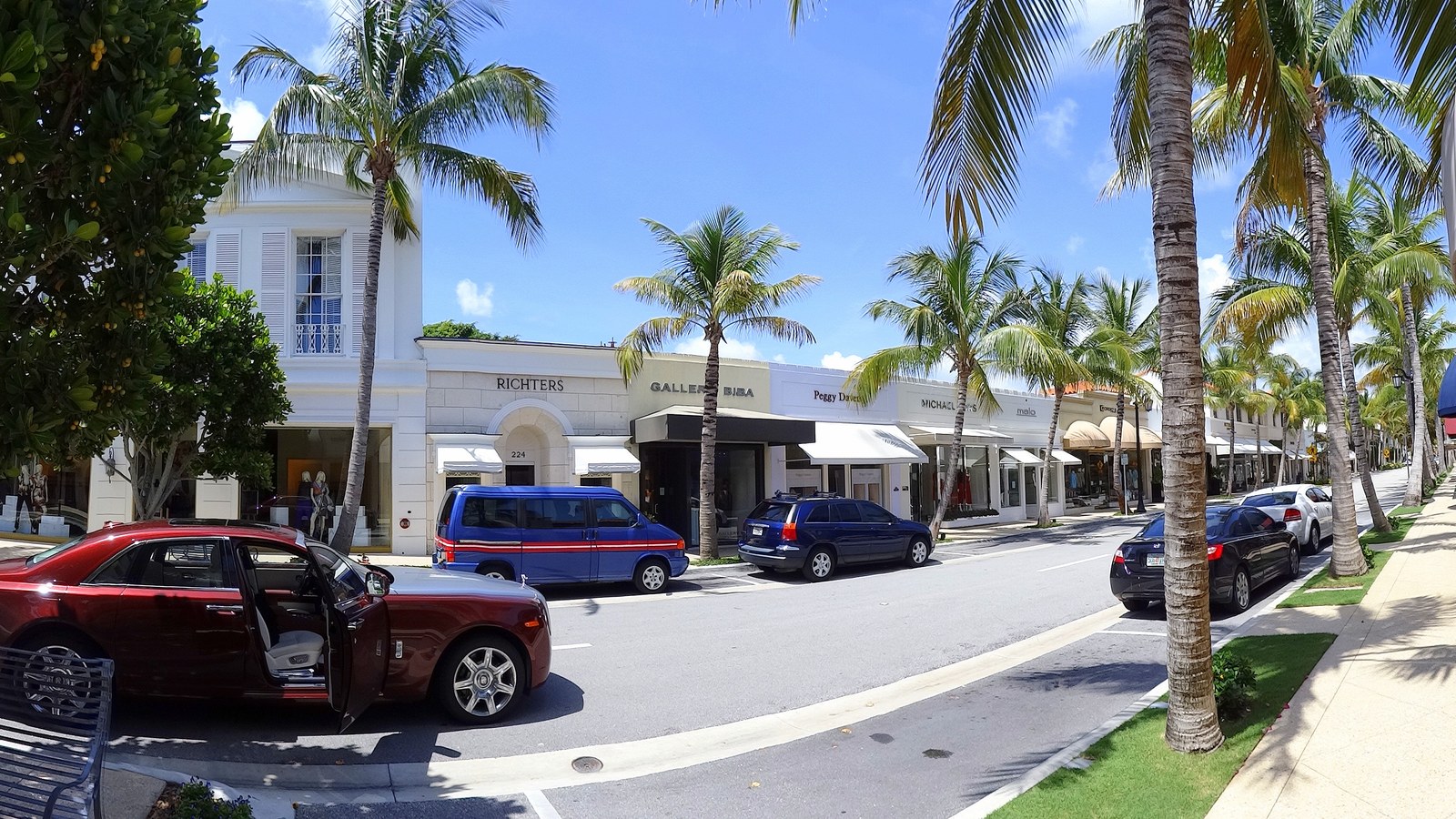

What Palm Beach is actually like
The Town of Palm Beach exists because Henry Flagler decided it should. The Standard Oil co-founder arrived on the barrier island in 1893, extended his Florida East Coast Railway down to it, and opened the Royal Poinciana Hotel on February 11, 1894 — at the time the largest wooden structure in the world — followed by The Breakers in 1896 and his own 75-room mansion, Whitehall, in 1902 as a wedding present for his third wife, Mary Lily Kenan. The town incorporated on April 17, 1911, and the island itself had already picked up its name decades earlier, when the wrecked Spanish barque Providencia spilled roughly 20,000 coconuts onto the beach in 1878, which local settlers planted along the shore (Wikipedia).
Worth Avenue, laid out in the 1910s and ’20s with architect Addison Mizner among its key designers, has anchored the town's retail identity as a luxury shopping street ever since, today home to roughly 250 boutiques, galleries, and restaurants (Wikipedia). Mar-a-Lago, built 1924–1927 for cereal heiress Marjorie Merriweather Post, passed to Donald Trump in 1985 for roughly $10 million, was converted into a private club by 1995, and has served as a presidential “Winter White House” during both of Trump's terms — it's the single most recognizable address in this entire market, a short distance from The Breakers' original 1896 site (rebuilt after two fires, most recently in 1926) and Flagler's own Whitehall, now the Flagler Museum.
Palm Beach's year-round population was an estimated 9,423 as of July 1, 2025 (U.S. Census Bureau), down from a peak of over 10,000 in 2000 — but that figure undersells the town for about half the year. During “the season,” roughly November through April, the population is commonly described as swelling toward 25,000 as seasonal residents return, the charity-gala and event calendar fills in, and traffic and restaurant demand rise together, before receding again every spring; anyone relocating here should plan around that swing rather than be surprised by it. Median household income runs $168,403 (2020–2024 estimate), among the highest of any place in this market (U.S. Census Bureau).
Home values in Palm Beach
Zillow's Home Value Index for Palm Beach was $2,134,843 as of July 31, 2026, up 0.2% year-over-year (Zillow) — by a wide margin the highest of any place in this market. Palm Beach County's combined 2025–26 millage runs about 18.72 mills, or roughly 1.87% of taxable value; Florida's standard $50,000 homestead exemption and the Save Our Homes 3%-per-year assessment cap both apply to a primary residence, though a new buyer's first-year bill is based on the home's market value at purchase, not a prior owner's capped assessment (Momentum). Palm Beach does have older co-op and condominium buildings, mostly on the island's south end, so Florida's post-Surfside condo law, SB 4-D, still applies there: buildings three stories or taller need a “milestone” structural inspection at 30 years old (25 within three miles of the coast, which covers the entire town) and a fully funded structural integrity reserve study (Florida DBPR). Homeowners insurance on a barrier island runs toward the higher end of a county range that's already described as running from the mid four figures inland to five figures or more for coastal, older, or luxury construction (Living in Palm Beach County FL).
Getting around
Worth Avenue and its immediate surrounding blocks are genuinely walkable -- Walk Score puts that core at 73 -- but the town-wide average of 21 is the more honest description of daily life here: this is an island of estate lots and private streets, not a walkable downtown, and there's no public transit on the island itself. Getting to West Palm Beach's Tri-Rail/Brightline station, CityPlace, or the airport means crossing one of the four Intracoastal bridges by car.
Palm Beach FAQ
Is Palm Beach walkable?
Worth Avenue's shopping district is genuinely walkable -- Walk Score rates that specific core 73 (“Very Walkable”) -- but the town overall averages just 21, reflecting the estate-lined residential streets that make up most of the island. There's no public transit on the island itself.
Does Palm Beach flood?
The entire town sits on a barrier island between the Atlantic and the Intracoastal, which puts more of it into FEMA's higher-risk AE and VE flood zones than a typical inland Palm Beach County address. Check FEMA's Flood Map Service Center for a specific address; the town is also roughly two-thirds through a $128 million project to bury its remaining overhead utility lines to reduce storm-related outages.
What is “the season” in Palm Beach?
Roughly November through April, when Palm Beach's population is commonly described as swelling from about 9,400 year-round residents toward 25,000, bringing a heavier social and charity-gala calendar, more traffic, and higher restaurant and rental demand. Things quiet down again by late spring.
Can the public visit Mar-a-Lago or Worth Avenue?
Mar-a-Lago is a private club, not open to the public. Worth Avenue is open, free, and one of the town's main public draws -- roughly 250 boutiques, galleries, and restaurants along a few blocks laid out in the 1910s and ’20s.
How much does it cost to buy in Palm Beach?
Zillow's Home Value Index for Palm Beach was $2,134,843 as of July 31, 2026 -- the highest of any place in this market by a wide margin. Median household income here runs $168,403, also among the highest in the market.
Who lives in Palm Beach?
About 9,423 people year-round as of a July 2025 Census Bureau estimate, a figure that swells toward 25,000 during the winter season. It's a small, wealthy, older-skewing population by national standards; confirm zoned schools and specific neighborhood character for any individual address before assuming this reflects every block.
Nearby alternatives*We're not ranking these — every place has real trade-offs, and which ones matter is up to you.
West Palm Beach
West Palm Beach's downtown sits directly across the Intracoastal via one of four bridges -- its Tri-Rail/Brightline station, CityPlace, and Good Samaritan Medical Center are the practical hub that doesn't fit on an island built out with estates.
Riviera Beach
A few miles up the coast on the mainland side of the Intracoastal -- a working-class port city built around the Port of Palm Beach and Singer Island's beaches, about as different from Worth Avenue's retail as the market gets.
Lake Worth Beach
A few miles south past South Palm Beach -- a smaller, artsier downtown along Lake and Lucerne avenues, at a fraction of Palm Beach's home values and a very different, more bohemian character.
See what makes West Palm Beach-Fort Pierce stand out — verified, named medical, dietary, sports, and other specialty resources you won't find in most metros.
Explore Specialty Resources →