Port St. Lucie, FL

What Port St. Lucie is actually like
Port St. Lucie exists because a Miami-based land-sales company decided it should. General Development Corporation (GDC) bought 40,000 acres along the North Fork of the St. Lucie River in 1958 for a reported $50 million, then built the area's first bridge across the river in 1959 to make the land reachable by car at all — before that, the site was mostly farmland and a single fishing camp. By February 1961 the young community had 250 homes, enough for state representative Rupert Smith to push a city charter through the Florida Legislature; Governor C. Farris Bryant signed House Bill No. 953 into law, and Port St. Lucie became a city on April 27, 1961 (Wikipedia).
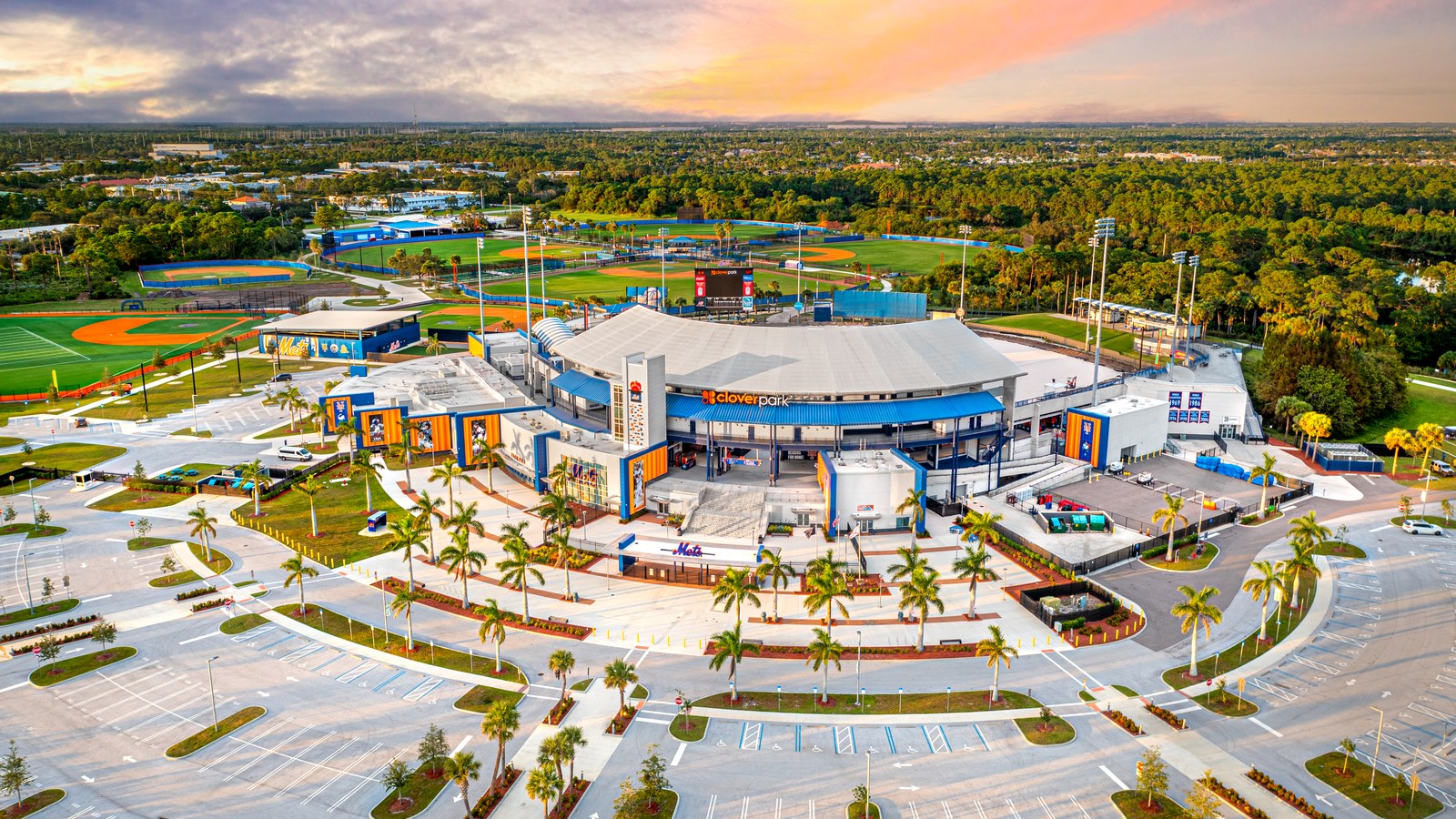
What followed is one of the starker population curves on the Treasure Coast: 330 residents in 1970, 14,690 by 1980, 55,866 by 1990, 88,769 by 2000, 164,603 by 2010, and 204,851 by the 2020 Census — a city built almost entirely from platted GDC-era subdivisions filling in decade after decade, long after most Florida cities' founding-era growth had leveled off. The city's other defining institution arrived later: Clover Park, owned by St. Lucie County and built for spring training, has hosted the New York Mets' spring camp for decades and remains an active MLB spring-training and Minor League Baseball facility today (MiLB.com).
Port St. Lucie's population was an estimated 268,062 as of July 1, 2025, up 30.9% since the 2020 Census (U.S. Census Bureau). By one analysis of the same Census data, it's been the fastest-growing city among America's 91 largest for five consecutive years, adding 9,131 people in the single year from July 2024 to July 2025 alone and 61,274 people — the fourth-largest numeric gain of any U.S. city — over the five years since 2020, driven mostly by people moving in from elsewhere rather than local births; St. Lucie County's net domestic migration over that period was 9,861 people. Real estate agents cite a new-construction median price around $400,000, against roughly $650,000 in Palm Beach County to the south, as a straightforward part of the draw (Miami REALTORS®).
Home values in Port St. Lucie
Zillow's Home Value Index for Port St. Lucie was $384,593 as of August 31, 2026, down 1.3% year-over-year (Zillow). St. Lucie County adopted a combined countywide millage of 21.79 mills for 2025 — the highest of any Florida county that year, against a statewide county average around 17.01 mills (Port St. Lucie Talks). The City of Port St. Lucie's own municipal component is a comparatively small slice of that total — 4.9750 mills for fiscal year 2025–26, cut further to 4.8750 mills for 2026–27, the city's 11th consecutive year of reducing its own rate (Hometown News) — meaning most of the county's high combined rate comes from the school, county, and special-district layers, not city hall. Florida's standard $50,000 homestead exemption and the Save Our Homes 3% assessment-growth cap both apply to a primary residence. A cost specific to Port St. Lucie's newer master-planned neighborhoods like Tradition and Wylder: most new construction here sits inside a Community Development District (CDD), a separate assessment layered onto the property tax bill that typically runs $1,500 to $3,500-plus a year — a bond portion that runs 20–30 years plus an ongoing operations-and-maintenance portion — so a newer home's real carrying cost can run meaningfully above what the millage rate alone suggests (Kim Spears Group).
Getting around
There's no single walkability number that describes Port St. Lucie honestly — it's a sprawling, car-built city with no historic walkable core, platted in subdivisions rather than a downtown grid, and no Tri-Rail or Brightline station of its own. St. Lucie County's Area Regional Transit runs fixed bus routes and on-demand microtransit, but daily life here assumes a car the way most of the Treasure Coast does.
Port St. Lucie FAQ
Is Port St. Lucie really the fastest-growing city in the U.S.?
By one analysis of Census Bureau data, it's led population growth among America's 91 largest cities for five consecutive years, adding 9,131 people in the year ending July 2025 and 61,274 people -- the fourth-largest numeric gain of any U.S. city -- over the five years since the 2020 Census.
Is Port St. Lucie walkable?
No, honestly -- it's a low-density, roughly 120-square-mile city built from platted subdivisions with no historic downtown grid, and there's no single Walk Score that describes it fairly. A car is the default here for nearly everyone.
What's the deal with the Mets and Clover Park?
Clover Park, owned by St. Lucie County, is the New York Mets' spring-training home and hosts Minor League Baseball; it's an active facility with games running through February and March every year.
Does Port St. Lucie flood?
The city was built by dredging and filling along the North Fork of the St. Lucie River and a wide canal network, and countywide NFIP data shows roughly 40% of St. Lucie County's flood-insurance policies fall into FEMA's higher-risk zones (AE, AO, VE, and AH combined). Check FEMA's Flood Map Service Center for a specific address.
Why is St. Lucie County's property tax rate the highest in Florida?
St. Lucie County's adopted 2025 combined millage of 21.79 mills was the highest of any Florida county that year. Port St. Lucie's own city government contributes a comparatively small share of that -- 4.9750 mills for 2025-26 -- so most of the high combined rate comes from school, county, and special-district levies rather than city hall.
Who lives in Port St. Lucie?
Port St. Lucie's population was an estimated 268,062 as of mid-2025, with a median household income of $80,648 -- meaningfully higher than neighboring Fort Pierce's -- and a population that's grown nearly 31% since the 2020 Census, almost entirely from people moving in rather than local births.
Nearby alternatives*We're not ranking these — every place has real trade-offs, and which ones matter is up to you.
Fort Pierce
A few miles north -- St. Lucie County's seat despite being the smaller of the two cities, with a much older, historic waterfront downtown rather than Port St. Lucie's newer, sprawling subdivisions.
Stuart
About 15 miles south, across the county line into Martin County -- a small, historic 19th-century railroad town of under 20,000 people, a sharp contrast to Port St. Lucie's scale and 1960s planned-subdivision origins.
West Palm Beach
About 49 miles south -- Palm Beach County's seat and largest job center, with the Tri-Rail/Brightline access and downtown density Port St. Lucie itself doesn't have.
See what makes West Palm Beach-Fort Pierce stand out — verified, named medical, dietary, sports, and other specialty resources you won't find in most metros.
Explore Specialty Resources →