Fort Pierce, FL

What Fort Pierce is actually like
Fort Pierce takes its name directly from a military outpost. During the Second Seminole War, soldiers under Lieutenant Colonel Benjamin Kendrick Pierce — brother of the future president Franklin Pierce — sailed down the Indian River in December 1837 and built a fort at the site, which operated from 1838 until 1842 (Britannica; Wikipedia). Permanent civilian settlement didn't take hold until the 1860s, and the town wasn't incorporated until 1901 — four years before St. Lucie County itself was carved out of southern Brevard County on May 24, 1905, with Fort Pierce named the new county's seat from day one, a status it's held ever since even as Port St. Lucie grew far larger.
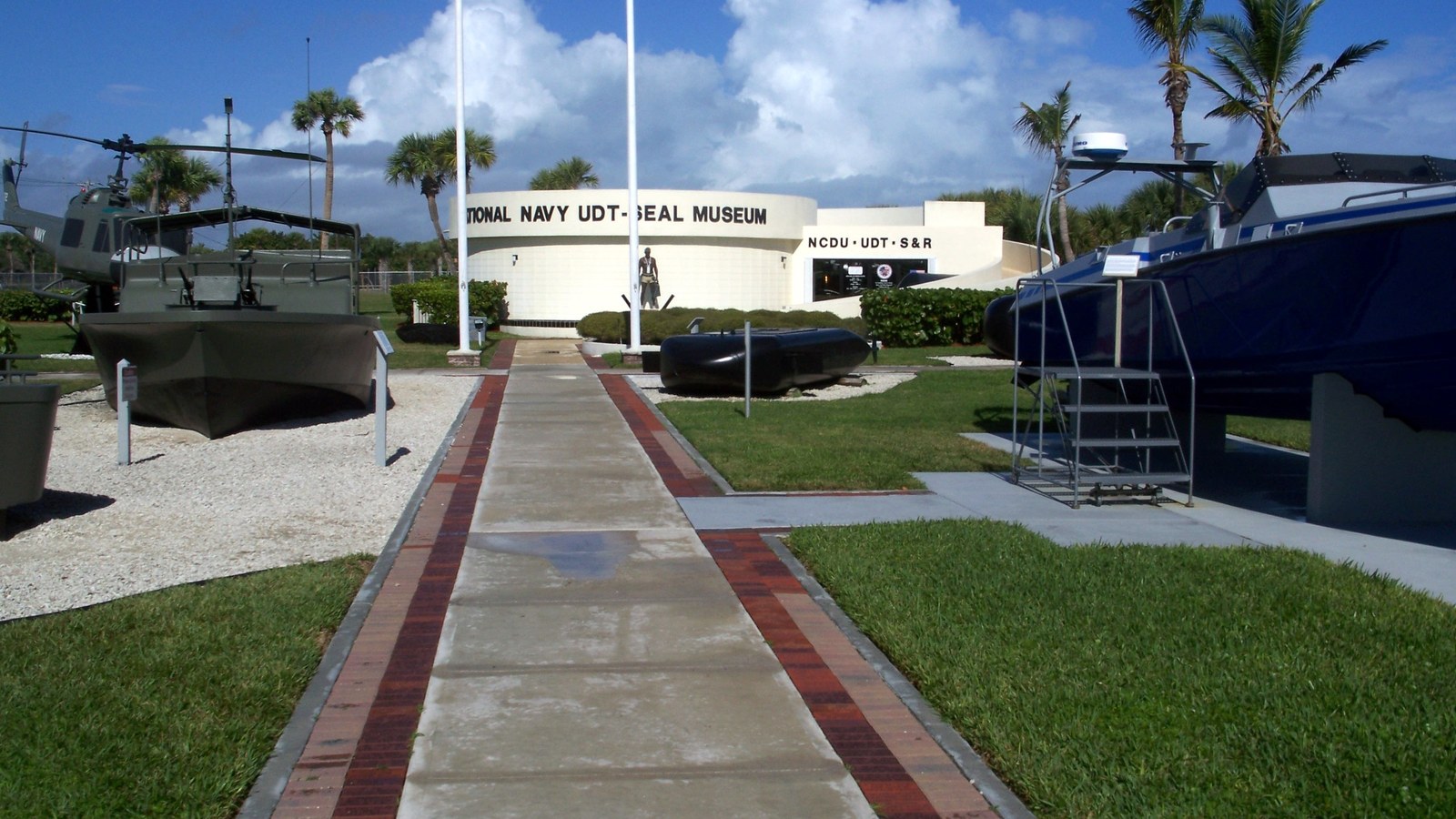
World War II gave Fort Pierce its most distinctive institution. The Navy trained its early Scouts and Raiders and Naval Combat Demolition Units — the direct predecessors of today's Navy SEALs — in and around Fort Pierce during the war, and in 1985 a group of former UDT “frogmen” led by Albert Stankie turned that history into a museum, first gathering personal artifacts in Stankie's own home before acquiring the site of a defunct local treasure museum. Congress formally recognized it as a National Museum in 2008, and it now displays vessels, SEAL Delivery Vehicles, and the actual lifeboat recovered from the 2009 Maersk Alabama piracy incident (Wikipedia). Downtown's own cultural anchor, the Sunrise Theatre, opened in 1923 as a Mediterranean Revival vaudeville house with the largest stage between Jacksonville and Miami; it closed in 1983, sat mostly dark for over a decade, and reopened fully in January 2006 after a long community restoration effort, today hosting touring acts from Willie Nelson to Diana Ross (Wikipedia).
Fort Pierce's population was an estimated 51,737 as of July 1, 2025, up 9.0% since the 2020 Census (U.S. Census Bureau) — roughly a fifth the size of neighboring Port St. Lucie, with a visibly different economic profile: median household income of $47,072 against Port St. Lucie's $80,648, and a poverty rate of 26.2%. It's also a more historically Black city than most of the Treasure Coast, at 43.6% of residents, with a downtown built around the Indian River Lagoon waterfront rather than Port St. Lucie's newer inland subdivisions.
Home values in Fort Pierce
Zillow's Home Value Index for Fort Pierce was $277,496 as of July 31, 2026, down 2.2% year-over-year (Zillow) — notably lower than Port St. Lucie's or Stuart's, consistent with an older housing stock and lower area incomes. St. Lucie County's combined millage was set at 21.79 mills countywide for 2025, the highest of any Florida county that year (Port St. Lucie Talks). The City of Fort Pierce's own municipal millage held flat at 6.9 mills for fiscal year 2025–26, per city Finance Director Johnna Morris (Hometown News). Florida's standard $50,000 homestead exemption and the Save Our Homes 3% assessment-growth cap both apply to a primary residence, though a new buyer's first-year bill is based on market value at purchase rather than a prior owner's capped assessment.
Getting around
Downtown's 70 Walk Score is a real number for the historic waterfront core around the Sunrise Theatre and the UDT-SEAL Museum, but it describes that specific district, not the city as a whole. There's no passenger rail stop in Fort Pierce; St. Lucie County's Area Regional Transit provides fixed bus routes and on-demand service, but a car remains the default for most residents.
Fort Pierce FAQ
Is Fort Pierce walkable?
Downtown, around the Sunrise Theatre and the waterfront, scores 70 on Walk Score (“Very Walkable”) with a 67 Bike Score -- a real, historic walkable core, though that's a specific downtown district rather than the whole city.
Does Fort Pierce flood?
Fort Pierce sits directly on the Indian River Lagoon and the Fort Pierce Inlet, and countywide St. Lucie County NFIP data shows roughly 40% of flood-insurance policies in FEMA's higher-risk zones combined. Downtown's lagoon-front parcels skew toward that higher-risk end more than the county's inland subdivisions. Check FEMA's Flood Map Service Center for a specific address.
What is the National Navy UDT-SEAL Museum?
It documents the history of the Navy's original World War II-era frogmen -- Scouts and Raiders and Naval Combat Demolition Units, trained in and around Fort Pierce -- through the modern Navy SEALs. Former UDT veterans founded it in 1985, and Congress recognized it as a National Museum in 2008.
Why is Fort Pierce the county seat instead of the larger Port St. Lucie?
Fort Pierce was already an incorporated town in 1901, four years before St. Lucie County was created in 1905 with Fort Pierce named its seat from the start. Port St. Lucie wasn't founded until 1961 and only overtook Fort Pierce in population decades later, but Florida county seats don't automatically move when a newer city grows larger.
What happened to the Sunrise Theatre?
Built in 1923 as a vaudeville and movie house with the largest stage between Jacksonville and Miami, the Sunrise closed in 1983 and sat mostly dark for over a decade before a community restoration effort brought it back fully in January 2006. It's now a National Register-listed performing arts venue.
Who lives in Fort Pierce?
Fort Pierce's population was an estimated 51,737 as of mid-2025, with a median household income of $47,072 and a poverty rate of 26.2% -- both notably different from neighboring Port St. Lucie's newer, higher-income growth. It's also a more historically Black city than most of the Treasure Coast, at 43.6% of residents.
Nearby alternatives*We're not ranking these — every place has real trade-offs, and which ones matter is up to you.
Port St Lucie
A few miles south -- St. Lucie County's much larger city (268,062 people to Fort Pierce's 51,737), built from 1960s planned subdivisions rather than Fort Pierce's older lagoon-front downtown, though Fort Pierce remains the county seat.
Vero Beach
About 12 miles north, across the county line into Indian River County -- a smaller, higher-income county seat of its own, with a comparably historic downtown but a very different economic profile.
Stuart
About 20 miles south, across the county line into Martin County -- another small historic county seat on the water, with its own 19th-century downtown and a similarly modest population.
See what makes West Palm Beach-Fort Pierce stand out — verified, named medical, dietary, sports, and other specialty resources you won't find in most metros.
Explore Specialty Resources →