Plaza District, Paseo & Asian District, Oklahoma City, OK
.jpg)
What Plaza District, Paseo & Asian District is actually like
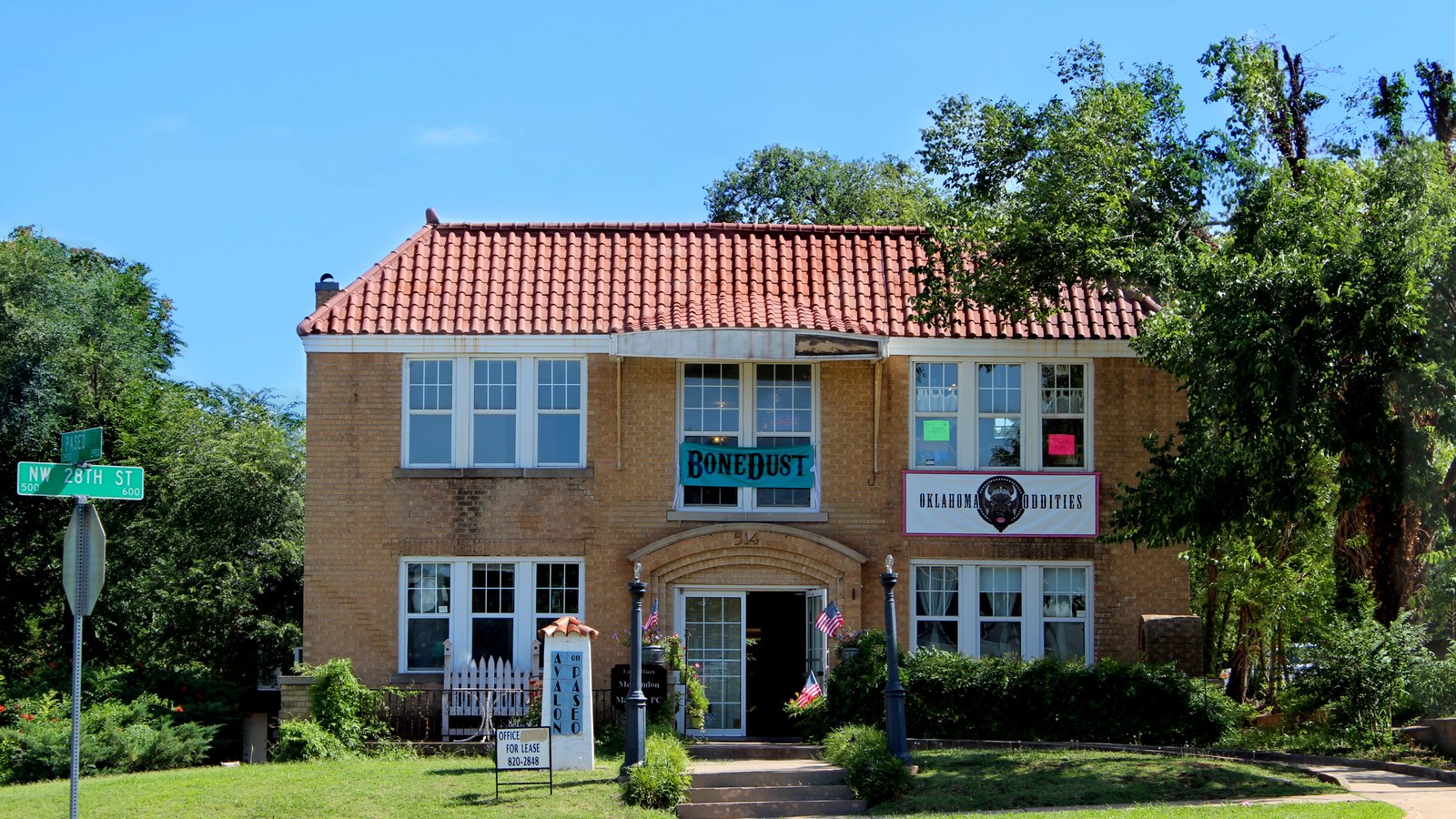
The Paseo was built in 1929 as the first shopping district north of downtown, and its original Spanish Revival stucco buildings and clay tile roofs still stand, earning the district a spot on the National Register of Historic Places. Artists found it almost immediately: the Elms, a home at 28th and Walker, operated as the city's first artist salon and gallery in the 1930s, followed by jazz clubs in the 1950s and a counter-culture arts scene in the 1960s (The Paseo Arts District). The Asian District's roots are newer and more specific: it formed starting in 1975, when thousands of Vietnamese refugees arrived in Oklahoma City after being staged at Fort Chaffee, Arkansas following the fall of Saigon, settling along Classen Boulevard between roughly NW 22nd and NW 32nd streets (Wikipedia).
The Paseo Arts Association formally organized in the 1970s to drive the district's revitalization, a process that predates most of Oklahoma City's other historic-district comebacks by decades. The Plaza District's own turnaround, a few blocks south along NW 16th Street, came later and started from a genuinely lower point -- the district's own account describes "intolerable crime and disrepair" before a grassroots revival that began around 2005 with living-room meetings, weekend weed-pulling, and a single street festival, and has since produced more than $17 million in investment and 45-plus businesses (Plaza District). Along Classen, the Milk Bottle Grocery building, built in 1910 and shaped like an actual milk bottle, unofficially marks the Asian District's entrance and has outlasted the underground "Chinatown" that once existed beneath downtown OKC, whose artifacts turned up during 1969 convention-center excavation (Wikipedia).
Today the Paseo alone holds more than 20 galleries and 80-plus working artists within walking distance of each other, anchored by First Friday Gallery Walk every month from 6 to 9pm (The Paseo Arts District). The Plaza District runs its own separate monthly event, LIVE on the Plaza, on the second Friday -- a distinction worth keeping straight, since the two districts sit only a few blocks apart but hold their signature walks on different nights (Plaza District). The Asian District remains the city's densest concentration of Vietnamese restaurants, grocers, and community institutions, including the Vietnamese-American Association and a Vietnamese Buddhist temple along Classen (Wikipedia).
Home values in Plaza District, Paseo & Asian District
Zillow's Home Value Index for ZIP 73106, covering the Paseo, Plaza District, and Asian District, was $192,652 as of May 31, 2026, down 4.9% year-over-year (Zillow) -- notably lower than Midtown/Automobile Alley's figure a few blocks southeast, consistent with this corridor's older, smaller housing stock and its identity as a commercial arts district more than a newly built residential one. Oklahoma's tax structure is genuinely different from the no-income-tax states this site has built in recently: the state levies a personal income tax with three brackets topping out at 4.5% (Tax Foundation), on top of which Oklahoma City's own combined sales tax runs 8.625% (4.5% state plus 4.125% city) (Avalara). Property taxes run the other direction: Oklahoma's statewide average effective property tax rate is 0.80% (26th-highest nationally), though Oklahoma County itself runs a bit above that state average at roughly 0.97%. The state's homestead exemption is modest by design -- a flat $1,000 reduction in a primary residence's assessed fair cash value, not a percentage or dollar-amount cap like Florida's -- with a separate, larger assessed-value freeze available to homeowners 65 or older or with a qualifying disability and household income under $25,000 (PropertyTaxByState.com). That risk shows up directly in insurance costs: Oklahoma homeowners insurance is projected to average around $5,858 a year in 2026, nearly double the roughly $3,057 national average, making Oklahoma the second most expensive state for homeowners insurance despite having no hurricane coastline at all. Hail, not tornado wind directly, is the bigger day-to-day claims driver -- Oklahoma saw 767 hailstorms in 2024, third-most nationally, and each one can generate roof claims across an entire metro area at once -- and the state's homeowners insurance rates rose 24% in 2025 alone as carriers priced that in (Live Insurance News).
Getting around
The Paseo's 86 Walk Score is a genuine, sourced number, not an outlier -- it's Walk Score's own pick for Oklahoma City's most walkable neighborhood, and the Asian District's Corridor South scores nearly as high at 83. That said, the Paseo, Plaza District, and Asian District are each their own compact, walkable pocket along a different street, several blocks apart from one another, and none of the three sit on the streetcar line -- moving between them, or reaching downtown, still means a car or an EMBARK bus.
Plaza District, Paseo & Asian District FAQ
Is the Paseo Arts District walkable?
Yes, genuinely -- Walk Score's own site names it Oklahoma City's most walkable neighborhood outright, at an 86 Walk Score, 30 Transit Score, and 70 Bike Score. The nearby Asian District's "Corridor South" section scores nearly as high, at 83.
What's the difference between the Paseo's First Friday and the Plaza District's LIVE on the Plaza?
They're two separate events in two separate districts a few blocks apart: the Paseo Arts District holds First Friday Gallery Walk on the first Friday of the month, and the Plaza District holds its own LIVE on the Plaza block party on the second Friday. Confirm which Friday before planning a visit around either one.
How did the Asian District form?
Vietnamese refugees began settling along Classen Boulevard starting in 1975, after being staged at Fort Chaffee, Arkansas following the fall of Saigon. The district, sometimes called Little Saigon, remains the city's densest concentration of Vietnamese restaurants, grocers, and community institutions.
What is the Gold Dome?
The Gold Dome at NW 23rd and Classen is a 1958 geodesic-dome building, originally Citizens State Bank -- only the fifth geodesic dome built anywhere in the world and the first ever used as a bank. It sits right at the seam between the Asian District and the Uptown 23rd corridor.
Does this area flood?
No -- the Paseo, Plaza District, and Asian District all sit on higher ground well north of the Oklahoma River's channelized path, so direct river flood exposure is minimal. The dominant severe-weather risk here, as across the metro, is tornado season, which runs roughly April through June.
How much do homes cost here?
Zillow's Home Value Index for the ZIP covering this corridor was $192,652 as of May 31, 2026, down 4.9% year-over-year -- notably lower than Midtown/Automobile Alley a few blocks southeast, reflecting an older, smaller housing stock in a district built primarily as a commercial arts corridor.
Nearby alternatives*We're not ranking these — every place has real trade-offs, and which ones matter is up to you.
Uptown 23Rd Western Avenue
The Gold Dome sits right at the boundary -- NW 23rd Street continues west into Uptown 23rd's own shopping and dining strip, a natural walk or short drive from the Asian District.
Midtown Automobile Alley
A couple of miles southeast via Walker Avenue or Classen -- denser, pricier, and closer to downtown, with the OKC Streetcar's Midtown stop this corridor itself lacks.
Bricktown Downtown
A few miles south -- the metro's civic and entertainment anchor, with home values and foot traffic well above this arts-district corridor's own.
Compare Plaza District, Paseo & Asian District to these side by side →
See what makes Oklahoma City stand out — verified, named medical, dietary, sports, and other specialty resources you won't find in most metros.
Explore Specialty Resources →