Bricktown & Downtown, Oklahoma City, OK

What Bricktown & Downtown is actually like
Downtown Oklahoma City exists because of a single afternoon: the Land Run of April 22, 1889, when an estimated 10,000 people staked claims and a tent city of that same size stood by nightfall. Bricktown specifically grew up a few years later as a rail-served warehouse district east of the original townsite, with the first one- and two-story brick structures going up between 1898 and 1903 as four separate railroads ran freight operations through the area; larger and taller brick buildings followed through 1930. The district also carries real civil-rights history: it was home to the Black Dispatch, Oklahoma City's first Black newspaper, at 228 E. First Street, and to one of the earliest local NAACP chapters in the state (Wikipedia).
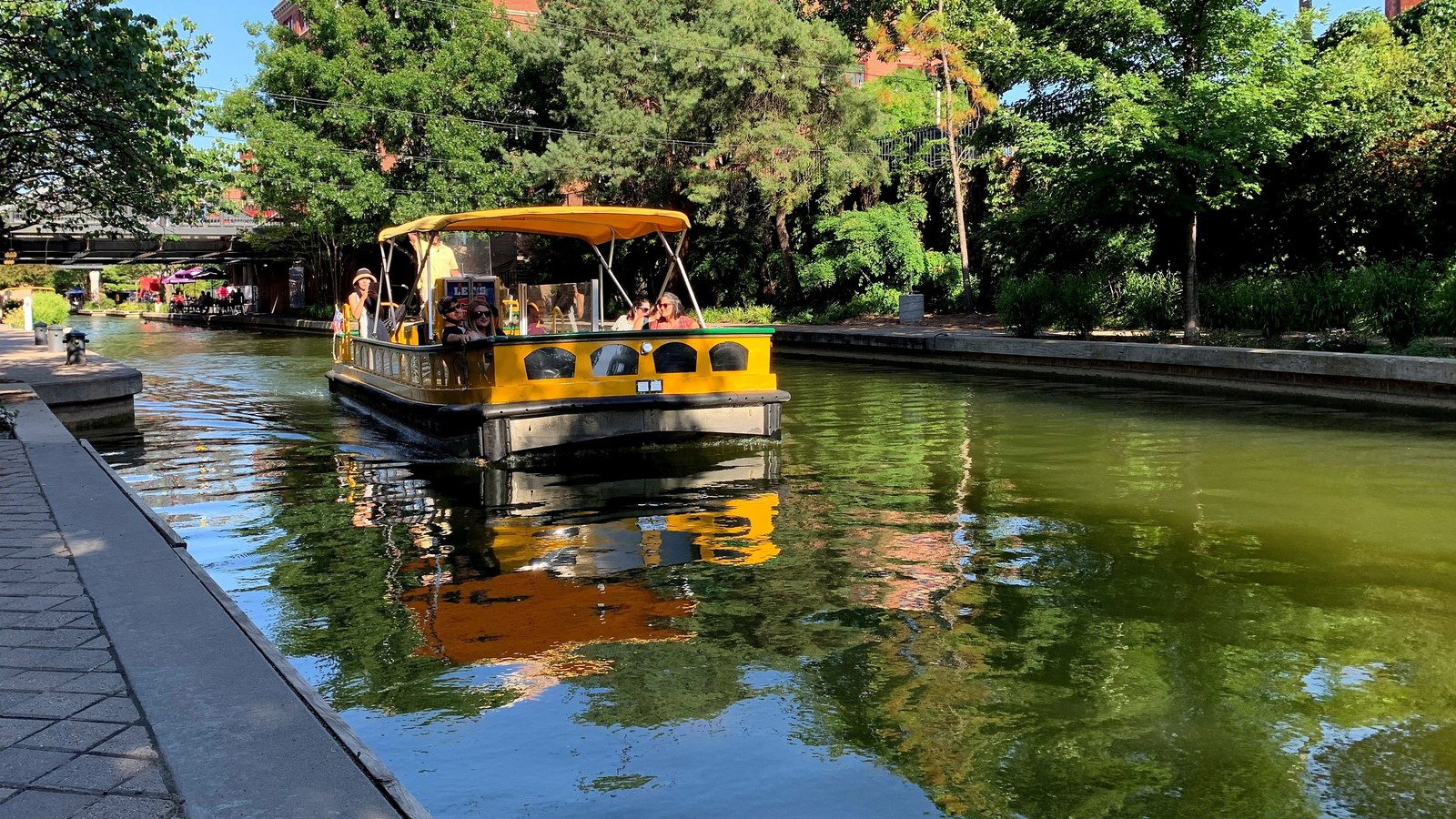
Freight moved to trucks and highways after World War II, and by 1980 Bricktown had become a cluster of largely abandoned warehouses. The turnaround started with a single vote: in December 1993, Oklahoma City voters approved a temporary five-year, one-cent sales tax -- the original Metropolitan Area Projects (MAPS) program -- by a narrow 54.58% margin, raising roughly $310 million in direct tax revenue plus $52 million in interest toward a $350 million program. MAPS funded nine projects citywide, including the Chickasaw Bricktown Ballpark (opened 1998), the mile-long Bricktown Canal (opened July 1999), the arena now known as Paycom Center, and a renovated Civic Center Music Hall; the original program is credited with roughly $5 billion in economic impact over the following two decades (Wikipedia).
Three more MAPS rounds followed the same one-cent-sales-tax model -- MAPS for Kids ($700 million, approved 2001), MAPS 3 ($777 million, approved December 2009, which funded Scissortail Park and the OKC Streetcar), and MAPS 4 ($978 million, approved with 71.71% support in December 2019) -- turning a temporary tax mechanism into the city's standing playbook for downtown reinvestment. Oklahoma City's population reached an estimated 719,849 as of July 1, 2025 (U.S. Census Bureau), and downtown's own newest civic landmark arrived in June 2025, when the Thunder beat the Indiana Pacers in seven games to win the franchise's first NBA championship since moving to Oklahoma City in 2008 -- and the first major professional sports title for the state of Oklahoma, period -- with an estimated 500,000 people turning out for the victory parade outside Paycom Center two days later (Wikipedia).
Home values in Bricktown & Downtown
Zillow's Home Value Index for ZIP 73102, covering downtown and Bricktown, was $302,397 as of August 31, 2026, down 5.6% year-over-year (Zillow). Redfin's own Bricktown-specific neighborhood page shows a much higher $610,000 median sale price, up 45.2% year-over-year, but that figure is dated to the three months ending August 2024 on Redfin's own page -- a small, condo-heavy market where a handful of sales can swing the median sharply, and one Redfin's neighborhood-level tool hadn't refreshed as recently as its own ZIP-level data at the time of this research (Redfin). Oklahoma's tax structure is genuinely different from the no-income-tax states this site has built in recently: the state levies a personal income tax with three brackets topping out at 4.5% (Tax Foundation), on top of which Oklahoma City's own combined sales tax runs 8.625% (4.5% state plus 4.125% city) (Avalara). Property taxes run the other direction: Oklahoma's statewide average effective property tax rate is 0.80% (26th-highest nationally), though Oklahoma County itself runs a bit above that state average at roughly 0.97%. The state's homestead exemption is modest by design -- a flat $1,000 reduction in a primary residence's assessed fair cash value, not a percentage or dollar-amount cap like Florida's -- with a separate, larger assessed-value freeze available to homeowners 65 or older or with a qualifying disability and household income under $25,000 (PropertyTaxByState.com). Downtown's employment base still carries real energy-sector weight: Devon Energy's headquarters tower -- at 844 feet and 50 stories, Oklahoma's tallest building, completed in October 2012 at a cost of roughly $708-750 million -- anchors the district alongside fellow Oklahoma City-headquartered producers Continental Resources and Chesapeake Energy, a real but no longer singular driver of downtown's job base given how much the broader economy has diversified since MAPS-era revival began (Wikipedia). That risk shows up directly in insurance costs: Oklahoma homeowners insurance is projected to average around $5,858 a year in 2026, nearly double the roughly $3,057 national average, making Oklahoma the second most expensive state for homeowners insurance despite having no hurricane coastline at all. Hail, not tornado wind directly, is the bigger day-to-day claims driver -- Oklahoma saw 767 hailstorms in 2024, third-most nationally, and each one can generate roof claims across an entire metro area at once -- and the state's homeowners insurance rates rose 24% in 2025 alone as carriers priced that in (Live Insurance News).
Getting around
Downtown and Bricktown are genuinely walkable in a way the rest of the city isn't -- the 800 N Oklahoma Avenue score of 73 is real, and most of Bricktown's canal-front restaurants, the ballpark, and Paycom Center sit within a few blocks of each other. The free OKC Streetcar extends that on-foot radius out to Midtown and Automobile Alley without a car. Beyond that loop, though, Oklahoma City's citywide 34 Walk Score is the honest baseline: a car (or EMBARK bus) is standard for anything outside downtown's core.
Bricktown & Downtown FAQ
Is downtown Oklahoma City walkable?
The core around Bricktown and the Central Business District is -- a location near 800 N Oklahoma Avenue scores 73 ("Very Walkable") on Walk Score, well above Oklahoma City's citywide 34. The free OKC Streetcar extends that on-foot radius to Midtown and Automobile Alley, but the rest of the city is car-dependent.
Does downtown Oklahoma City flood?
The Oklahoma River along downtown's edge is a channelized, dammed waterway rebuilt for flood control and recreation between 1999 and 2004, not an open floodplain. The more relevant severe-weather risk here, as across the metro, is tornado season, which runs roughly April through June.
Did the Thunder really win their first championship in 2025?
Yes -- the Oklahoma City Thunder beat the Indiana Pacers in seven games in June 2025 to win the franchise's first NBA title since relocating to Oklahoma City in 2008, and the first major professional sports championship for the state of Oklahoma. An estimated 500,000 people attended the victory parade outside Paycom Center.
What is MAPS, and why does it keep coming up in Oklahoma City?
MAPS (Metropolitan Area Projects) is a recurring city program that funds specific capital projects through a temporary, voter-approved sales tax. The original 1993 MAPS built the Bricktown Canal, ballpark, and arena; three later rounds -- MAPS for Kids, MAPS 3, and MAPS 4 -- funded schools, Scissortail Park, the streetcar, and a further $978 million in projects approved in 2019.
What happened to the arena's name, and is a new one coming?
The arena opened as the Ford Center in 2002, was renamed Paycom Center in 2021 under a 15-year naming-rights deal, and hosted the 2025 NBA Finals under that name. Oklahoma City voters approved funding for a new downtown arena in December 2023, expected to open by the 2029-30 season, with the Thunder committed to staying in the city for 25 years.
Who lives in downtown and Bricktown?
Downtown anchors a city of an estimated 719,849 residents as of mid-2025, with a median household income of $68,656 citywide. Bricktown and downtown's own housing stock is smaller and condo-heavy, skewing toward the district's role as the metro's job and entertainment center rather than a large residential population.
Nearby alternatives*We're not ranking these — every place has real trade-offs, and which ones matter is up to you.
Midtown Automobile Alley
Immediately north via the OKC Streetcar's free downtown loop -- a denser, more residential district of renovated auto dealerships and restaurants a fraction of a mile from Bricktown's canal.
Capitol Hill South Okc
The Oklahoma State Capitol itself sits about 2 miles northeast of downtown, while Historic Capitol Hill's Hispanic commercial district is about 3 miles south across the Oklahoma River -- two very different places sharing one name, covered together in that guide.
Plaza Paseo Asian District
A few miles north via Classen Boulevard -- OKC's arts-and-culture corridor, considerably lower-priced and lower-key than downtown's ballpark-and-arena entertainment district.
See what makes Oklahoma City stand out — verified, named medical, dietary, sports, and other specialty resources you won't find in most metros.
Explore Specialty Resources →