Capitol Hill & South OKC, Oklahoma City, OK
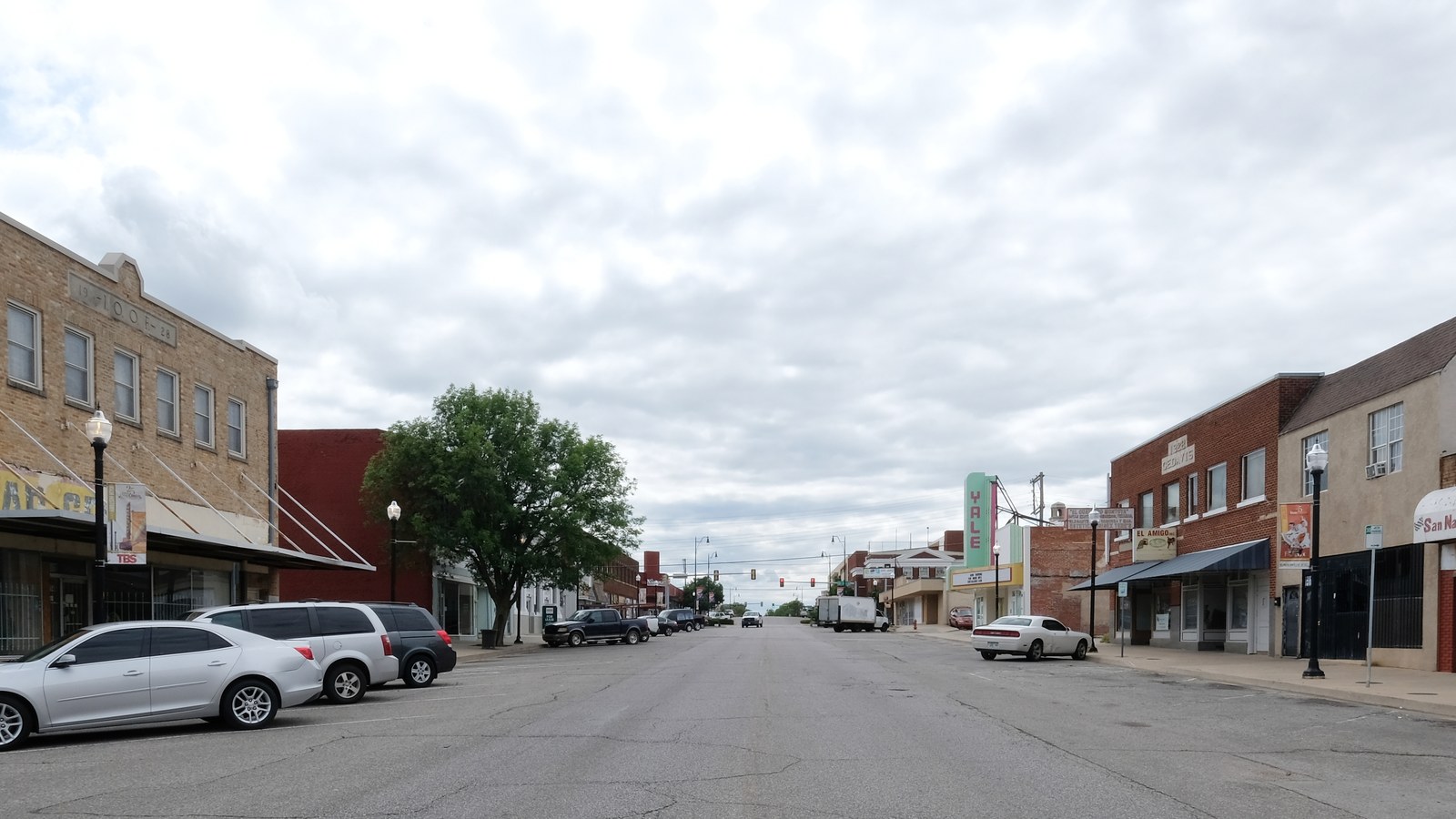

What Capitol Hill & South OKC is actually like
This guide covers two places that share a name but not a location. The Oklahoma State Capitol itself -- groundbreaking July 20, 1914, completed June 30, 1917, designed by Solomon Andrew Layton in the Renaissance Revival and Neoclassical style -- sits at 2300 N Lincoln Blvd., about 2 miles northeast of downtown, and is the only state capitol grounds in the country with active oil rigs still pumping on-site; the building's signature dome wasn't actually built until 2001-2002, nearly a century after the original design allowed for one (Wikipedia). Historic Capitol Hill, the actual neighborhood, sits about 3 miles south, across the river -- founded in 1900 when B.R. Harrington bought 160 acres and platted the land hoping it would become the state's real capital, a bet that never paid off, though the name stuck (Metropolitan Library System).
Capitol Hill incorporated as its own separate city on May 3, 1904, and stayed independent until December 6, 1909, when Oklahoma City annexed it by a vote of 1,407 to 188 -- though only Oklahoma City residents, not Capitol Hill's own, were allowed to vote on the measure -- in exchange for over $12,000 (Calle Dos Cinco). The district grew through Morris Packing Company's stockyards (1910) and the 1928 discovery of oil, including the dramatic "Wild Mary Sudik" well, then declined along with the rest of the inner city by mid-century. Its modern identity as a Hispanic commercial district traces to a 1997 National Main Street designation and that same year's launch of Fiestas de las Americas, an annual Hispanic Heritage Month festival that now draws over 20,000 visitors (Calle Dos Cinco).
Calle Dos Cinco, the nonprofit organized around SW 25th Street's commercial core, puts the surrounding residential area at 74% Hispanic origin and 5% Native American (Calle Dos Cinco) -- a genuinely different demographic profile from the districts north of the river covered elsewhere in this cluster, exactly the distinction the Metropolitan Library System's own essay points to in calling this area "South of the River" as its own identifiable community. Groundbreaking on Plaza Calle Dos Cinco, a new multicultural public plaza along the corridor, took place in January 2025, part of continued investment in the district's commercial core (Hoodline).
Home values in Capitol Hill & South OKC
Redfin's median sale price for ZIP 73109, covering Historic Capitol Hill and much of South OKC, was $128,944 over the three months ending August 2026, up 1.9% year-over-year (Redfin) -- well below every other district in this cluster, most sharply against Midtown/Automobile Alley's $448,806 a few miles north, and a real illustration of the price-point gap between north-of-the-river and south-of-the-river Oklahoma City. A separate, much smaller-sample census-tract breakdown of the historic commercial core itself put the median detached-home value even lower, at $50,694, drawn from a tract of just 232 residents -- a figure to read as descriptive of that specific historic block cluster, not the broader ZIP (City-Data.com). Oklahoma's tax structure is genuinely different from the no-income-tax states this site has built in recently: the state levies a personal income tax with three brackets topping out at 4.5% (Tax Foundation), on top of which Oklahoma City's own combined sales tax runs 8.625% (4.5% state plus 4.125% city) (Avalara). Property taxes run the other direction: Oklahoma's statewide average effective property tax rate is 0.80% (26th-highest nationally), though Oklahoma County itself runs a bit above that state average at roughly 0.97%. The state's homestead exemption is modest by design -- a flat $1,000 reduction in a primary residence's assessed fair cash value, not a percentage or dollar-amount cap like Florida's -- with a separate, larger assessed-value freeze available to homeowners 65 or older or with a qualifying disability and household income under $25,000 (PropertyTaxByState.com). That risk shows up directly in insurance costs: Oklahoma homeowners insurance is projected to average around $5,858 a year in 2026, nearly double the roughly $3,057 national average, making Oklahoma the second most expensive state for homeowners insurance despite having no hurricane coastline at all. Hail, not tornado wind directly, is the bigger day-to-day claims driver -- Oklahoma saw 767 hailstorms in 2024, third-most nationally, and each one can generate roof claims across an entire metro area at once -- and the state's homeowners insurance rates rose 24% in 2025 alone as carriers priced that in (Live Insurance News).
Getting around
Central Capitol Hill's 70 Walk Score is a real, sourced number and a genuine standout for this part of the city -- most errands along the historic SW 25th Street corridor can be done on foot. That walkable core is compact, though, and South OKC more broadly, like most of the metro, requires a car or an EMBARK bus for anything beyond it; the OKC Streetcar doesn't reach this far south.
Capitol Hill & South OKC FAQ
Why is it called Capitol Hill if the State Capitol isn't there?
The neighborhood's developer, B.R. Harrington, platted the land in 1900 hoping it would become the actual site of Oklahoma's state capital. That bet never paid off -- the real Oklahoma State Capitol was built starting in 1914 about two miles northeast, across downtown -- but the Capitol Hill name stuck anyway.
What is Calle Dos Cinco?
Calle Dos Cinco is the nonprofit organized around Historic Capitol Hill's SW 25th Street commercial corridor, working to preserve and promote the district as a Hispanic-culture business district. It runs the annual Fiestas de las Americas festival and opened a new public plaza, Plaza Calle Dos Cinco, in 2025.
Is Capitol Hill walkable?
Yes, relatively -- Walk Score's own "Central Capitol Hill" page scores the historic core 70 ("Most errands can be accomplished on foot"), the 10th-most-walkable neighborhood Walk Score has ranked anywhere in Oklahoma City, well above the citywide baseline of 34.
Who lives in Capitol Hill/South OKC?
The area is demographically distinct from the rest of Oklahoma City: Calle Dos Cinco's own figures put the surrounding district at 74% Hispanic origin and 5% Native American, and home values here run well below the citywide average -- a genuinely different market from the districts north of the river.
Does Capitol Hill flood?
Historic Capitol Hill sits on the Oklahoma River's south bank, historically known locally as "South of the River," but the river itself is a dammed, engineered channel rebuilt for flood control between 1999 and 2004, not an active floodplain threatening the commercial core several blocks from the water. Tornado season, roughly April through June, is the more relevant severe-weather risk here, as across the metro.
How much do homes cost in Capitol Hill/South OKC?
Redfin's median sale price for the ZIP covering Historic Capitol Hill was $128,944 over the three months ending August 2026 -- well below every other district in this part of Oklahoma City, and a real illustration of the price gap between north- and south-of-the-river neighborhoods.
Nearby alternatives*We're not ranking these — every place has real trade-offs, and which ones matter is up to you.
Bricktown Downtown
About 3 miles north across the Oklahoma River -- the metro's civic and entertainment anchor, and, separately, the direction of the actual State Capitol building itself, 2 miles northeast of downtown.
Midtown Automobile Alley
A few miles north -- considerably higher-priced, with a $448,806 median sale price against Capitol Hill's $128,944 over the same recent window.
Plaza Paseo Asian District
Several miles north via Robinson or Western Avenue -- OKC's arts corridor, sharing Capitol Hill's identity as a historic, culturally distinct commercial district even as the two sit on opposite sides of the city.
See what makes Oklahoma City stand out — verified, named medical, dietary, sports, and other specialty resources you won't find in most metros.
Explore Specialty Resources →