Boulder City, NV
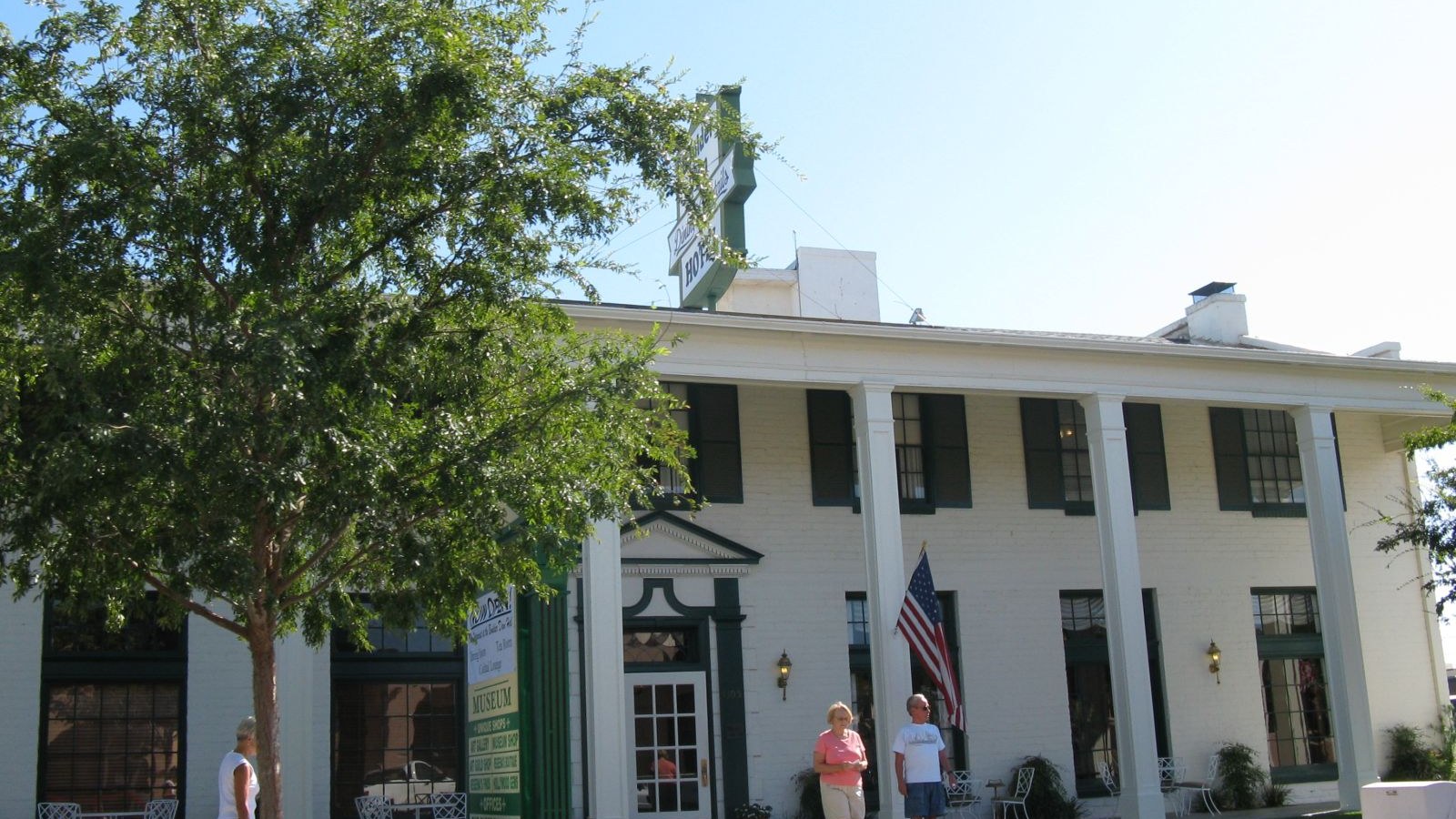

What Boulder City is actually like
Boulder City was built in 1931 by the federal Bureau of Reclamation and its dam contractor, Six Companies, Inc., to house the workforce constructing Hoover Dam. Urban planner Saco Rienk de Boer laid out the townsite, and for its first three decades the city was run directly by the federal government -- gambling and alcohol were barred from the start, part of the strict company-town rules imposed on the dam workforce. Boulder City became self-governing when it formally incorporated on January 4, 1960, and its new city charter carried the gaming ban forward, which is why it remains the only incorporated city in Nevada that prohibits casinos by law.
Today Boulder City is a small, slow-growth city of about 14,885 residents per the 2020 Census, with a noticeably older population than the rest of the valley -- median age 54.3, with roughly three in ten residents 65 or older. Its historic downtown, centered on Nevada Way and Arizona Street, still carries 1930s federal-townsite architecture, including the 1933 Boulder Dam Hotel, now home to a small museum. Housing stock ranges from modest older homes near downtown to newer subdivisions on the city's edges, but growth is tightly constrained: Boulder City is largely hemmed in by Lake Mead National Recreation Area and other federal land, and the city has long capped how much new development it allows each year.
That land-locked footprint, combined with the no-gaming charter, gives Boulder City a different feel from the rest of the Las Vegas Valley -- closer to a small Western railroad town than a Vegas suburb. It functions as the practical gateway to Hoover Dam and Lake Mead, and tourism tied to both is central to its economy, alongside a retiree and remote-work population drawn by the quieter, dam-adjacent setting and cooler elevation.
Home values in Boulder City
Zillow's Home Value Index put the typical Boulder City home value at $473,568 as of July 31, 2026, down 1.8% year-over-year.
See what makes Las Vegas stand out — verified, named medical, dietary, sports, and other specialty resources you won't find in most metros.
Explore Specialty Resources →Boulder City FAQ
Why doesn't Boulder City have any casinos?
Its city charter bans gambling outright. The prohibition dates to the town's 1931 origins as a federally run construction camp for Hoover Dam workers, where gambling and alcohol were barred by the Bureau of Reclamation; when Boulder City incorporated as a self-governing city on January 4, 1960, that ban was written into the new charter, and it has stayed in place ever since -- making Boulder City the only incorporated city in Nevada that prohibits casino gaming.
How far is Boulder City from the Las Vegas Strip?
About 26 miles, typically a 35-to-45-minute drive via US-93 and I-215 or Boulder Highway. There's no rail or Strip-focused transit service, so it's a car trip either way -- one of the longer commutes of any community in the Las Vegas metro.
Is Boulder City actually close to Hoover Dam?
Yes -- it's the closest town to the dam, a short drive out US-93, and it exists specifically because the dam was built there starting in 1931. Guided Hoover Dam tours and the dam's visitor center are a routine day trip for residents.
Does Boulder City have its own hospital?
Yes. Boulder City Hospital, at 901 Adams Blvd, traces back to a 20-bed hospital that dam contractor Six Companies opened in 1931 during Hoover Dam's construction. The current facility opened in 1973 and today runs an emergency department, a helipad, and roughly 80 combined acute and long-term care beds, with a teaching affiliation to the UNLV School of Medicine.
Why does Boulder City feel cooler than the rest of the Las Vegas Valley?
Elevation. At roughly 2,510 feet, Boulder City sits noticeably higher than the valley floor, which brings its mean summer high down to about 101.6°F in July and its mean winter low to about 38.6°F in January -- several degrees milder than Las Vegas proper.
Is Boulder City on NV Energy like the rest of the valley?
No. Boulder City owns and runs its own municipal electric utility, one of the few in the valley outside NV Energy's territory, supplied by an allocation of Hoover Dam hydropower distributed through the Silver State Energy Association.