Sugar House, Salt Lake City, UT
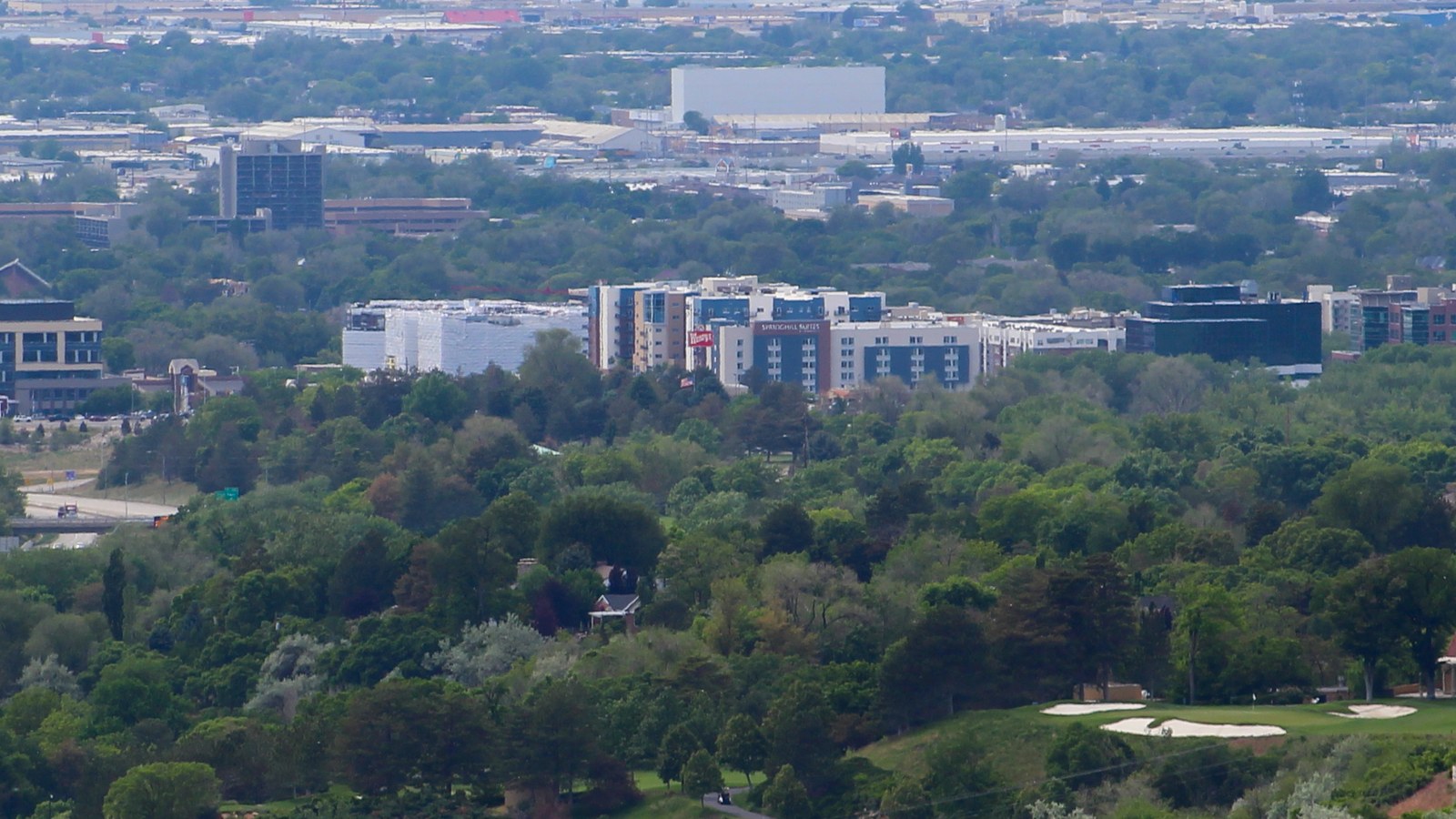

What Sugar House is actually like
Sugar House traces its name to 1853, six years after Brigham Young's party reached the valley, when the Deseret Manufacturing Company set up a sugar-beet test factory in a former blacksmith shop near what's now the neighborhood's commercial core; Margaret McMeans Smoot, wife of early Salt Lake City mayor Abraham O. Smoot, is credited with suggesting the name, though the factory itself never actually produced usable sugar (Wikipedia). The district's other defining early institution sat where its central park sits today: Utah's first territorial prison operated on the site from 1855 until March 12, 1951, when the state relocated the penitentiary to Draper (Sugar House Park).
After the prison closed, the state sold the roughly 575-acre site to Salt Lake City and Salt Lake County for $225,000 between 1951 and 1953, and in July 1957 the two governments placed it in trust with the newly formed Sugar House Park Authority for a 99-year term running through 2055 -- the origin of today's Sugar House Park and neighboring Highland High School (Sugar House Park). Transit shaped the district twice: an early-20th-century streetcar network first made Sugar House a commuter suburb, and after a $40-50 million, city-led project first proposed around 2006, the S-Line streetcar began service on December 8, 2013, running along the historic Denver & Rio Grande Western rail corridor and connecting Sugar House directly to the TRAX system (Wikipedia).
Sugar House counts an estimated 31,419 residents according to Walk Score's own neighborhood tally, making it the 11th-most-walkable neighborhood in Salt Lake City (Walk Score). The park at its center still does double duty as the neighborhood's stormwater infrastructure: it functions as a temporary detention basin for Parleys Creek, and when officials close it to vehicles during spring snowmelt releases from Mountain Dell and Little Dell reservoirs, that's the system working as designed, not a flood emergency (The Salt Lake Tribune).
Home values in Sugar House
Zillow's Home Value Index for ZIP 84106, covering most of Sugar House, was $597,830 as of August 31, 2026, up 3.4% year-over-year (Zillow). Redfin's own Sugar House Downtown Business District neighborhood page shows a lower $601,000 median sale price, down 17.2% year-over-year, but that figure is dated to the three months ending July 2025 and reflects a small, commercial-core-adjacent sample where a handful of condo sales can swing the median sharply -- a directional, not one-to-one comparable, figure against the broader ZIP's ZHVI (Redfin). Utah levies a flat 4.45% individual income tax rate on all residents regardless of income level, plus a 6.10% state sales tax rate that combines with local option taxes for a statewide average combined rate of 7.19% (Tax Foundation) -- the actual rate paid at the register varies by city and county. Property taxes run the other direction and carry Utah's signature structural break for owner-occupants: the state's constitutional primary residential exemption shields 45% of a primary, owner-occupied home's fair market value from taxation entirely, so only 55% of assessed value is actually taxed -- automatic for most owner-occupied homes, with no age or income requirement attached, though a Residential Property Declaration must be filed within 90 days of a county assessor's notice to keep it (Utah State Tax Commission). That exemption is a structural reason Utah's statewide average effective property tax rate runs low even before any single homeowner does anything: Tax Foundation puts it at 0.48% of home value, AskDoss's own homeowner-facing guide puts it at roughly 0.55% -- both well below the national average, with the small gap ordinary source-to-source variance rather than a real disagreement about the underlying rate (Tax Foundation, AskDoss). Rocky Mountain Power, a division of PacifiCorp, is the dominant electric utility across the Salt Lake Valley and most of the Wasatch Front, serving more than 1.2 million customers combined across Utah, Wyoming, and Idaho, with Utah its largest single-state customer base (Rocky Mountain Power).
Evenings and weekends
Evenings here center on the Highland Drive and 2100 South commercial core, not one single strip. Campfire Lounge (837 E 2100 South) is the neighborhood's long-running patio-and-firepit staple; Kimi's Chop Shop and Oyster House (2155 S Highland Drive) draws a dinner-and-drinks crowd onto its own patio into the evening. The newer Sugarmont development near the S-Line's Sugarmont Station has added apartments and street-level restaurants as more residents move in, extending foot traffic later into the evening than the district saw a decade ago. Weeknights go quiet a block or two off the main corridors, and the Granite Block redevelopment displaced some of the independent shops and galleries that used to anchor the district, so the retail mix here is still resettling. There's no dense bar-hopping strip the way Downtown Salt Lake City has; people looking for that head a few minutes northwest.
Getting around
Sugar House's 61 Walk Score is a real step up from a car-dependent baseline -- most errands along the 2100 South/1100 East commercial core can be done on foot -- and the S-Line streetcar's connection to the TRAX system at Central Pointe Station gives the neighborhood a genuine car-free route downtown. Outside that core, though, a car is still standard for most trips, consistent with the rest of the valley.
Sugar House FAQ
Is Sugar House walkable?
Somewhat -- Walk Score's own Sugar House page scores it 61 ("Somewhat Walkable"), the 11th-most-walkable neighborhood in Salt Lake City, with a 69 Bike Score. Its commercial core along 2100 South and 1100 East is the most walkable stretch; outside it, a car is standard.
Why is it called Sugar House if there's no sugar factory?
An 1853 sugar-beet test factory operated near the neighborhood's core, and locals credit Margaret McMeans Smoot, wife of early Salt Lake City mayor Abraham O. Smoot, with suggesting the name -- but the factory itself never actually produced marketable sugar. The name stuck anyway.
Was Sugar House Park really a prison?
Yes -- Utah's first territorial prison operated on the site from 1855 until it closed in March 1951 and relocated to Draper. The state sold the roughly 575-acre property to the city and county in the early 1950s, and it's been Sugar House Park, held in a 99-year trust, since 1957.
Does Sugar House flood?
Sugar House Park is intentionally engineered as a detention basin for Parleys Creek, so its pond rises and the park closes to vehicles during planned spring reservoir releases -- that's the system working, not an emergency. The neighborhood's real structural hazard, as across the valley, is the Wasatch Fault.
What is the S-Line streetcar?
A streetcar line running along the historic Denver & Rio Grande Western rail corridor, in service since December 2013, connecting Sugar House directly to the TRAX light-rail system at Central Pointe Station -- a genuine car-free route to downtown Salt Lake City.
How much do homes cost in Sugar House?
Zillow's Home Value Index for the ZIP covering most of Sugar House was $597,830 as of August 31, 2026, up 3.4% year-over-year. A separate, smaller-sample Redfin figure for the immediate commercial core shows more volatility, consistent with a smaller, condo-influenced pool of sales.
Nearby alternatives*We're not ranking these — every place has real trade-offs, and which ones matter is up to you.
Downtown & Central City
About 4 miles northwest -- a one-transfer trip via the S-Line streetcar to TRAX, and the metro's primary job center every commute in this cluster is measured against.
The Avenues & Capitol Hill
A few miles north across downtown -- a hillside historic district with a very different housing stock (pre-1920s bungalows and Victorians vs. Sugar House's more varied 20th-century mix).
Murray
About 5 miles south via I-15 or state highways -- home to Intermountain Medical Center and Murray Central Station, a bigger transit hub than Sugar House's own S-Line connection.
See what makes Salt Lake City stand out — verified, named medical, dietary, sports, and other specialty resources you won't find in most metros.
Explore Specialty Resources →