Norman, OK
.jpg)
What Norman is actually like
Norman exists because of two 1889 events layered on top of each other. Abner Ernest Norman, a young surveyor working for the Atchison, Topeka and Santa Fe Railway, had surveyed the townsite in the early 1870s, and when the Unassigned Lands opened to settlement in the Land Run of April 22, 1889, the site kept his name; the town incorporated on May 13, 1891 (Wikipedia). Eighteen months earlier, the Oklahoma Territorial Legislature had already decided to put the territory's new university here: the University of Oklahoma was chartered December 19, 1890, and held its first classes in 1892, the year first president David Ross Boyd arrived, on 407 acres Norman residents donated about half a mile south of the railroad depot (Wikipedia).
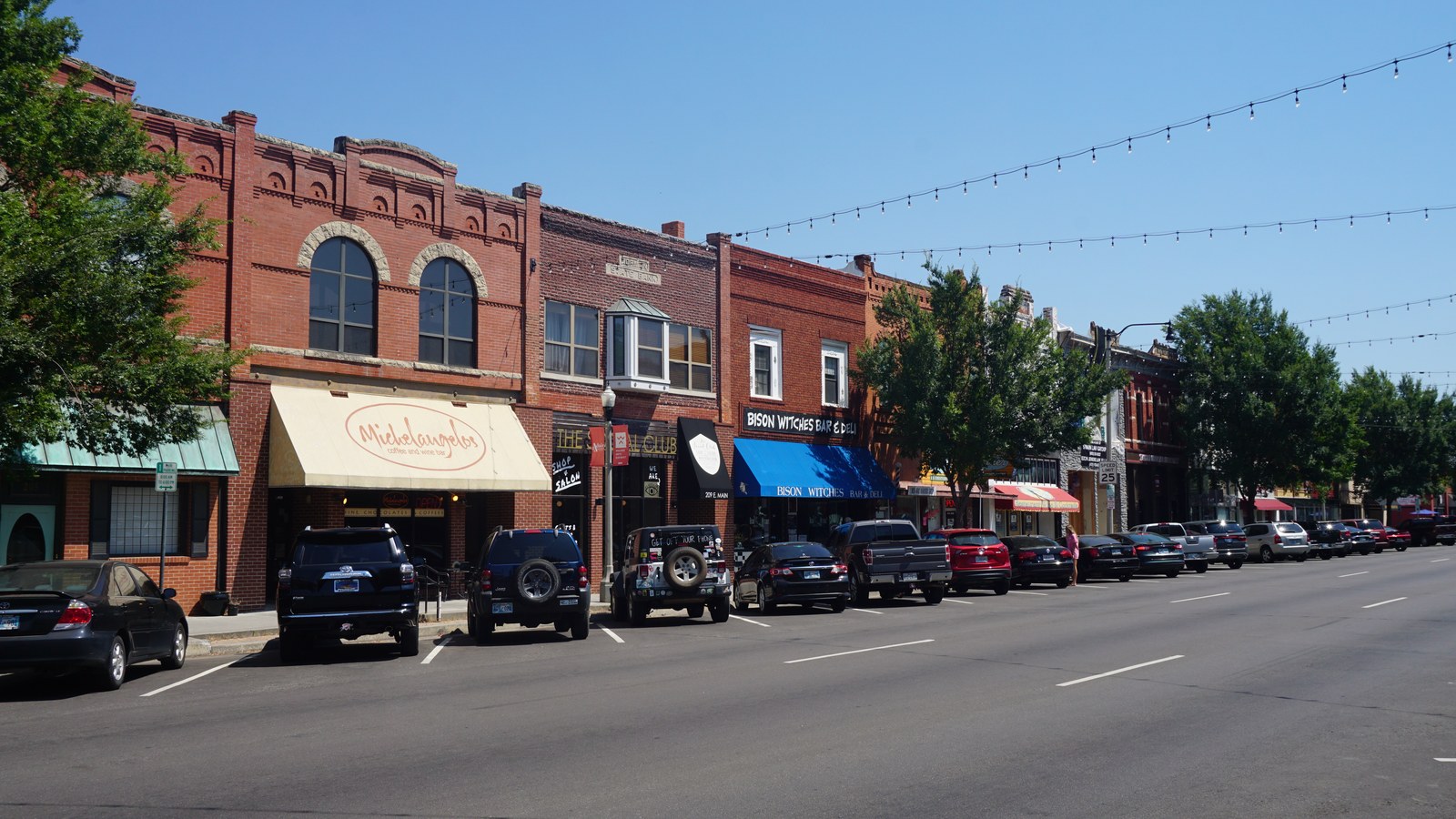
The university and the city grew up tangled together at Campus Corner, the commercial strip just north of campus that became a thriving business district by 1920, once students — barred from driving on campus — needed restaurants, pharmacies, and clothing stores within walking distance. A 1929 fire leveled most of it; it was rebuilt, flourished again through the 1950s, then declined for decades once student housing shifted south of campus and OKC-area malls pulled retail away, before a 2000s investment wave — OU football coach Bob Stoops became part-owner of a Campus Corner sports bar in 2003 — brought back the bars, coffee houses, and renovated storefronts that define it today (Wikipedia). Norman is also, less visibly, the literal headquarters of American tornado science: NOAA's National Weather Center, on OU's south research campus, houses the National Weather Service's own Norman forecast office alongside the Storm Prediction Center and the National Severe Storms Laboratory — the agencies that issue and study the tornado warnings this part of the state takes seriously (Wikipedia).
Norman's population reached an estimated 130,943 as of July 1, 2025 — the state's third-largest city, behind only Oklahoma City and Tulsa (U.S. Census Bureau). OU's Norman campus enrolled 30,922 students in spring 2026, up 5.3% from the year before: 23,474 undergraduates, 6,685 graduate students, and 763 professional students (University of Oklahoma Office of Institutional Research and Reporting). On the six Saturdays OU hosts a home football game each fall, Gaylord Family Oklahoma Memorial Stadium's roughly 80,000-seat capacity pulls tens of thousands of visitors into a city of 131,000, and the rental market notices — when Ohio State visited Norman for the first time since 1983, nearly every short-term rental in town booked out, and nightly rates that normally ran about $200 climbed as high as $750 (OU Daily).
Home values in Norman
Zillow's Home Value Index for Norman was $265,617 as of July 31, 2026, up 1.0% year-over-year (Zillow). Oklahoma is not a no-income-tax state the way Texas or Florida are: the state runs a graduated individual income tax with rates from 0.50% up to a 4.50% top bracket, a real budgeting line for anyone relocating from a no-income-tax state (Tax Foundation). Property taxes run the other direction — Oklahoma's statewide effective property-tax rate on owner-occupied homes is about 0.79%, among the lower rates nationally, with a standard homestead exemption available on a primary residence and Cleveland County's own assessor setting the specific assessed value and mill rate for a given address (Tax Foundation). Homeowners insurance here is priced around tornado and hail exposure rather than flood or hurricane risk — worth asking a specific agent how a policy's wind/hail deductible works before assuming a quote is apples-to-apples with one from a lower-risk state.
Getting around
Norman's 31 Walk Score is an honest citywide number — car-dependent outside the University neighborhood and Campus Corner, where students genuinely do walk to class, bars, and the football stadium. EMBARK Norman's five local routes are entirely fare-free, a genuine option for anyone living along a route, and the Norman Express commuter bus reaches downtown OKC on weekdays; OU's own CART shuttle is free but student-only and doesn't run weekends. Six Saturdays each fall, expect Boyd Street, Lindsey Street, Jenkins Avenue, and the rest of the Campus Corner grid to shift to game-day one-way patterns and permit-only parking — plan around it rather than trust a navigation app that doesn't know the schedule (City of Norman).
Norman FAQ
Is Norman a good place to live?
Norman is Oklahoma's third-largest city (an estimated 130,943 residents as of mid-2025), anchored by the University of Oklahoma's roughly 31,000-student Norman campus -- it reads as a genuine college town with its own downtown, museums, and a healthy job market in education and health care, not just a bedroom suburb of Oklahoma City.
How much does OU football actually affect life in Norman?
On the six Saturdays OU hosts a home game each fall, Gaylord Family Oklahoma Memorial Stadium's roughly 80,000-seat capacity brings road closures and permit-only parking to the Campus Corner grid, and short-term rentals can more than triple in price for a marquee matchup. It's a real, predictable seasonal swing worth planning around if you live near campus.
Is Norman walkable?
Not citywide -- Walk Score rates Norman a car-dependent 31 overall, though the University neighborhood right against campus scores a genuinely walkable 80. Norman also runs its own fare-free local bus system, EMBARK Norman.
Does Norman flood, or is tornado risk the bigger concern here?
Tornado risk is the dominant severe-weather fact about Norman -- fittingly, since the National Weather Service's own Storm Prediction Center is headquartered here. River and creek flooding is a real but secondary risk, concentrated along the Canadian and Little Rivers; check FEMA's flood maps for a specific address.
What is Campus Corner?
Campus Corner is the historic commercial strip immediately north of OU's campus, dating to the 1900s-1920s as the district where students -- once barred from driving on campus -- shopped and ate. A 1929 fire leveled it and it was rebuilt; after a mid-century decline it saw a 2000s revival and is today Norman's densest concentration of bars, restaurants, and coffee shops.
What hospital serves Norman?
Norman Regional Hospital, a 324-bed Level III trauma center that has operated in the city since 1946, handles more than 70,000 emergency visits a year and anchors the locally based Norman Regional Health System, which also runs a satellite emergency and outpatient campus in Moore.
Nearby alternatives*We're not ranking these — every place has real trade-offs, and which ones matter is up to you.
Moore
About 10 miles north on I-35 -- a smaller (roughly 63,600 residents), more affordable city between Norman and Oklahoma City, defined less by a university and more by its rebuilt-after-tornado building code and storm-shelter culture.
Bricktown Downtown
About 20 miles north via I-35 -- Oklahoma City's own downtown/entertainment core and the metro's biggest job center, a genuinely different pace and density than Norman's college-town grid.
See what makes Oklahoma City stand out — verified, named medical, dietary, sports, and other specialty resources you won't find in most metros.
Explore Specialty Resources →