Pinecrest, FL

What Pinecrest is actually like
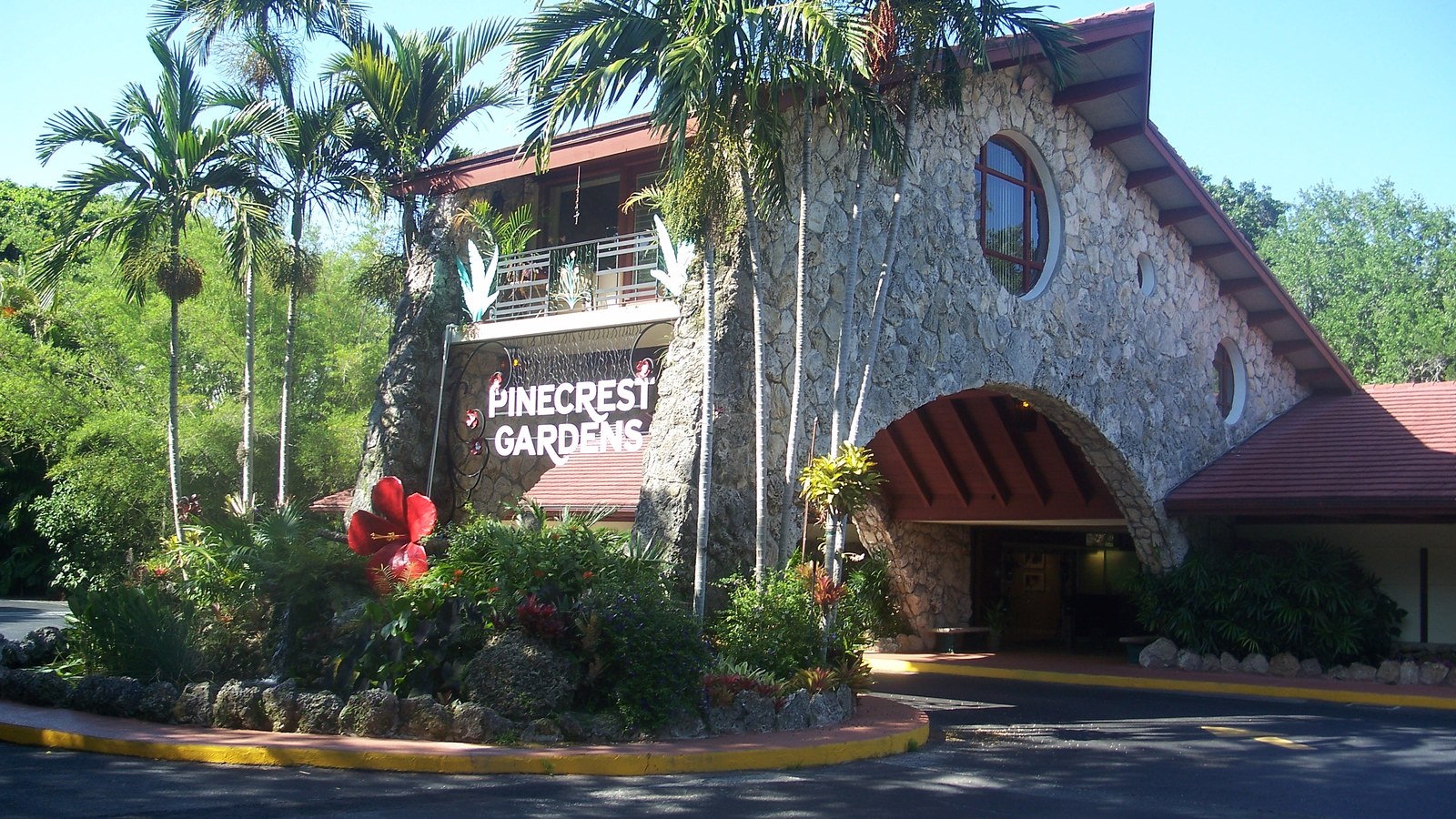
Long before it was Pinecrest, the area served as a staging ground for Henry Flagler’s Over-Sea Railroad construction in the early 1900s, and its identity as a destination really crystallized in December 1936, when Franz and Louise Scherr opened Parrot Jungle — about 100 visitors paid a quarter apiece on opening day — on what is now the Pinecrest Gardens site (Source). The 1950s and ’60s brought the ranch-house-on-a-one-acre-lot development pattern that still defines the village today, as the surrounding area — then generally lumped in with greater Kendall — filled in with the low-density, heavily wooded residential streets now associated with the Pinecrest name.
Hurricane Andrew devastated the area in August 1992, and the rebuilding years that followed fed directly into a push for local control: residents Evelyn Greer and Gary Matzner led the effort to incorporate, and the Village of Pinecrest was formally created on March 12, 1996, splitting off from unincorporated Miami-Dade specifically so the community could write and enforce its own zoning — above all, the one-acre-minimum EU-1 estate lots and tree-canopy protections that keep it from redeveloping into denser subdivisions (Source). Greer became the village’s first mayor; Matzner succeeded her in 2004.
Three decades on, Pinecrest is one of the wealthiest municipalities in Florida: the 33156 ZIP code it largely shares with South Miami regularly ranks among the state’s highest-income ZIP codes, and the village’s median household income was reported at roughly $166,801 as of the 2020 American Community Survey (Source). Population has held essentially flat for two decades — about 18,388 residents in 2020, versus 19,055 in 2000 — largely because there’s little vacant land left to build on and the village’s own zoning caps density; today Pinecrest is best known for Pinecrest Gardens, a Tree City USA-certified street canopy (over 10,000 trees planted since 1997), and a public-school pipeline — Pinecrest Elementary, Palmetto Middle, Miami Palmetto Senior High — that draws families willing to pay a premium to get into its boundaries.
Home values in Pinecrest
Redfin puts Pinecrest’s median sale price at $2,423,396 as of August 2026, up 8.3% year-over-year (Source); a separate three-month Redfin snapshot ending in June 2026 showed a median of $831 per square foot and homes spending about 94 days on market before selling (Source). Zillow’s own Home Value Index for Pinecrest specifically was $2,245,702 as of July 31, 2026, up 3.9% over the past year (Source); for a wider yardstick, Zillow’s ZHVI for the whole Miami metro area was just $580,866 as of August 31, 2026, up 0.8% year-over-year (Source) — underscoring how far above the regional median Pinecrest sits. RentCafe lists Pinecrest’s average asking rent at $2,444/month, with individual listings ranging roughly from $1,600 to $3,734 for studios and running higher for one- and two-bedroom units, though a precise citywide breakdown by unit size wasn’t published (Source) — renting is very much the minority option here, since most of the village’s housing stock is single-family homes on acre lots rather than apartment buildings. That zoning is itself a cost factor worth knowing about: Pinecrest’s EU-1 estate district requires a one-acre minimum lot for most single-family construction, plus tree-removal and replacement permitting, which keeps land — rather than square footage — the dominant driver of price and makes teardown-and-rebuild projects here slower and more regulated than in unincorporated Miami-Dade (Source).
Getting around
Pinecrest posts a village-wide average Walk Score of 29, with individual addresses commonly scoring much lower given the acre-lot layout, plus a Transit Score around 23 and a Bike Score around 28 near its US-1 corridor (Source) — this is a drive-everywhere suburb by design, not an oversight.
Pinecrest FAQ
Is Pinecrest walkable?
No — Pinecrest posts a village-wide average Walk Score of 29, and its defining EU-1 estate zoning (one-acre minimum lots) spreads houses out in a way that makes walking to errands impractical for most residents (Source).
Does Pinecrest flood?
Pinecrest is inland, so it’s general stormwater flooding rather than storm surge that matters here. Parts of the village fall within FEMA Zone AE (the mapped 100-year floodplain, where flood insurance is effectively required), and the Village runs its own stormwater and floodplain-management program (Source).
Why does Pinecrest have such large lots and so many trees?
Because it’s written into the zoning code: Pinecrest incorporated in 1996 partly to gain control over its own zoning, and its EU-1 estate district requires a one-acre minimum lot for most single-family homes, paired with tree-removal and replacement rules that have helped the village plant over 10,000 street trees since 1997 (Source).
Do you need a car in Pinecrest?
Yes — there’s no Metrorail station inside the village (Dadeland South sits just north of the line), and the acre-lot layout means almost every errand requires driving (Source).
Is Pinecrest good for families?
Very — it’s one of the most family-oriented municipalities in Miami-Dade, built around large lots, five municipal parks, and a public-school pipeline (Pinecrest Elementary, Palmetto Middle, Miami Palmetto Senior High) that families specifically move to the village to access (Source).
What is there to do in Pinecrest?
Pinecrest Gardens — the former Parrot Jungle attraction — is the village’s signature destination for gardens, events, and a weekend farmers market, and the five municipal parks (Evelyn Greer, Coral Pine, Flagler Grove, Suniland, Veterans Wayside) cover most everyday recreation (Source).
Nearby alternatives*We're not ranking these — every neighborhood has real trade-offs, and which ones matter is up to you.
Coral Gables
North — an older (1920s), architecturally regulated planned city with a genuine downtown/Miracle Mile commercial core, versus Pinecrest's newer (1996), almost entirely residential, large-lot character.
Kendall
Adjacent to the west — unincorporated Miami-Dade County land with no city government of its own, generally denser and more commercial than Pinecrest's low-density, tree-canopied residential streets.
See what makes Miami-Fort Lauderdale stand out — verified, named medical, dietary, sports, and other specialty resources you won't find in most metros.
Explore Specialty Resources →