Little Haiti, Miami, FL

What Little Haiti is actually like
Long before it was Little Haiti, this stretch of land north of the Miami River was Lemon City, a settlement of squatters and homesteaders that got its own post office in 1889 and was eclipsed after the Florida East Coast Railway reached Miami in 1896 (Wikipedia). The modern neighborhood took shape in the 1970s, when Haitian refugees — fleeing the Duvalier dictatorships and arriving in waves often described as “boat people” — began settling in the area, and activist Viter Juste, who ran a bookstore and founded the Haitian American Community Association, coined the name “Little Haiti” in a Miami Herald article (the paper reportedly shortened his original suggestion, “Little Port-au-Prince”) (Wikipedia; The New Tropic).
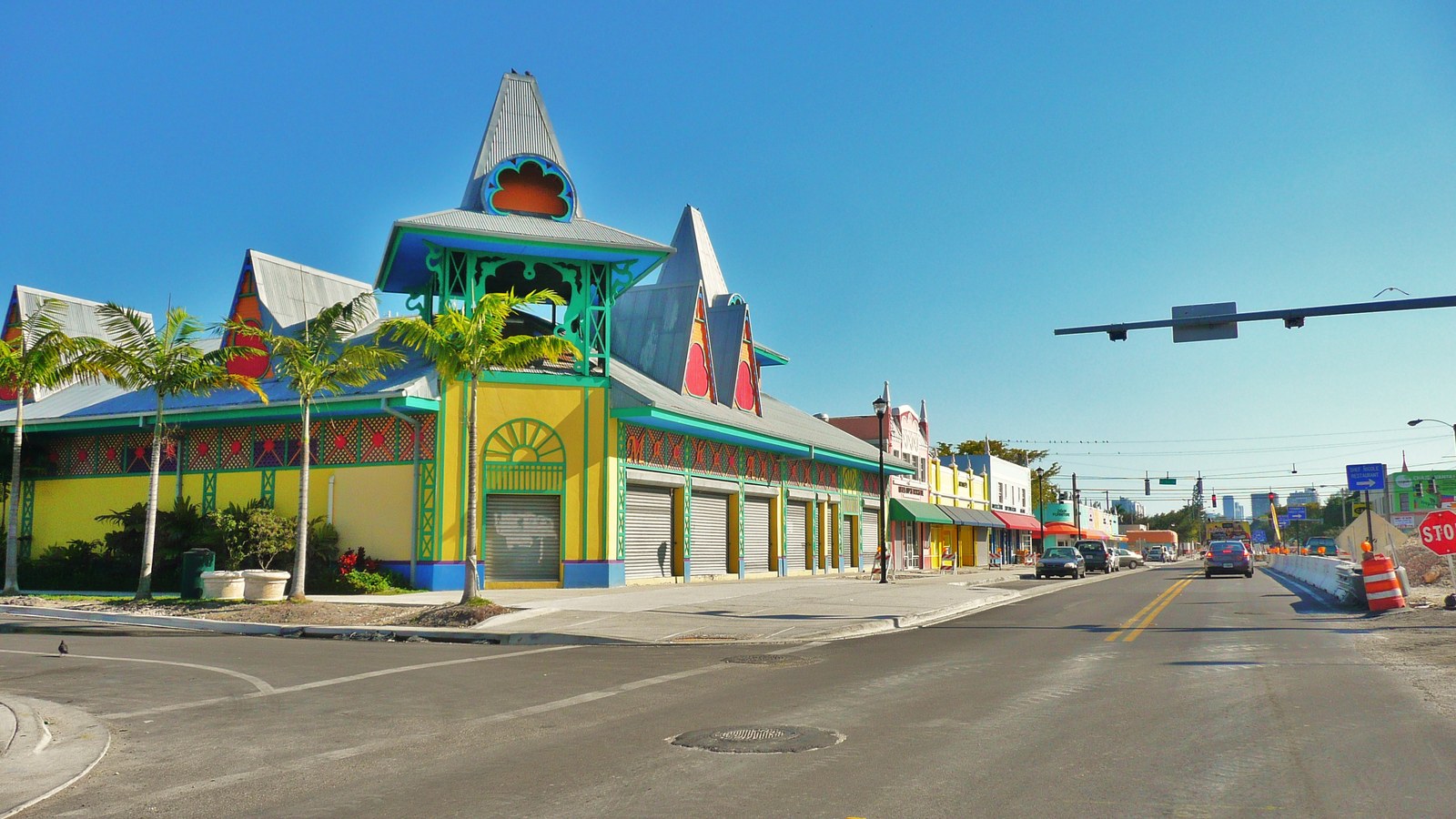
Immigration accelerated in 1980, when roughly 25,000 Haitians arrived fleeing political unrest; unlike Cuban arrivals from the same era’s Mariel boatlift, many Haitians were denied refugee status and faced deportation, even as they built out the neighborhood’s institutions (The New Tropic). Notre Dame d’Haiti Catholic Church opened in the 1980s offering Creole-language services, the Caribbean Marketplace rose in a distinctive Haitian “gingerbread” architectural style, and the Little Haiti Cultural Complex opened in 2009 as a home for exhibitions and festivals (The New Tropic; Wikipedia). The City of Miami formally recognized the “Little Haiti” name over the older Lemon City designation in 2016, a change that also ceded some of the neighborhood’s southern blocks to the expanding, upscale Design District next door (FIU Commons for Justice).
Little Haiti is now Miami’s best-known example of “climate gentrification”: a 2018 Harvard study found that higher-elevation Miami-Dade properties were appreciating faster than low-lying ones as sea-level-rise concerns grew, and Little Haiti’s position on a limestone ridge has made it a target for developers — projects like the Magic City Innovation District and Sabal Palm Village have drawn sustained community opposition (WLRN). Only about a quarter of residents own their homes, and rents have climbed sharply for longtime tenants — one resident quoted by WLRN saw his rent rise from $400 to $1,000 a month since 1985 (The New Tropic; WLRN). The neighborhood’s population is roughly 28,600 as of recent estimates (Walk Score), and longtime residents and advocacy groups are pushing to keep new development tied to affordable housing rather than displacement.
Home values in Little Haiti
Little Haiti’s housing market is thin enough that Redfin doesn’t publish one clean, blended median sale price the way it does for denser neighborhoods; its own listings as of September 2026 show a median listing price of about $699,000 for single-family and “luxury” homes on the market, versus roughly $149,000 for the small number of condos listed, with homes typically taking well over 100 days to sell (Redfin). Zoomed out to the broader Miami metro area, Zillow’s home value index stood at $580,866 as of August 31, 2026, up 0.8% year over year (Zillow). RentCafe puts the average asking rent in Little Haiti at $3,187 a month, though the underlying listings span an unusually wide range — one-bedrooms advertised from roughly $689 to $2,500 and two-bedrooms from about $706 to $1,995 — a spread that likely reflects a neighborhood where older, long-affordable rentals now sit blocks from new luxury development (RentCafe). That gap is the real cost story here: Little Haiti’s appeal to developers rests partly on its relatively high, flood-resistant ground, and the resulting “climate gentrification” has been pulling prices up faster than incomes in a neighborhood where only about a quarter of residents own their homes (WLRN).
Getting around
Little Haiti posts a Walk Score of 76 (“Very Walkable”), a Transit Score of 52, and a Bike Score of 70 — ranking it the 7th most walkable neighborhood in the city of Miami (Walk Score).
Little Haiti FAQ
Is Little Haiti walkable?
Yes — it carries a Walk Score of 76 (“Very Walkable”) and a Bike Score of 70, though its Transit Score of 52 is lower than Little Havana’s or Brickell’s since the neighborhood has no Metrorail station of its own (Walk Score).
Does Little Haiti flood?
Less than much of coastal Miami — Little Haiti sits on relatively high ground, with parts of the neighborhood estimated at 10 to 17 feet above sea level on an underlying limestone ridge, though sources vary on the exact figure and flood risk still differs by specific address (WLRN).
What is climate gentrification, and why is Little Haiti the example everyone cites?
A 2018 Harvard study found that higher-elevation Miami-Dade properties were appreciating faster than low-lying ones as sea-level-rise concerns grew, and Little Haiti’s limestone-ridge elevation put it directly in that pattern — developers and buyers began targeting the neighborhood specifically for its relative safety from flooding, pushing up prices and displacement pressure on a community where only about a quarter of residents own their homes (Yale Climate Connections; The New Tropic).
Can you live in Little Haiti without a car?
It’s more walkable than most Miami neighborhoods day to day, but harder to go fully car-free than Brickell or Little Havana: there’s a City of Miami trolley route and Metrobus service, but no Metrorail station in the neighborhood itself, so a car or regular rideshare use is realistic for most residents (Walk Score).
Is Little Haiti family-friendly?
It’s a historically working-class, culturally tight-knit neighborhood undergoing rapid change; Miami-Dade County Public Schools serves the area, but exact zoned schools vary by address, so families should check a specific property against M-DCPS’s official locator (GuideK12).
What is there to do in Little Haiti?
The Little Haiti Cultural Complex hosts galleries, theater, and festivals; the Caribbean Marketplace and nearby restaurants showcase Haitian food and Creole culture; and the neighborhood has become an unlikely arts destination as galleries priced out of Wynwood and the Design District move in (Wikipedia).
Nearby alternatives*We're not ranking these — every neighborhood has real trade-offs, and which ones matter is up to you.
Design District
Just south — the luxury retail/design-showroom district that's expanded toward Little Haiti's borders in recent years, sitting at meaningfully lower elevation and higher flood-risk than Little Haiti's own high ground.
Edgewater
East toward the bay — a high-rise waterfront condo corridor with a much higher flood-risk profile than Little Haiti's elevated, largely single-family and small-multifamily streets.
See what makes Miami-Fort Lauderdale stand out — verified, named medical, dietary, sports, and other specialty resources you won't find in most metros.
Explore Specialty Resources →