Key Biscayne, FL

What Key Biscayne is actually like
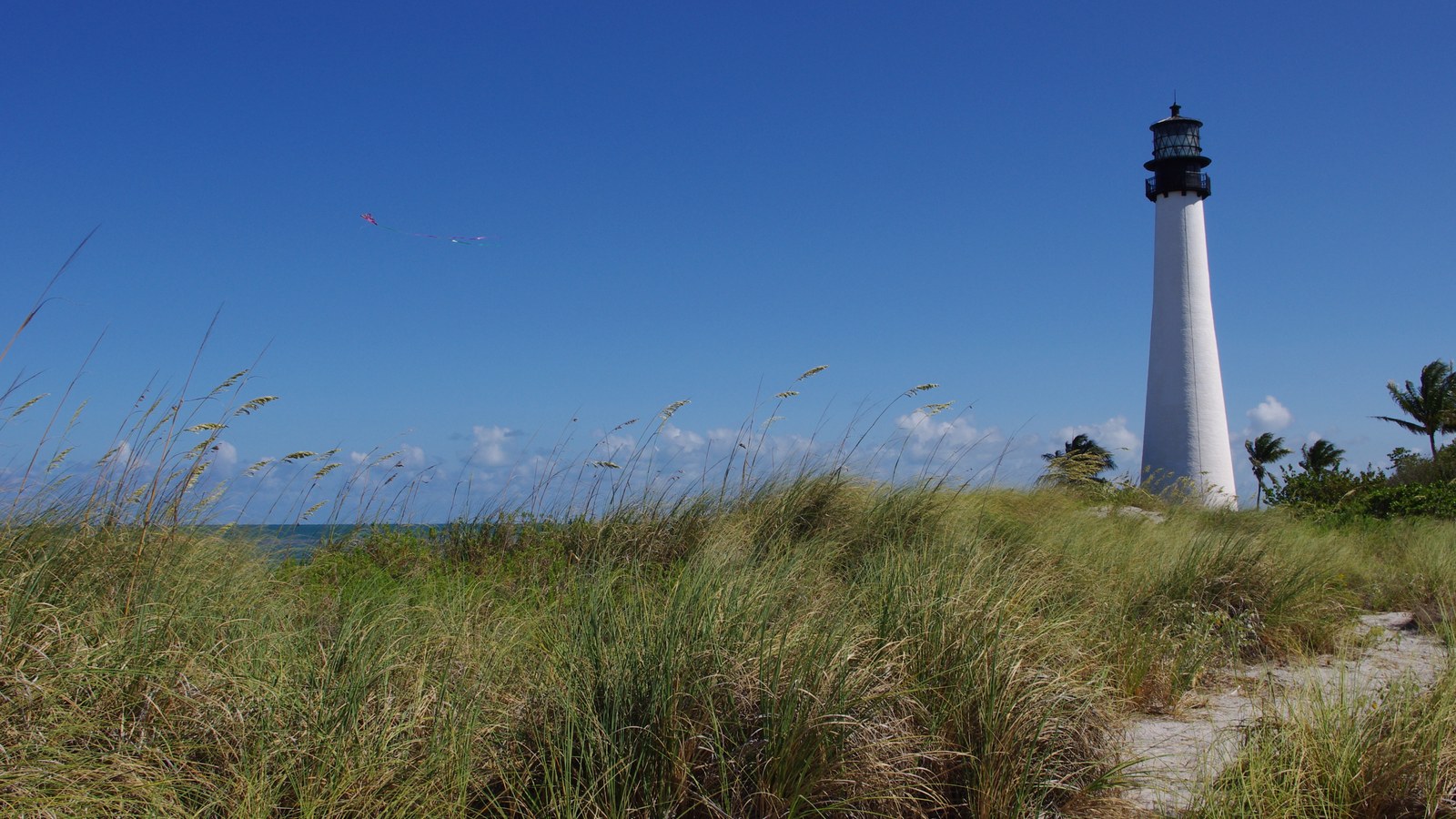
Key Biscayne’s modern history starts with the Cape Florida Lighthouse, built in 1825 at the island’s southern tip to mark the dangerous reef line offshore. It didn’t have an easy run: on July 23, 1836, during the Second Seminole War, Seminole warriors attacked the lighthouse and set fire to its interior, killing assistant keeper John W. B. Thompson’s aide and leaving the light dark for a decade until it was rebuilt and relit in 1846–47, then raised to 95 feet in 1855 (Wikipedia). For most of the next century the island itself stayed largely undeveloped, the northern two-thirds operating as one of the largest coconut plantations in the continental United States; that changed when the Rickenbacker Causeway opened in 1947, finally connecting the island to the mainland, and the Mackle Construction Company began selling new homes starting at $9,540 in 1951 (Village of Key Biscayne). Residents voted to incorporate as their own municipality on June 18, 1991 — the first new city in Miami-Dade County in more than 50 years — specifically to gain local control over development, keep more tax revenue, and improve public safety, with Rafael Conte serving as the Village’s first mayor (Village of Key Biscayne).
Hurricane Andrew marked the island’s defining turning point. When the Category 5 storm made landfall on August 24, 1992, its eyewall passed directly over what’s now Bill Baggs Cape Florida State Park at the island’s tip, flooding homes and businesses across Key Biscayne and destroying the park’s vegetation, while the storm’s broader devastation reshaped Florida’s property-insurance market for years afterward (Wikipedia; Village of Key Biscayne). Twenty-five years later, Hurricane Irma crossed the island on September 10, 2017 as a weakened Category 3, sparing Key Biscayne any deaths but still costing the Village roughly $2.5 million in damage, debris removal, and related expenses (Key News).
Today Key Biscayne is defined by what it isn’t as much as what it is: a compact, high-value island that has deliberately stayed low-density and largely residential rather than following Miami’s urban-core towers or its own neighbor Sunny Isles Beach’s condo-skyline path. The 2020 Census counted 14,809 residents, and the Village’s own figures put its housing stock at roughly 7,207 units — 1,296 single-family homes and 5,911 multi-family units — across just 1.71 square miles (Wikipedia; Village of Key Biscayne). It’s also genuinely affluent: the Census Bureau’s latest American Community Survey estimate puts median household income at $181,505, with a 66.6% owner-occupied homeownership rate (U.S. Census Bureau QuickFacts).
Home values in Key Biscayne
Redfin puts Key Biscayne’s median sale price at $1,523,991 over the three months ending August 2026, up 5.1% year-over-year, with a median of $1,020 per square foot (up 25.7% year-over-year) (Redfin) – Redfin’s pages update continuously, so confirm the live figure before relying on it. That runs well above Zillow’s ZHVI for the Miami metro overall, $580,866 as of August 31, 2026 and up 0.8% year-over-year (Zillow), reflecting how much pricier this specific island is than the metro as a whole. RentCafe, which normally supplies this site’s rent figures, doesn’t publish a reliable average for Key Biscayne — its own listings pages return no current rental inventory for the market, consistent with an overwhelmingly owner-occupied island with relatively few apartment rentals (RentCafe); treat any rent estimate for Key Biscayne as unconfirmed rather than sourced. One cost factor that’s directly relevant to Key Biscayne’s substantial condo housing stock (5,911 of its roughly 7,207 units, per the Village’s own figures): Florida’s post-Surfside condo safety law (SB 4-D, 2022) requires condo and co-op associations in buildings three stories or taller to complete a Structural Integrity Reserve Study at least every 10 years (associations formed before July 1, 2022 owed their first by December 31, 2025) and bars waiving reserve funding for big-ticket items it flags — roof, load-bearing structure, plumbing, electrical, waterproofing, and any component over $25,000, among others (Fla. Stat. §718.112(2)(g), §719.106(1)(k)) (Florida DBPR). Confirm a specific building’s milestone-inspection and reserve status directly with its association before buying.
Getting around
Key Biscayne posts a Walk Score of 74 (“Very Walkable”) and a Bike Score of 65 (“Bikeable”); Walk Score doesn’t report a Transit Score for the island (Walk Score). The island’s flat, compact geography and the dedicated multi-use path running the length of the Rickenbacker Causeway give it a strong reputation locally for cycling and running, though no independent Bicycle Friendly Community award for the Village specifically was confirmed this pass.
Key Biscayne FAQ
Is Key Biscayne walkable?
Reasonably so for a residential island — a Walk Score of 74 (“Very Walkable”) and a Bike Score of 65 (“Bikeable”), helped by flat terrain and a dedicated causeway bike path, though it has no Transit Score data and no rail service of its own.
Does Key Biscayne flood, and what’s the evacuation risk?
Yes — it sits in Miami-Dade’s highest-risk storm-surge Evacuation Zone A, took a direct hit from Hurricane Andrew’s eyewall in 1992, and was crossed again by Hurricane Irma in 2017. Because the Rickenbacker Causeway is the island’s only road, evacuation orders here matter more than in most places — there’s no alternate route off the island.
Does the post-Surfside condo law (SB 4-D) apply here?
For a large share of the housing stock, yes: roughly 5,911 of the Village’s approximately 7,207 housing units are multi-family/condo units. Any condo or co-op building three stories or taller falls under SB 4-D’s structural reserve study and inspection requirements — confirm a specific building’s status with its association before buying.
Can I get by without a car in Key Biscayne?
It’s possible within the island itself given the Walk Score and bike infrastructure, but a car (or the Route 102 bus to Brickell Station) is effectively required for anything on the mainland, since the Rickenbacker Causeway is the only way on or off.
Is Key Biscayne good for families?
By the numbers, yes — it’s a low-density, high-income community (median household income $181,505) with a 66.6% homeownership rate, its own K-8 center, and priority access to a well-regarded marine-science magnet high school, a notably different profile from Miami’s renter-heavy urban core.
What’s there to do in Key Biscayne?
The historic Cape Florida Lighthouse and Bill Baggs Cape Florida State Park anchor the island’s south end; Crandon Park offers beach, golf, and nature-center access; and Hobie Island Beach Park along the causeway is a well-known windsurfing and kitesurfing spot.
Nearby alternatives*We're not ranking these — every neighborhood has real trade-offs, and which ones matter is up to you.
South Beach
Across the bay via the MacArthur and Rickenbacker Causeways — a denser, more tourist-driven, nightlife-oriented identity than Key Biscayne's quieter, family-oriented island.
Mid-Beach
On the main barrier island rather than its own separate one — a resort-hotel corridor with a more transient, tourist-facing feel than Key Biscayne's low-density residential character.
See what makes Miami-Fort Lauderdale stand out — verified, named medical, dietary, sports, and other specialty resources you won't find in most metros.
Explore Specialty Resources →