Hollywood, FL
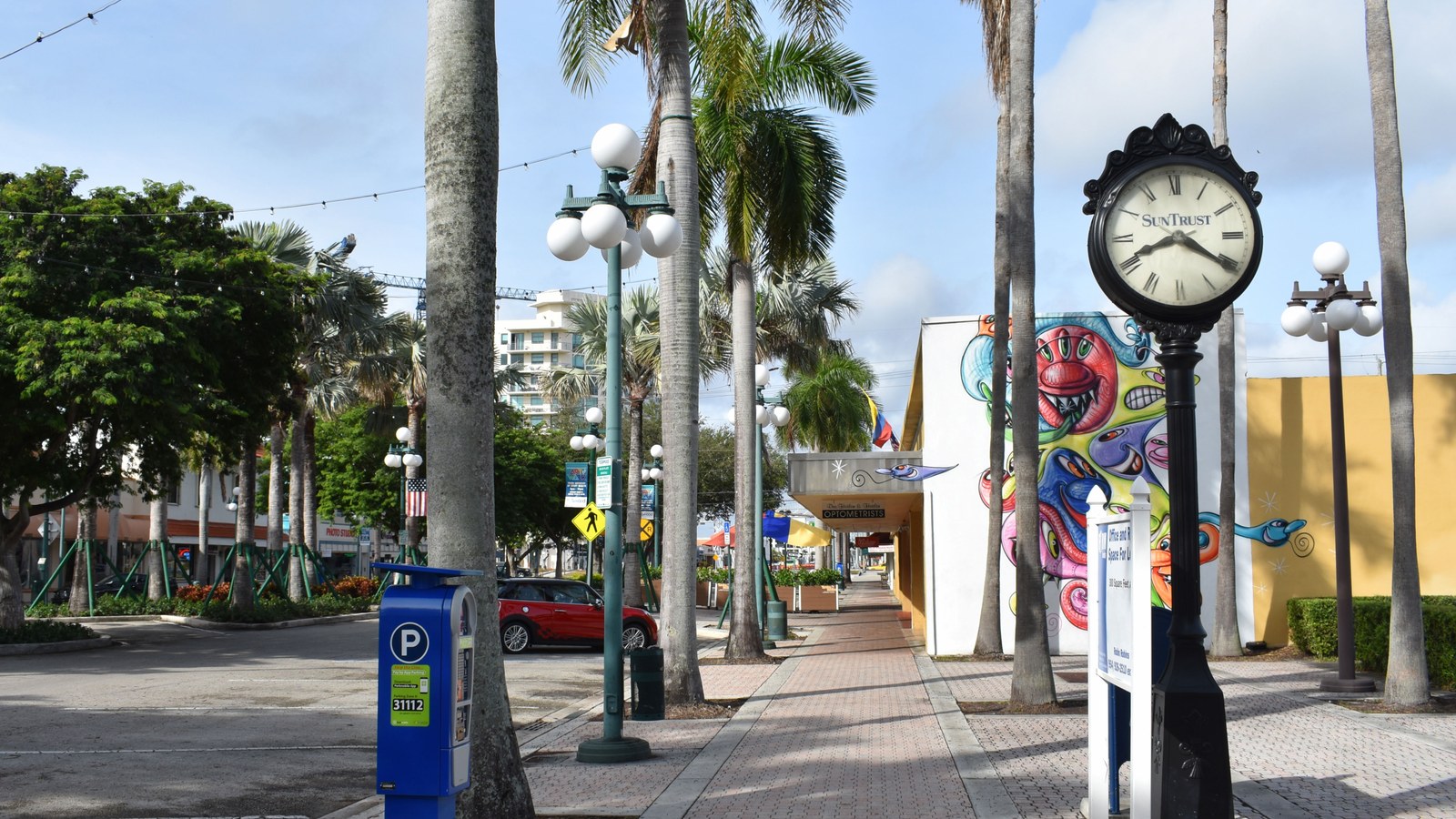
.jpg)
What Hollywood is actually like
Hollywood was founded by Indiana developer Joseph W. Young, who began platting the city in 1920 as one of South Florida’s signature 1920s land-boom projects and was elected its first mayor when Hollywood formally incorporated on November 28, 1925 (Source). Young’s crews reportedly used some 1,500 trucks and tractors to clear land and grade streets, and the city’s yacht basins were laid out by George Washington Goethals, the chief engineer of the Panama Canal — on the night Hollywood’s new street lights were first switched on, passing ships are said to have mistaken the glow for Miami on fire (Source).
The defining turn in Hollywood’s identity was the development of Hollywood Beach and its oceanfront Broadwalk, a roughly 2.5-mile paved promenade running the length of the barrier-island beach that today carries restaurants, hotels, ice-cream parlors, bike-rental shops, a farmer’s market, a children’s playground, and the open-air Hollywood Beach Theatre bandshell (Source). The young city weathered a major setback early on — the catastrophic 1926 Miami hurricane badly damaged Hollywood just a year after incorporation — but rebuilt, and the Broadwalk itself has remained the city’s civic and tourist anchor for nearly a century.
Hollywood is now one of Broward County’s largest cities, with a 2020 Census population of 153,067 (a 2022 Census Bureau estimate put it slightly lower, at 152,650), and one of its most ethnically mixed, with residents identifying as 39.9% Hispanic or Latino, 37.2% non-Hispanic white, and 16.5% non-Hispanic Black (Source). The most visible recent addition to the skyline is the guitar-shaped tower of the Seminole Hard Rock Hotel & Casino, which opened in 2019 and, together with the Broadwalk and Young Circle’s ArtsPark, anchors Hollywood’s current identity as both a working, family-oriented Broward suburb and a long-running beach resort town (Source).
Home values in Hollywood
Redfin put Hollywood’s median sale price at $495,752 as of July 2026, or $348 per square foot — both figures move monthly, so check Redfin’s Hollywood market page for the current numbers (Source). Zillow’s Home Value Index (ZHVI) for Hollywood specifically, a separate measure of the typical home value, was $433,845 as of January 31, 2026, down 6.0% over the past year (Source) — Broward is a meaningfully different, and historically somewhat less expensive, market than Miami-Dade. RentCafe’s Hollywood rent-trends page put the average apartment rent at $2,347 a month as of August 31, 2026, with studios averaging $1,765, one-bedrooms $2,005, and two-bedrooms $2,618 (Source). One factor that is confirmed and directly relevant here, given Hollywood’s significant stock of older beachfront and Intracoastal condo towers: Florida’s 2022 post-Surfside law, SB 4-D, requires condo and co-op associations in buildings three stories or taller to complete a Structural Integrity Reserve Study at least every 10 years (associations formed before July 1, 2022 owed their first by December 31, 2025) and bars waiving reserve funding for big-ticket items it flags — roof, load-bearing structure, plumbing, electrical, waterproofing, and any component over $25,000, among others (Fla. Stat. §718.112(2)(g), §719.106(1)(k)) (Source). Buyers looking at Hollywood’s older beachfront towers should ask sellers for the building’s SIRS and reserve-funding status before closing.
Getting around
Walk Score rates Hollywood 52 overall (“Somewhat Walkable”), with a Transit Score of 35 and a Bike Score of 53, and calls out Parkside, Royal Poinciana, and Lawn Acres as its most walkable neighborhoods — central Hollywood and the beach corridor generally score well above the city’s western, more car-dependent neighborhoods (Source).
Hollywood FAQ
Is Hollywood, FL walkable?
It depends heavily on the neighborhood: the Hollywood Beach Broadwalk corridor and the Young Circle/downtown core are genuinely walkable, with restaurants, shops, and transit within reach on foot, while most of the city’s inland, western neighborhoods are laid out for driving. Hollywood’s citywide Walk Score is 52; check a specific address for its own rating (Source).
Does Hollywood, FL flood?
Its beachfront and Intracoastal-adjacent areas carry real storm-surge and coastal-flood exposure as an Atlantic barrier-island city, according to risk models from First Street Foundation and Redfin’s climate-risk data; inland neighborhoods are generally lower-risk, but Broward’s flat terrain makes heavy-rain street flooding a regional issue. Pull a property-specific flood report before buying. Always check FEMA's Flood Map Service Center and Broward County's own flood-zone lookup tool for a specific address — flood-zone designation (and the insurance requirement that comes with it) can vary block to block, and the county's own materials describe zone bands (X, AE, VE) rather than naming a single risk level for an entire city.
Does Florida’s post-Surfside condo law affect buying in Hollywood?
Yes, meaningfully — Hollywood has a significant stock of older beachfront and Intracoastal condo towers, and under SB 4-D, associations in buildings three stories or taller must complete a Structural Integrity Reserve Study at least every 10 years and can no longer waive reserve funding for big-ticket items like the roof, structure, and plumbing (Fla. Stat. §718.112(2)(g)). Ask any condo seller for the building’s SIRS and reserve status (Source).
Can I live in Hollywood without a car?
It’s possible if you live right along the Broadwalk or downtown near Young Circle and rely on Broward County Transit buses and Tri-Rail, but most of the city is built for driving, and neither of Hollywood’s two Tri-Rail stations nor its nearest Brightline stations (Fort Lauderdale and Aventura) put the whole city within easy walking distance (Source).
Is Hollywood, FL good for families?
Many of its inland, single-family neighborhoods read as classic Broward suburbs, and the city is zoned through Broward County Public Schools rather than Miami-Dade’s district; families should check BCPS’s official “Find My School” locator for their specific address before assuming which schools they’re zoned into (Source).
What is there to do in Hollywood, FL?
The Hollywood Beach Broadwalk is the city’s signature attraction — a 2.5-mile oceanfront path with restaurants, bike rentals, and the open-air Hollywood Beach Theatre — while Young Circle’s ArtsPark hosts outdoor events downtown and the guitar-shaped Seminole Hard Rock Hotel & Casino, which opened in 2019, adds a resort-casino draw just west of the city center (Source).
Nearby alternatives*We're not ranking these — every neighborhood has real trade-offs, and which ones matter is up to you.
Downtown Fort Lauderdale / Las Olas
Broward's county seat and downtown core, about 20 minutes north, with its own Brightline station and Las Olas restaurant row.
Pembroke Pines
A larger, more suburban Broward city just inland to the west, with newer master-planned housing stock.
See what makes Miami-Fort Lauderdale stand out — verified, named medical, dietary, sports, and other specialty resources you won't find in most metros.
Explore Specialty Resources →