Downtown Fort Lauderdale, FL
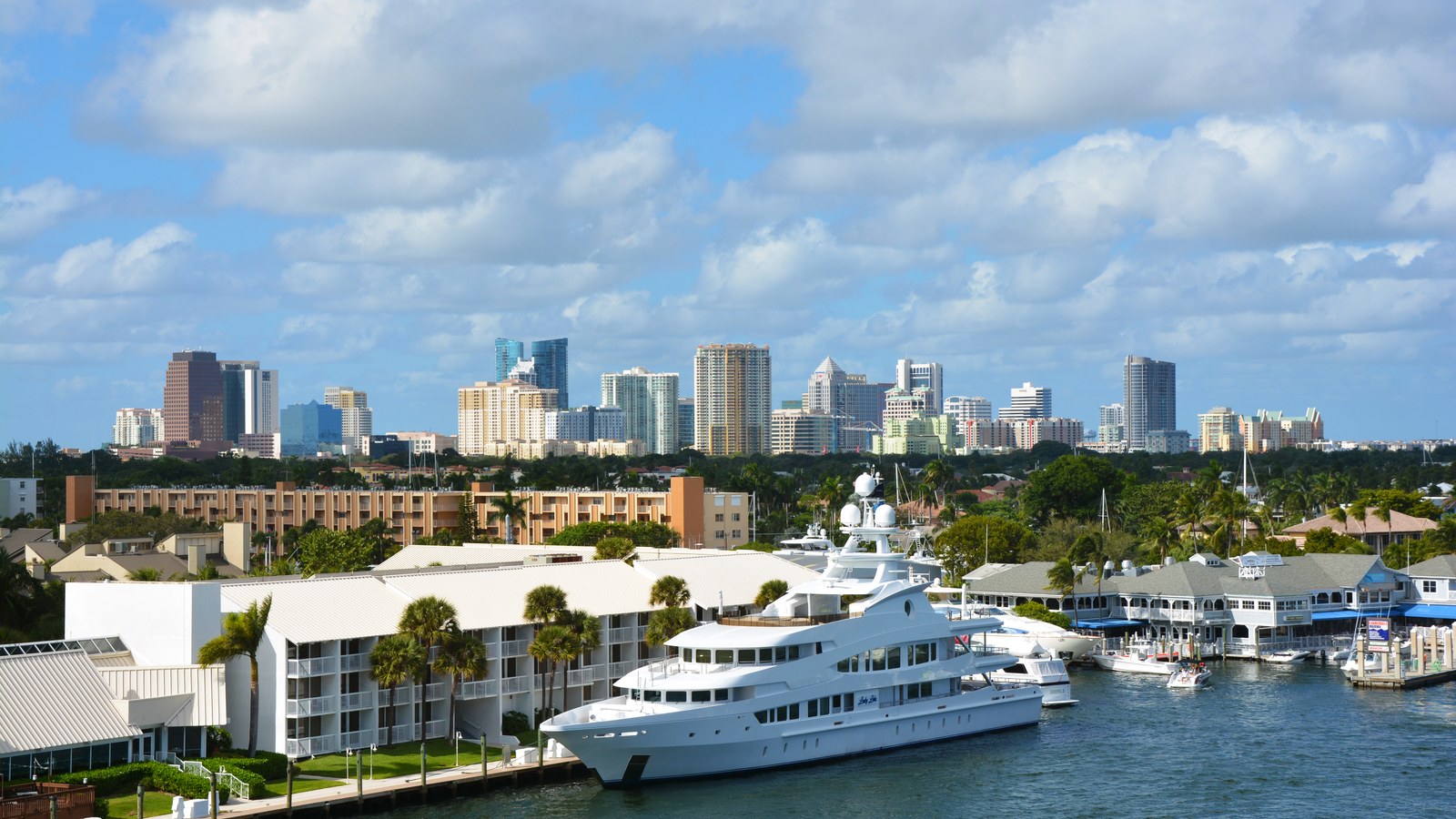

What Downtown Fort Lauderdale / Las Olas is actually like
Downtown Fort Lauderdale traces back to a trading post Frank Stranahan opened on the New River in 1893, years before the city itself existed, ferrying goods and passengers across the water at what’s now the edge of downtown (Source). The Florida East Coast Railway’s arrival accelerated settlement, and the city incorporated on March 27, 1911 (Source). Much of what followed was shaped by water: developers dredged roughly 165 miles of interconnecting waterways through the city starting in the 1920s, earning Fort Lauderdale its “Venice of America” nickname and setting a finger-canal street grid that still defines the neighborhoods just east and south of downtown today (Source).
For much of the mid-20th century, Fort Lauderdale’s identity was Spring Break, not skyline. The 1960 film Where the Boys Are, shot partly around the Elbo Room bar, cemented the city as a college pilgrimage site, and by spring 1985 an estimated 350,000 students were descending on the beach in a single season (Source). City leaders, worried about the strain on services and the city’s reputation, responded with strict ordinances starting in the mid-1980s that deliberately pushed the crowds elsewhere — a turning point that let downtown and the beach corridor reposition themselves over the following decades around boating, dining, and eventually high-rise condo living rather than keg parties (Source).
That repositioning is now most visible along Las Olas Boulevard, the palm-lined restaurant-and-boutique corridor running from the Andrews Avenue business core out toward the barrier island (Source). The adjoining Riverwalk Arts & Entertainment District, anchored by the Broward Center for the Performing Arts, has drawn a wave of residential high-rises and mixed-use towers over the past decade, and the city itself — Broward County’s seat and, by at least one count, the second-largest city in the greater Miami metro area — passed 182,760 residents at the 2020 Census (Source). The exact number of condo units under construction downtown at any given moment shifts too fast for a static count to stay accurate, but cranes along the New River and Las Olas corridor have been a fixture of local coverage for years.
Home values in Downtown Fort Lauderdale / Las Olas
Redfin put Fort Lauderdale’s citywide median sale price at $579,710 as of July 2026, or roughly $444 per square foot, both up double digits year-over-year — figures that move monthly, so check Redfin’s Fort Lauderdale housing market page for the current numbers (Source). That citywide figure blends everything from inland starter homes to Intracoastal estates, and downtown/Las Olas condo listings typically sell well above it given the concentration of newer high-rise inventory. Zillow’s Home Value Index (ZHVI) for Fort Lauderdale, a separate measure of the typical home value citywide, put the figure at $513,820 as of July 31, 2026, down 2.2% over the past year — a genuinely different market from the Miami-Dade ZHVI figure used elsewhere on this site (Source). RentCafe’s rent survey for downtown Fort Lauderdale put the average apartment rent at $4,182 a month as of August 31, 2026, with studios averaging $2,342, one-bedrooms $3,159, and two-bedrooms $4,672 — well above the citywide average given downtown’s newer, amenity-heavy buildings (Source). One statewide fact is confirmed and directly relevant to downtown’s substantial condo stock: Florida’s post-Surfside law, SB 4-D, requires condo and co-op associations in buildings three stories or taller to complete a Structural Integrity Reserve Study at least every 10 years (associations formed before July 1, 2022 owed their first by December 31, 2025) and bars waiving reserve funding for big-ticket items it flags — roof, load-bearing structure, plumbing, electrical, waterproofing, and any component over $25,000, among others (Fla. Stat. §718.112(2)(g), §719.106(1)(k)) (Source). This law applies statewide, so it matters just as much in Broward County as it did in Brickell.
Getting around
Walk Score rates the downtown/Las Olas core far above the rest of the city: a point near Flagler Village just north of Las Olas scores 98 (“Walker’s Paradise”), with a Transit Score of 56 and a Bike Score of 51, versus a citywide Fort Lauderdale score of 56/38/56 — a real gap that backs up downtown’s reputation as one of the more walkable pockets of Broward County (Source).
Downtown Fort Lauderdale / Las Olas FAQ
Is downtown Fort Lauderdale walkable?
Along Las Olas Boulevard and the Riverwalk, yes — Walk Score puts a point near downtown/Flagler Village at 98, a “Walker’s Paradise,” well above Fort Lauderdale’s citywide score of 56 (Source).
Does downtown Fort Lauderdale flood?
The area sits low and is threaded by the city’s dredged canal system and the New River, and Broward County as a whole averages only about six feet above sea level, so tidal and heavy-rain flooding is a real, recurring risk rather than a hypothetical one — check a building-specific flood score before buying (Source).
Does Florida’s post-Surfside condo law (SB 4-D) apply to downtown Fort Lauderdale buildings?
Yes — it’s a statewide law, and downtown’s condo towers are exactly the building type it targets: associations in buildings three stories or taller must complete a Structural Integrity Reserve Study at least every 10 years and can no longer waive reserve funding for big-ticket items like the roof, structure, or plumbing (Fla. Stat. §718.112(2)(g)) (Source).
Can you live in downtown Fort Lauderdale without a car?
It’s more feasible than most of Broward County: downtown has its own Brightline station (opened 2018) for trips to Miami, a Tri-Rail stop dating to 1927, and the free Sun Trolley circulator, but greater Fort Lauderdale is still a largely car-oriented metro overall (Source).
Is downtown Fort Lauderdale family-friendly?
It leans more toward young professionals, empty-nesters, and condo buyers than families with school-age kids — the highest-rise blocks have few traditional K-12 campuses, and any family should confirm zoned schools through Broward County Public Schools, a different district from Miami-Dade’s, before committing to an address (Source).
What is there to do in downtown Fort Lauderdale?
Las Olas Boulevard’s restaurants, galleries, and boutiques; the Riverwalk Arts & Entertainment District anchored by the Broward Center for the Performing Arts; the Museum of Discovery and Science with its AutoNation 3D IMAX theater; the NSU Art Museum Fort Lauderdale; and Stranahan House, the 1901 home of the city’s founder and widely cited as the oldest surviving structure in Broward County (Source).
Nearby alternatives*We're not ranking these — every neighborhood has real trade-offs, and which ones matter is up to you.
Wilton Manors
Fort Lauderdale's small, walkable LGBTQ+-hub neighbor immediately to the north, a short drive up Andrews Avenue or Dixie Highway.
Hollywood
Another Broward beach city with its own oceanfront promenade, about 20 minutes south down US-1 or I-95.
Compare Downtown Fort Lauderdale / Las Olas to these side by side →
See what makes Miami-Fort Lauderdale stand out — verified, named medical, dietary, sports, and other specialty resources you won't find in most metros.
Explore Specialty Resources →