Doral, FL

What Doral is actually like
Doral takes its name from Alfred and Doris Kaskel, who bought roughly 2,400 acres of Miami-Dade swampland in the late 1950s for about $49,000 and opened the Doral Hotel and Country Club in 1962 — “Doral” itself a blend of “Doris” and “Alfred” (Source). The golf resort, now Trump National Doral Miami, hosted a PGA Tour stop for decades and became the area’s first real landmark; residential subdivisions like Doral Estates and Doral Park followed in the early 1980s once a county building moratorium lifted (Source). After a seven-year campaign, residents voted 85% in favor of incorporation in January 2003, and the City of Doral was chartered that June with Juan Carlos Bermudez as its first mayor (Source).
The turning point was sheer speed of growth: Doral’s population went from 3,126 in 1990 to 20,438 in 2000 to 45,704 by 2010, a boom driven by new subdivisions and corporate offices — and, especially, by a wave of Venezuelan immigration that accelerated as Venezuela’s political and economic crisis deepened through the 2000s and 2010s (Source). By the 2020 Census, 83% of Doral’s residents identified as Hispanic or Latino, and Venezuelan was the single largest reported ancestry group at 38.8%, ahead of Colombian (11.2%) and Cuban (7.9%) — a concentration local and national outlets have described as the largest Venezuelan community in the United States (Source).
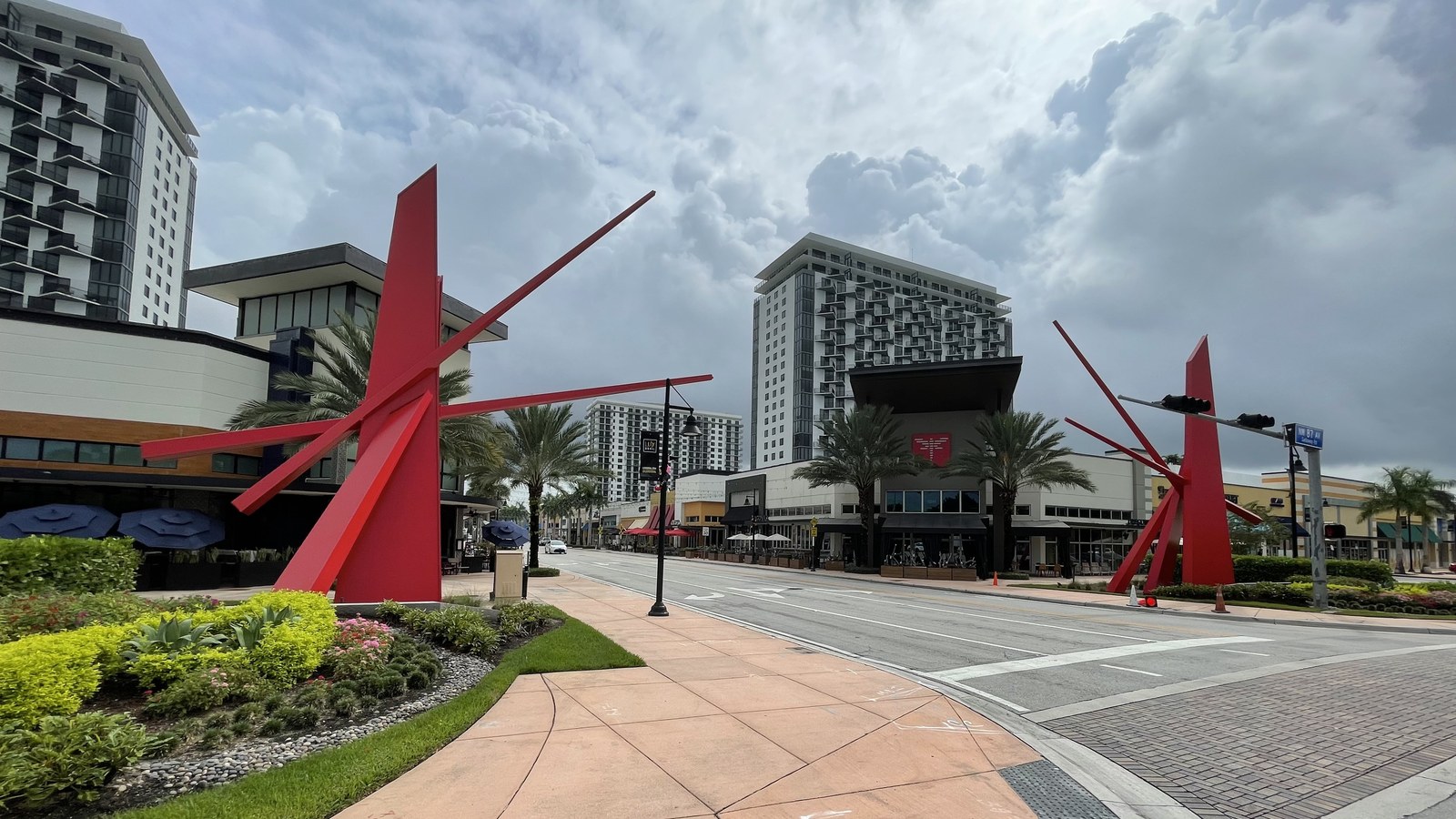
Growth hasn’t slowed: the Census Bureau’s mid-2025 estimate put Doral’s population at 81,634, up more than 7% since the 2020 count, with a median household income around $94,164 and 70.3% of residents born outside the United States (Source). The most visible recent development has been Downtown Doral, a mixed-use town-center district of apartments, offices, restaurants and City Hall itself built out over the last decade, alongside the open-air CityPlace Doral retail-and-entertainment center — both aimed at giving a famously car-dependent suburb something closer to a walkable core (Source).
Home values in Doral
Redfin put Doral’s median home sale price at $599,200 in July 2026, up 1.6% year-over-year across all home types; an earlier Redfin snapshot showed per-square-foot pricing around $346 (Source). Zillow’s Home Value Index for the broader Miami metro area stood at $580,866 as of August 31, 2026, up 0.8% year-over-year — this is a metro-wide figure, not Doral-specific (Source). Renters pay an average of $2,888 a month across all unit types in Doral, according to RentCafe, with studios averaging $2,325, one-bedrooms $2,557, and two-bedrooms $3,053 (Source).
Doral’s housing stock skews new — most condo and townhome communities were built after the mid-1990s, which matters because of Florida’s 2022 condo-safety reforms. Buildings three stories or taller face their first mandatory SB 4-D milestone inspection at 30 years old (25 years if within three miles of the coast), so most of Doral’s newer stock won’t hit that trigger for years yet (Source). But a separate, age-blind piece of the same law — the Structural Integrity Reserve Study (SIRS) requirement — forces every condo association statewide to fully fund reserves for roofs, load-bearing walls and other structural components regardless of a building’s age, and that has already pushed HOA and condo fees higher across new construction in Doral along with the rest of Florida (Source).
Getting around
Walk Score gives Doral a 39 out of 100 (“Car-Dependent”), a Transit Score of 35, and a Bike Score of 53 — meaning most daily errands still require a car, even though a growing trail and bike-lane network makes short trips within some neighborhoods bikeable, and the most walkable pockets (like Costa Del Sol) score closer to the high 40s (Source).
Doral FAQ
Is Doral walkable?
Not really. Walk Score rates the city 39 out of 100 (“Car-Dependent”), and even the most walkable pockets top out in the high 40s, though Downtown Doral and CityPlace Doral are deliberately built to be walkable within themselves (Source).
Does Doral flood?
It’s at real risk of nuisance and stormwater flooding rather than direct storm surge — a private risk model rates flood exposure very high citywide, and parts of Doral, especially near NW 79th Avenue, have flooded repeatedly after heavy rain in recent years, which is why the city is in the middle of a multi-year stormwater upgrade (Source).
Are Doral’s newer condos and townhomes covered by Florida’s SB 4-D inspection law?
Most of Doral’s condo stock is new enough that it won’t hit SB 4-D’s 30-year milestone-inspection trigger for a while yet. But a related requirement — the Structural Integrity Reserve Study (SIRS) — applies to condo associations regardless of building age, and it’s already pushing HOA and condo fees higher across Florida, Doral included (Source).
Do I need a car in Doral?
For most people, yes. Doral is a car-dependent suburb (Transit Score 35), though the free Doral Trolley and Freebee shuttles cover several routes, and a Tri-Rail/Metrorail transfer station sits just outside the city’s eastern edge (Source).
Is Doral good for families?
It skews young, with a median age of 36.5 and 24.4% of residents under 18 as of the 2020 Census, plus a large stock of newer housing, parks and M-DCPS and charter school options — though as in any suburb, school quality varies by exact address (Source).
What is there to do in Doral?
Golf at Trump National Doral Miami, outdoor dining and entertainment at CityPlace Doral, shopping at Miami International Mall, and a Latin American — especially Venezuelan — restaurant scene that reflects the city’s demographics, concentrated around Downtown Doral (Source).
Nearby alternatives*We're not ranking these — every neighborhood has real trade-offs, and which ones matter is up to you.
Hialeah
Northeast — one of Florida's largest cities outright, older and denser than Doral, with a longtime Cuban-American identity rather than Doral's newer, more international mix.
Miami Lakes
North — an older (originally 1960s), smaller planned community built around a single Main Street, quieter and less business-district-dense than Doral's newer international corporate corridor.
See what makes Miami-Fort Lauderdale stand out — verified, named medical, dietary, sports, and other specialty resources you won't find in most metros.
Explore Specialty Resources →