Lockerbie Square, IN
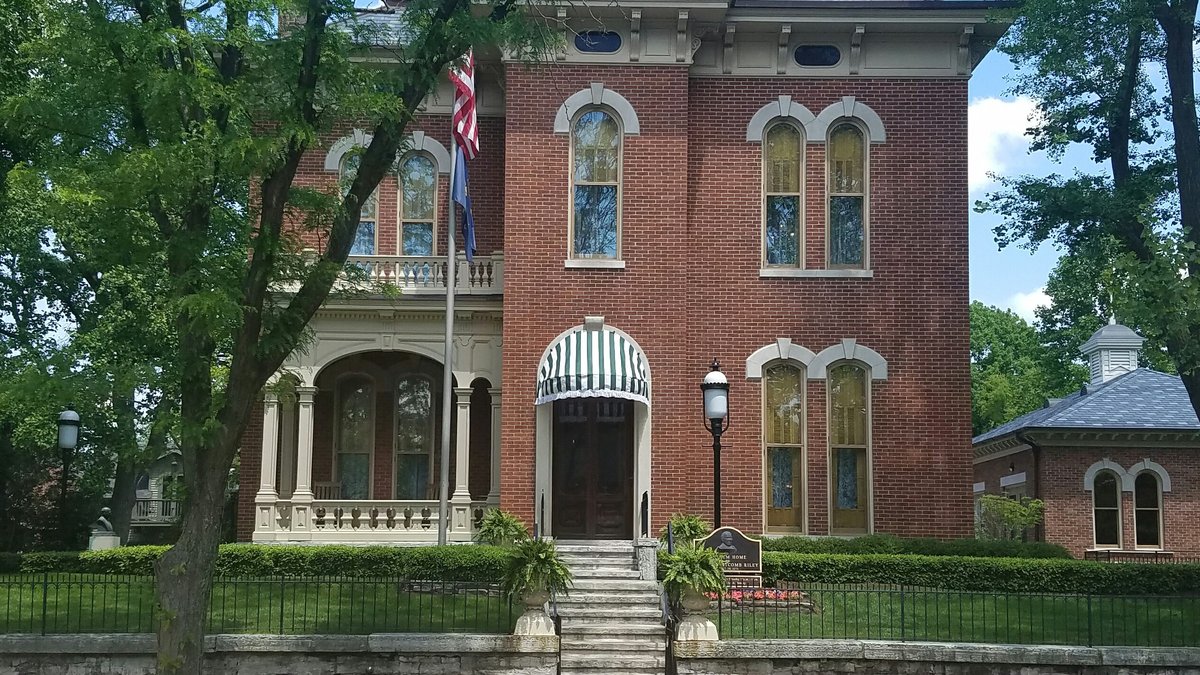

What Lockerbie Square is actually like
Lockerbie Square takes its name from George Murray Lockerbie, a Scottish immigrant from Glasgow who settled in Indianapolis in 1831. His daughter, Janet Lockerbie McOuat, and her husband Thomas McOuat platted the neighborhood's first lots in 1847 and 1850, naming the street after her father; bankers Calvin and Timothy Fletcher subsequently developed and sold the surrounding lots between 1847 and 1860, many to German immigrant craftsmen and laborers, giving the area an early nickname of "Germantown."
Most of the neighborhood's housing dates from a construction boom in the 1860s through 1930, in Federal, Italianate, and Queen Anne styles. Its most famous resident was Hoosier poet James Whitcomb Riley, author of "Little Orphan Annie" and roughly 1,044 published poems, who boarded at 528 Lockerbie Street -- an 1872 Italianate home -- from 1893 until his death there on July 22, 1916; his regular walks and habit of giving neighborhood children candy became local lore.
The neighborhood declined after World War I as commerce expanded downtown and wealthier residents moved north, but it became a focal point of Indianapolis's earliest historic-preservation movement starting around 1958-1960, when the city's planning department and the newly formed Historic Landmarks Foundation of Indiana began restoration efforts. It was listed on the National Register of Historic Places on February 23, 1973, with its boundary expanded in 1987 -- making it Indianapolis's first officially designated historic preservation district. Today it covers about 10.9 acres with a population the neighborhood association puts at "just over 400" -- one of the smallest, most architecturally distinct pockets in the city.
Home values in Lockerbie Square
We couldn't confirm a current, live home-value figure for Lockerbie Square specifically in our research — rather than publish a stale or citywide number that might not reflect this specific part of town, we're leaving pricing out of this particular guide for now.
See what makes Indianapolis stand out — verified, named medical, dietary, sports, and other specialty resources you won't find in most metros.
Explore Specialty Resources →Lockerbie Square FAQ
When was Lockerbie Square platted, and who is it named after?
It was platted in 1847 and 1850 by Janet Lockerbie McOuat, and named for her father, George Murray Lockerbie, a Scottish immigrant who settled in Indianapolis in 1831.
Did James Whitcomb Riley actually live in Lockerbie Square?
Yes -- the poet lived at 528 Lockerbie Street from 1893 until his death on July 22, 1916; the house opened to the public as the James Whitcomb Riley Museum Home in 1922.
When was Lockerbie Square listed on the National Register of Historic Places?
February 23, 1973, with a boundary expansion added in 1987 -- making it Indianapolis's first historic preservation district.
Are the neighborhood's cobblestone streets original?
Sections of the historic street paving date to the neighborhood's 19th-century development and are preserved as a protected feature of the historic district, distinguishing it from surrounding paved downtown streets.
Has Marion County had significant tornadoes?
The National Weather Service's Indianapolis office documents 47 tornadoes in Marion County from 1950-2025, causing $104.4 million in damage and 209 injuries but zero fatalities; none is confirmed as striking Lockerbie Square specifically.