Alamo Heights, TX
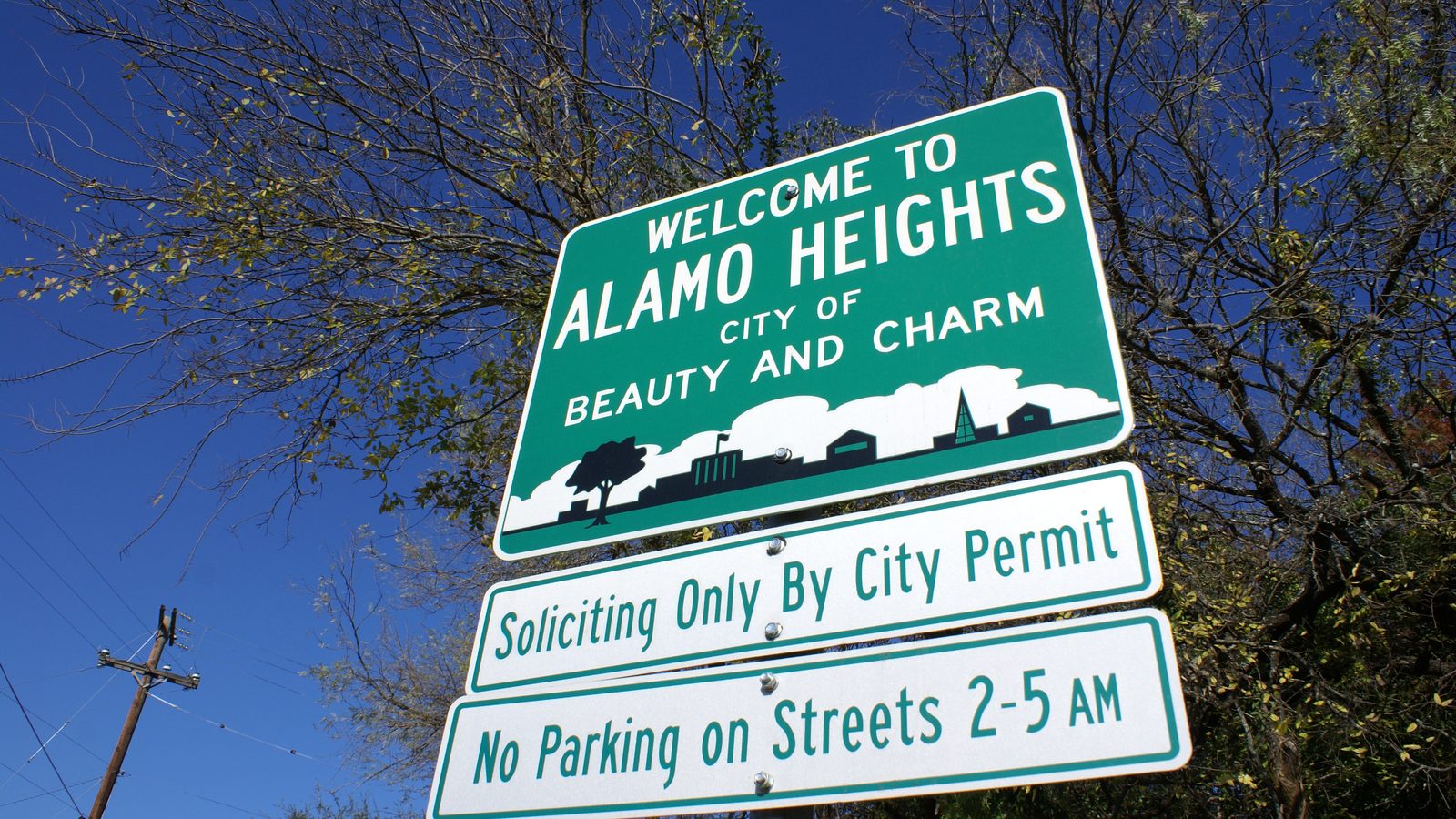

What Alamo Heights is actually like
Alamo Heights traces to the mid-1800s estates of George W. Brackenridge, whose Fernridge mansion gave the area its name, and Charles Anderson, whose ranch house later became The Argyle hotel. In the 1890s a Denver investment company bought Anderson's land and platted a deliberately upscale streetcar suburb -- laying streets to follow the land's contours, preserving centuries-old oak trees, and protecting the headwaters running through it.
Facing the threat of forced annexation by San Antonio, residents voted 289-8 to incorporate as their own municipality on June 4, 1922, officially becoming a city on June 20, 1922, with about 3,000 residents. The city later annexed Bluebonnet Hills (1928) and Sylvan Hills (1944) to set its current 1.84-square-mile footprint, and built out its own water and sewer infrastructure -- the same city-run utility that still serves the area today rather than San Antonio's SAWS.
At roughly 7,350 residents (2020 Census), Alamo Heights remains one of the most affluent, tree-lined residential enclaves in the San Antonio area -- a small, fully built-out, independently governed city surrounded on all sides by San Antonio. Housing is largely 1920s-1960s -- Tudor revivals, Spanish colonials, ranches, mid-century moderns -- on generously sized lots, and the Broadway corridor's ongoing restaurant and retail redevelopment sits about 5 minutes from the Pearl District and 9-15 minutes from downtown.
Home values in Alamo Heights
Zillow tracks home values city-by-city, not for every neighborhood within a city — Alamo Heights is one of the pockets that doesn't get its own figure. Rather than publish a citywide number that might not reflect this specific part of town, we're leaving pricing out of this particular guide for now.
See what makes San Antonio stand out — verified, named medical, dietary, sports, and other specialty resources you won't find in most metros.
Explore Specialty Resources →Alamo Heights FAQ
Is Alamo Heights part of San Antonio, or its own city?
Its own independently incorporated city, since June 1922 -- though it's almost completely surrounded by San Antonio and functions like a central San Antonio neighborhood day to day.
What school district serves Alamo Heights?
Alamo Heights Independent School District (AHISD), a separate district from San Antonio ISD serving about 4,700-4,800 students, generally well-regarded with an above-average share of highly rated campuses per GreatSchools.
Who provides utilities -- is it CPS Energy and SAWS like the rest of San Antonio?
Partly. Electric service comes from CPS Energy, same as greater San Antonio. But water and sewer come from the City of Alamo Heights' own municipal utility, which draws from its own four wells rather than buying from SAWS.
What's the commute to downtown San Antonio like?
Short by metro standards -- about 5 miles via Broadway or US-281, roughly 9-15 minutes depending on traffic, with VIA's Route 10 bus running the same corridor.
What's the Broadway corridor, and is Quarry Market actually in Alamo Heights?
Broadway is Alamo Heights' main commercial street, lined with restaurants and shops. Alamo Quarry Market and The Quarry Golf Club, often described as Alamo Heights landmarks, are technically just across the line in San Antonio proper -- immediately adjacent, not within city limits.