Sanford, NC
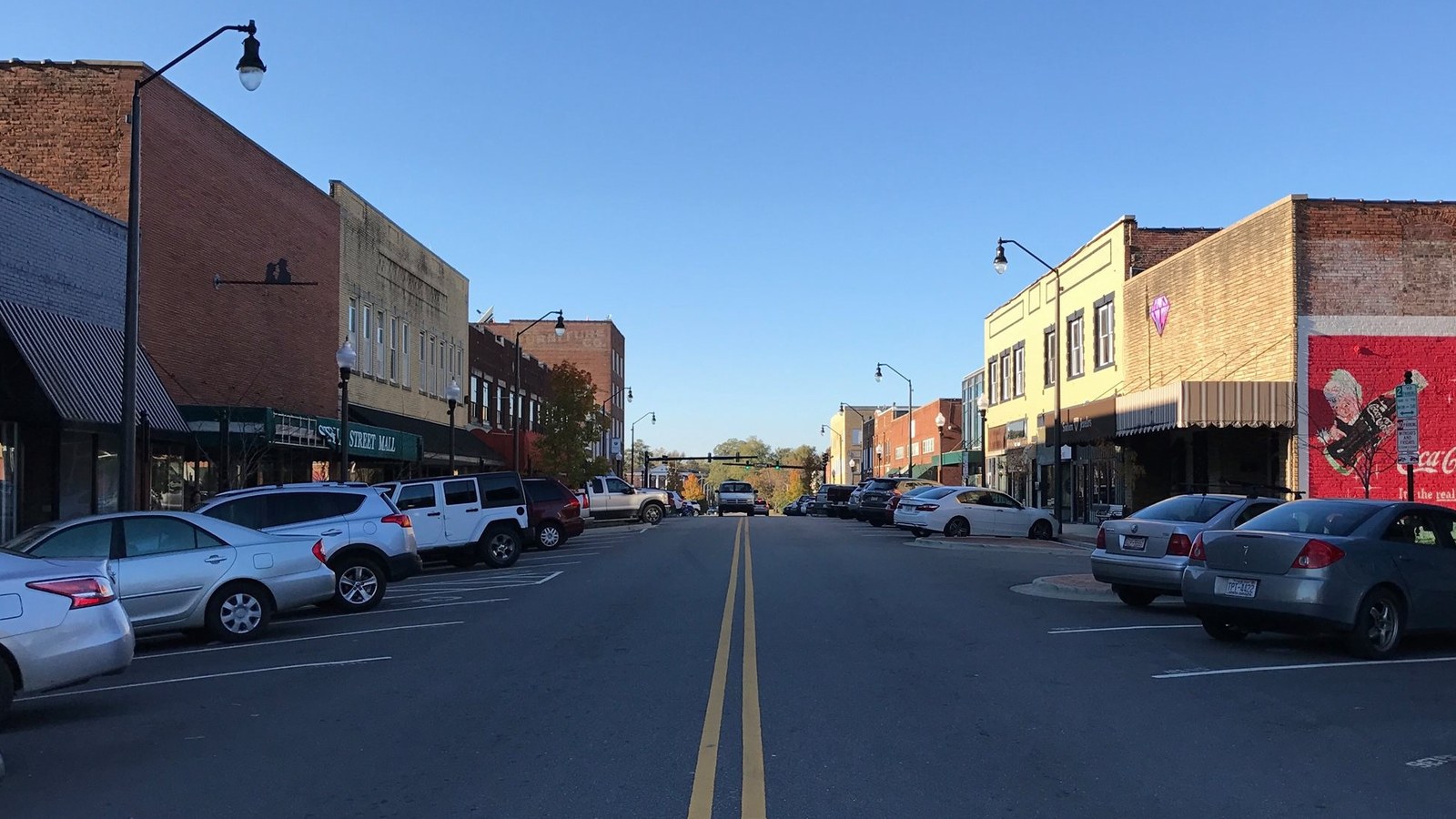

What Sanford is actually like
Sanford was incorporated in 1874 as the seat of Lee County, and grew historically as an industrial and railroad hub -- at one point nicknamed the "Brick Capital of the USA," producing roughly 10% of the country's bricks in 1959.
Modern growth has shifted toward pharmaceutical and general manufacturing, most visibly Pfizer's large gene-therapy and vaccine manufacturing expansion, a $500 million-plus investment that's part of a broader pharma-manufacturing cluster in this corridor. US-1 (running through downtown as Hawkins Ave) and US-421 are both key growth and logistics assets for that industry as well as the town's main commuting routes.
Sanford's population was 30,261 at the 2020 census -- the largest town in this entire sub-region. It's about 41 miles and a 44-minute drive southwest of Raleigh via US-1/US-64. Sanford sits near the Deep River, a Cape Fear River tributary, and has seen repeated flash flooding in recent years, including intense-rain flooding of downtown streets and moved cars in April 2025 -- inland riverine flooding, not the coastal storm surge the Cape Fear name might otherwise suggest, since Sanford sits well upstream of the actual coast.
Home values in Sanford
Zillow's average home value (ZHVI) for Sanford was $291,588 as of July 31, 2026, up 0.3% year-over-year, with a median sale price of $306,250 as of June 30, 2026 -- the most affordable of all 8 places in this sub-region (Zillow).
Getting around
Sanford is car-dependent, with no meaningful local transit and no rail transit anywhere in the Triangle. US-1 and US-421 are the town's main commuting and logistics arteries, and getting to Raleigh -- about 41 miles and 44 minutes away -- or anywhere else in the region assumes a car.
Sanford FAQ
Is Sanford in the Triangle or its own market?
It's often grouped with the Triangle for real-estate purposes, but at about 41 miles from Raleigh, with its own hospital, schools, and economy, Sanford functions more as an independent small city than a bedroom suburb.
Does Sanford flood?
Yes -- real flash-flooding and water-rescue events tied to the Deep River/Cape Fear watershed, most recently in April 2025. This is inland riverine flooding, not coastal storm surge, despite "Cape Fear" being in the watershed's name.
What's driving growth in Sanford?
Highway access at the US-1/US-421 junction and major pharmaceutical manufacturing investment, most visibly Pfizer's gene-therapy manufacturing expansion.
Nearby alternatives*We're not ranking these — every neighborhood has real trade-offs, and which ones matter is up to you.
Pittsboro
The nearest comparably sized option within this sub-region, roughly 25 miles northeast via US-421 -- Chatham County's seat, with its own severe, documented flood risk on a different river.
Clayton
A Johnston County town on the opposite side of this sub-region, similarly anchored by its own hospital but growing much faster than Sanford.
See what makes Raleigh-Durham stand out — verified, named medical, dietary, sports, and other specialty resources you won't find in most metros.
Explore Specialty Resources →