North Miami Beach, FL

What North Miami Beach is actually like
North Miami Beach began life as Fulford-by-the-Sea: in 1912 Lafe Allen bought 557 acres here with plans for a “perfect city,” and the Fulford-by-the-Sea Company started selling lots in 1922, with rapid Florida land-boom development from 1924–26 under Merle C. Tebbetts, including a radio station and a banked wooden speedway that hosted the Carl G. Fisher Cup Race on February 22, 1926 — a forerunner to the Sebring and Daytona races (Source). The catastrophic 1926 Miami hurricane destroyed the track after a single race and collapsed the regional land boom; residents incorporated as the Town of Fulford that year (City of Fulford in 1927) to seek disaster relief (Source). In 1931 the state legislature approved a new charter renaming the city North Miami Beach — explicitly to trade on Miami Beach’s national name recognition (Source).
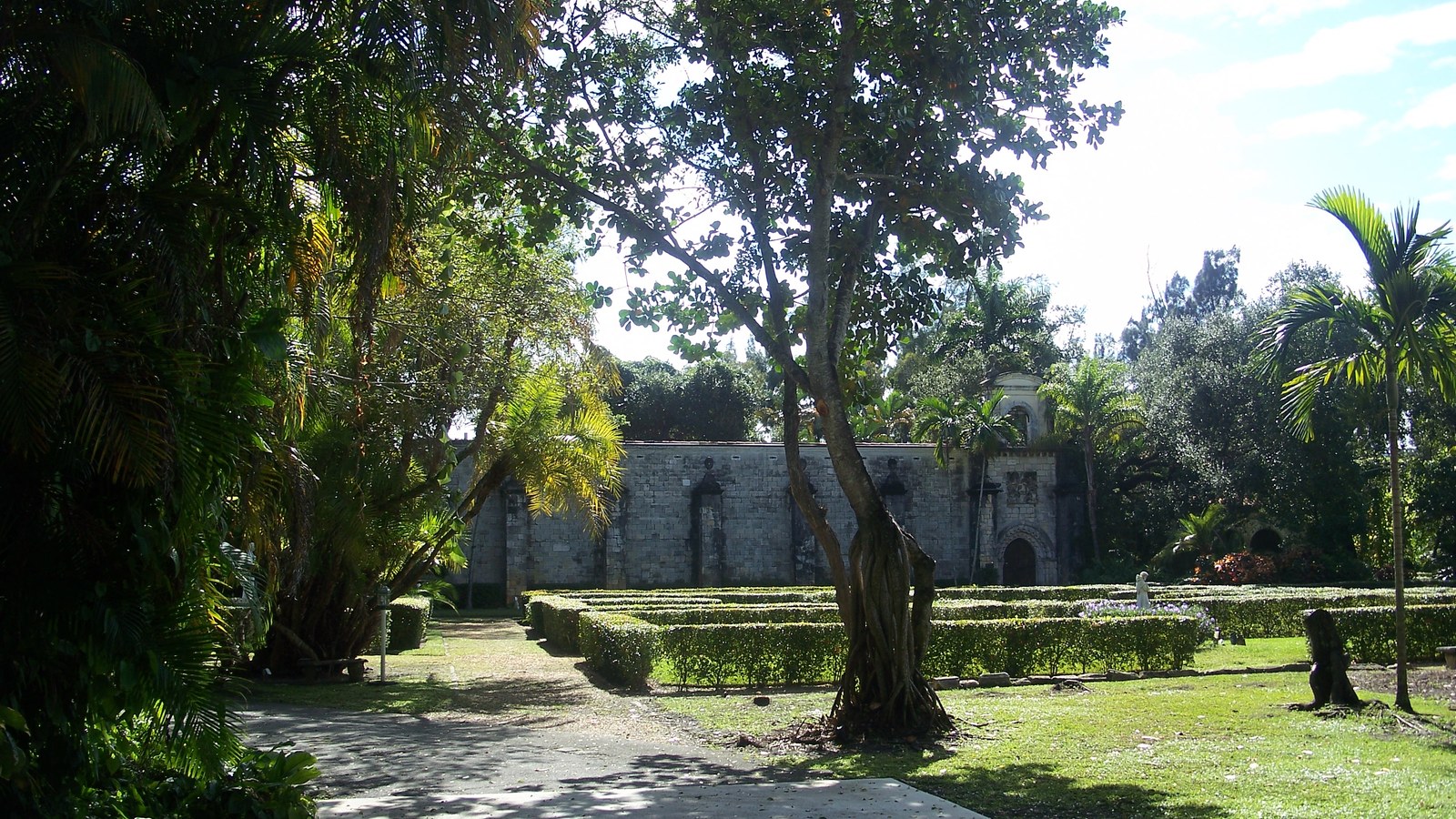
Real growth came at mid-century: State Road 826 (the Palmetto Expressway) reached the area in 1951, the 163rd Street Shopping Center opened in 1956, and the city adopted its current council-manager government in 1958 (Source). Population exploded alongside it, from 871 in 1940 to 21,405 by 1960 — a roughly 905% increase in two decades (Source). The same period brought one of the city’s most distinctive landmarks: the Ancient Spanish Monastery, a 12th-century Spanish cloister that newspaper magnate William Randolph Hearst had shipped to the U.S., reassembled here in the early 1950s (Source).
North Miami Beach has grown considerably more diverse since the 1980s. Between 2000 and 2020, the Hispanic/Latino share of residents rose from 30.0% to 42.4% and the non-Hispanic Black share held around a third, while the non-Hispanic white share fell from 24.8% to 17.5%; as of 2000 the city had the fourth-highest concentration of Haitian residents of any U.S. city, at 19.9% (Source). The 2020 census put the population at 43,676, with a median age of 39.8 — a decade younger than neighboring Aventura. Unlike that high-rise neighbor, roughly 38% of the city’s housing stock is still single-family detached homes, with most of the rest in older garden apartments and mid-rise buildings (Source).
Home values in North Miami Beach
Redfin put North Miami Beach’s median home sale price at $429,716 in the three months ending August 2026, down 15.2% year-over-year, with a median price per square foot of $301 (down 28.5% year-over-year) — a notably softer market than a year earlier (Source). Zillow’s home value index (ZHVI) for the broader Miami metro area — not North Miami Beach specifically — stood at $580,866 as of August 31, 2026, up 0.8% year-over-year (Source). RentCafe puts the average apartment rent in North Miami Beach at $2,615 as of August 2026 (down 0.84% year-over-year), breaking out to roughly $2,240 for a 1-bedroom and $2,805 for a 2-bedroom; a reliable studio-specific figure was not available (Source).
Florida’s post-Surfside condo law, Senate Bill 4-D (2022), still matters here but is a smaller factor than in a nearly all-condo city like Aventura: it requires condo and co-op associations in buildings three stories or taller to complete a Structural Integrity Reserve Study at least every 10 years (associations formed before July 1, 2022 owed their first by December 31, 2025) and bars waiving reserve funding for big-ticket items it flags — roof, load-bearing structure, plumbing, electrical, waterproofing, and any component over $25,000, among others (Fla. Stat. §718.112(2)(g), §719.106(1)(k)) (Source). Because roughly 38% of North Miami Beach’s housing stock is single-family homes and much of the rest is older low-rise garden apartments rather than condo high-rises, this law mainly affects buyers looking at the mid- and high-rise condo buildings along Biscayne Boulevard and the Intracoastal, not the housing stock as a whole.
Getting around
Walk Score gives North Miami Beach an overall score of 63 (“Somewhat Walkable”), a Transit Score of 49 (“Some Transit”), and a Bike Score of 59 (“Bikeable”) — car-optional in a few denser pockets, but more car-dependent overall than Aventura (Source).
North Miami Beach FAQ
Is North Miami Beach walkable?
Somewhat -- Walk Score rates it 63 out of 100 (“Somewhat Walkable”), with a 49 Transit Score and 59 Bike Score, meaning some errands are doable on foot but a car (or the city’s heavy Metrobus network) is genuinely useful for most trips (Source).
Does North Miami Beach flood?
Yes, though somewhat less severely than more exposed coastal neighbors -- First Street Foundation rates roughly 99% of buildings at some flood risk, with an average 64% chance of a 1.4-foot-plus flood over 30 years, and large parts of the city sit within Miami-Dade’s mapped Special Flood Hazard Areas (Source).
Does Florida’s post-Surfside condo law (SB 4-D) matter here?
It matters, but less uniformly than in a nearly all-condo city -- roughly 38% of North Miami Beach’s housing is single-family homes, so SB 4-D’s Structural Integrity Reserve Study and reserve-funding rules mainly affect buyers looking at the city’s mid- and high-rise condo buildings along Biscayne Boulevard and the Intracoastal, not the housing stock as a whole (Source).
Do you need a car in North Miami Beach?
Generally yes -- there is no Metrorail, Metromover, or Brightline station in the city, though it does have one of the highest concentrations of Metrobus service of any Miami-Dade municipality, plus a Tri-Rail connection at nearby Golden Glades (Source).
Is North Miami Beach good for families?
It can be -- median age is 39.8, a decade younger than Aventura, and about 38% of homes are single-family, considerably more than in most nearby high-rise cities; the city is also one of the most Haitian-American communities in the U.S., with a historically strong Haitian and broader Caribbean presence (Source).
What is there to do in North Miami Beach?
The Ancient Spanish Monastery is the standout attraction -- a genuine 12th-century Spanish cloister reassembled here in the 1950s -- along with nearby Oleta River State Park (Florida’s largest urban park) for kayaking and mountain biking, and the Mall at 163rd Street just over the city line (Source).
Nearby alternatives*We're not ranking these — every neighborhood has real trade-offs, and which ones matter is up to you.
North Miami
West — despite the similar name, its own separate incorporated city, with a significant Haitian-American community and somewhat older housing stock.
Aventura
North — Aventura's newer luxury high-rise condo towers sit at a notably higher price point than North Miami Beach's older, more architecturally mixed housing stock.
See what makes Miami-Fort Lauderdale stand out — verified, named medical, dietary, sports, and other specialty resources you won't find in most metros.
Explore Specialty Resources →