Downtown Las Vegas / Arts District, NV
.JPG)
What Downtown Las Vegas / Arts District is actually like
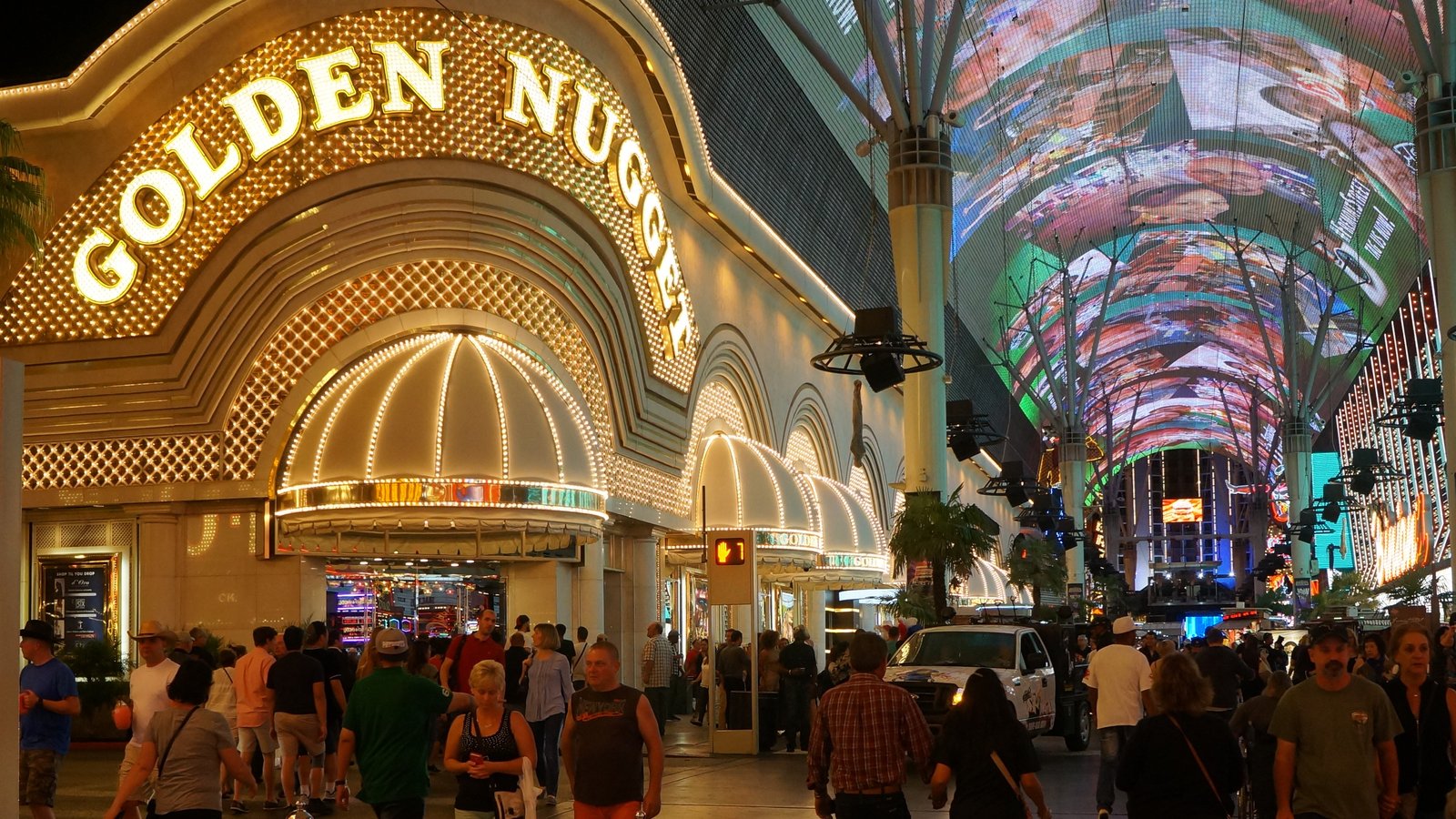
Downtown Las Vegas dates to May 1905, when 110 acres of land next to the new Union Pacific Railroad tracks were auctioned off, laying out the original townsite. Fremont Street became the city's earliest gambling and entertainment strip: the Hotel Nevada (1906, later the Golden Gate) was the city's first hotel, and the Golden Nugget, completed in 1946, became its first major casino. As the Las Vegas Strip drew larger resorts from the 1950s onward and had captured roughly 80% of the valley's casino market by the early 1990s, a cooperative of downtown casino operators financed the Fremont Street Experience -- a five-block pedestrian canopy designed by architect Jon Jerde over the historic neon corridor known as "Glitter Gulch" -- which opened December 14, 1995. Revitalization accelerated in the 2010s: the city began acquiring a former Union Pacific rail yard in 2000 to build what became Symphony Park, home to the Smith Center for the Performing Arts (2012); locally, 2012 was promoted as "The Year of Downtown." In late 2013, online retailer Zappos moved its corporate headquarters into the renovated former Las Vegas City Hall, part of roughly $350 million in revitalization spending backed by then-CEO Tony Hsieh's Downtown Project, which also funded small businesses like The Writer's Block bookstore. South and east of Fremont Street, blocks of old warehouses and working studios were formally promoted as the Arts District -- known locally as "18b" -- which now anchors the monthly First Friday gallery walk.
Today the area is a genuine mix of casino/tourism corridor and residential urban core, distinct from the Strip itself (which sits a few miles south in unincorporated Paradise and is not covered by this guide -- TheNewPlace.com treats it as its own tourist/resort corridor rather than a residential neighborhood, the same way it doesn't give Orlando's theme-park corridor its own guide). Housing is dominated by converted warehouse lofts and newer mid-rise apartment and condo buildings in the Arts District, plus high-rise condo towers scattered through the Fremont East and Symphony Park areas; there's little in the way of traditional single-family housing stock. The Arts District itself is walkable, gallery- and restaurant-dense, and increasingly residential, while Fremont Street and Fremont East remain tourism- and nightlife-heavy. Symphony Park, built on the old rail yard, now holds the Smith Center, the Discovery Children's Museum (relocated there in March 2013), the Cleveland Clinic Lou Ruvo Center for Brain Health, and newer housing including the Parc Haven apartments (2021), with more residential towers and a planned Las Vegas Museum of Art (announced 2024, targeted for 2028) still to come.
The Mob Museum, housed in the restored former federal courthouse and post office building, the Neon Museum, and Downtown Container Park (a retail and dining destination built from shipping containers) round out downtown's cultural and entertainment draws near Fremont Street. The area's growth trajectory is still tied to the Downtown Project-era revitalization push of the early-to-mid 2010s, though that effort went through its own financial turbulence (the Downtown Project's development arm filed for bankruptcy protection in 2016); redevelopment since has continued in a more piecemeal, developer-by-developer fashion rather than under one coordinated initiative.
Home values in Downtown Las Vegas / Arts District
Zillow's Home Value Index put the typical Downtown Las Vegas home value at $444,406 as of July 31, 2026, down 0.3% year-over-year -- Zillow doesn't track the Arts District as a separate region, so that figure is folded into this broader Downtown number.
See what makes Las Vegas stand out — verified, named medical, dietary, sports, and other specialty resources you won't find in most metros.
Explore Specialty Resources →Downtown Las Vegas / Arts District FAQ
Is Downtown Las Vegas the same thing as the Las Vegas Strip?
No. The Strip is a separate resort corridor a few miles south, mostly in unincorporated Paradise, built up from the 1950s onward. Downtown is the city's original 1905 townsite around Fremont Street -- older, smaller-scale, and increasingly residential rather than resort-focused. This guide covers Downtown/the Arts District specifically, not the Strip.
What is the 18b Arts District?
It's the informal name for the warehouse-block gallery and studio district just south of Fremont Street; "18b" is the local shorthand used for the area that hosts First Friday, the monthly evening of open galleries, live music, food vendors and street art that's become downtown's signature recurring event.
Can you live downtown without a car?
It's more feasible here than almost anywhere else in the valley. RTC's Deuce runs 24/7 along Las Vegas Boulevard between the Fremont Street Experience and the Strip, the fare-free Downtown Loop circulates through Symphony Park, City Hall, Fremont Street and the Arts District, and the Bonneville Transit Center (opened 2010) is the valley's main downtown transit hub with connections to express bus routes, FlixBus and Amtrak Thruway service. The Arts District and Fremont East core are also genuinely walkable in a way most of the valley isn't.
Is Zappos headquarters still downtown?
Zappos relocated its corporate headquarters into the renovated former Las Vegas City Hall in late 2013 as part of Tony Hsieh's Downtown Project revitalization push. This research could not independently confirm the company's current 2026 occupancy status at that building, so treat that specific detail as unconfirmed rather than current fact.
What's the closest hospital to downtown?
University Medical Center of Southern Nevada, at 1800 W. Charleston Blvd, is the closest major hospital, roughly two miles west of Fremont Street.
Does downtown flood?
No flash-flood event specific to the Downtown/Arts District blocks turned up in this research. The whole valley, downtown included, sits inside the flood-control network built by the Clark County Regional Flood Control District, formed in 1985 after a voter-approved quarter-cent sales tax in 1986; by 2013 it had put roughly $1.7 billion into 90 detention basins and about 581 miles of channels and storm drains, removing 51 square miles valley-wide from FEMA flood zones.