Summerville, SC

What Summerville is actually like
Summerville began in 1785 as Pineland Village, a scattering of summer houses Charleston-area planters built among the pines after the Revolutionary War so their families could get away from the coast during malaria and yellow-fever season. The town was formally incorporated on December 17, 1847, and that same year passed one of the country's earliest tree-protection ordinances -- a $25 fine for cutting a pine without permission, still commemorated in the town motto "Sacra Pinus Esto" ("The Pine Is Sacred"). By 1899, the International Congress of Physicians in Paris had gone so far as to name Summerville one of the two best places in the world to treat lung and throat disorders, crediting the turpentine scent of its pine forest (Wikipedia).
The event that most shaped the town's modern identity was the magnitude 7-plus earthquake of August 31, 1886 -- and unlike Charleston's own downtown, Summerville wasn't just shaken by it: researchers have identified the epicentral area, the zone of strongest shaking, as roughly 25 kilometers (about 15.5 miles) northwest of Charleston, in what was then the small village of Summerville itself. The quake reduced buildings around the town square to ruins and destroyed the nearby Old White Meeting House, and geologists have since mapped roughly 3 feet of ground uplift and a lateral rail offset along the old railroad line through town (EARTH Magazine, Wikipedia). The town's recovery leaned on the same pine identity that built it: the Chamber of Commerce adopted "Flower Town in the Pines" as an official slogan in 1925, azalea plantings expanded through the 1930s, and the Flowertown Festival has run every spring at Azalea Park since 1972, now drawing roughly 200,000 visitors a year (What's Up Summerville).
The Census Bureau's own estimate puts Summerville at 53,177 residents as of July 1, 2025, up from 50,915 at the 2020 Census, 43,392 in 2010, and just 27,752 in 2000 -- nearly doubling in a quarter-century and making it one of the largest and fastest-growing towns in the Charleston metro. The town spans roughly 19.71 square miles across three counties -- Dorchester, Berkeley, and Charleston -- though its municipal government and identity are centered in Dorchester (U.S. Census Bureau).
Home values in Summerville
Zillow's own typical-home-value index for ZIP 29483, Summerville's core, put the figure at $356,056 as of January 31, 2026, down 0.8% over the past year (Zillow). RealtyTrac's townwide market data tells a similar story from a different angle: a median listing price of $406,200 as of July 2026, down 0.67% year-over-year, against a median SOLD price of $399,800, up 4.65% over the same stretch -- listing and sold prices converging rather than pulling apart, unlike the wide swings a thin luxury market can produce (RealtyTrac). Water and sewer service comes from Summerville CPW (Commissioners of Public Works), the town's own public utility, which has run water service since 1930 and sewer since 1941 and serves more than 27,800 water customers today (Summerville CPW). Dominion Energy, which absorbed the former SCE&G, is the electric provider across most of town -- though Summerville's reach into Berkeley and Charleston counties means it's worth confirming the exact electric and water provider for a specific address rather than assuming townwide coverage (Post and Courier).
Evenings and weekends
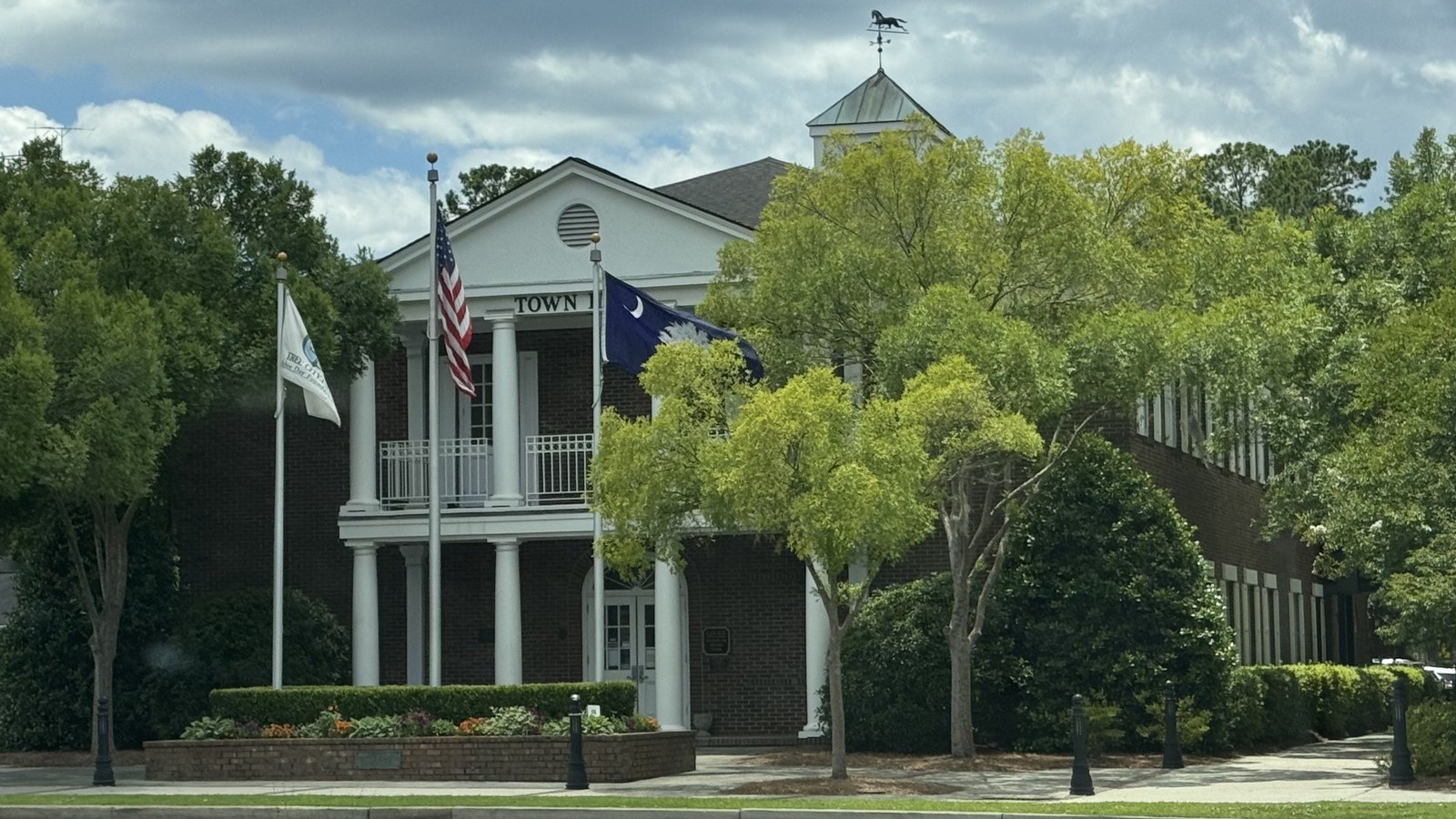
Downtown Summerville centers on Hutchinson Square, a village green bookended by Town Hall and a raised pavilion styled after the late-1800s railroad depot that once stood nearby -- a nod to the town's origins as one of the earliest railroad stops on the line between Charleston and the interior. The square has served as a communal gathering space since the early 1800s and now anchors a roughly one-square-mile historic district holding more than 700 properties listed on the National Register of Historic Places, ringed by locally owned shops, cafes, and restaurants along Main Street (Charleston Magazine, Summerville Downtown). The biggest annual draw is the Flowertown Festival, held the first weekend of April at Azalea Park since 1972 and now one of the largest arts-and-crafts festivals in the Southeast, drawing roughly 200,000 visitors over three days (What's Up Summerville).
Getting around
Summerville is a car-dependent town outside its historic core: Hutchinson Square and the surrounding downtown blocks are walkable on foot, but the town doesn't carry a single consolidated Walk Score the way a dense urban ZIP code does, and no dedicated fixed-route transit line runs into downtown Summerville -- confirm current commute and transit options for a specific address rather than assuming service. Downtown Charleston is about 26 miles away by car via I-26, typically a 29-minute drive without traffic, though the Summerville-to-North Charleston stretch of that corridor carries some of the metro's heaviest commute volume (Distance-Cities.com). For local care, Summerville Medical Center at 295 Midland Parkway is a 174-bed acute-care hospital that's served the area for more than 30 years as part of HCA Healthcare's Trident Health System (Trident Health System).
Summerville FAQ
Is Summerville, SC a good place to live?
Summerville is the Charleston metro's fastest-growing large suburb -- the Census Bureau's own estimate puts the town at 53,177 residents as of July 1, 2025, up from 50,915 in 2020 and 27,752 in 2000. It pairs a walkable historic downtown around Hutchinson Square with newer, car-dependent subdivisions along the Summerville/Ladson corridor; confirm commute, schools, and utilities for a specific address before deciding what fits.
Why is Summerville called 'Flowertown in the Pines'?
Charleston-area planters began retreating to Summerville's pine forest in the late 1700s and 1800s to escape malaria and yellow fever season, and by 1899 the International Congress of Physicians in Paris had named it one of the world's two best places to treat lung and throat disorders. The Summerville Chamber of Commerce adopted 'Flower Town in the Pines' as its official slogan in 1925, and the Flowertown Festival, held at Azalea Park every spring since 1972, now draws roughly 200,000 visitors a year.
Was Summerville actually at the epicenter of the 1886 Charleston earthquake?
Essentially yes -- the magnitude 7-plus earthquake of August 31, 1886 had its epicentral area, the zone of strongest shaking, about 25 kilometers (roughly 15.5 miles) northwest of Charleston, in what was then the small village of Summerville. It reduced buildings around the town square to ruins and destroyed the nearby Old White Meeting House, and researchers have since mapped roughly 3 feet of ground uplift along the old railroad line through town.
What county is Summerville in?
Summerville is primarily in Dorchester County, where its municipal government and identity are centered, though the town's boundaries also reach into small portions of Berkeley and Charleston counties.
What school district serves Summerville?
Dorchester County has more than one public school district, and Summerville falls mostly within Dorchester School District Two, which serves the county's southeastern portion and enrolled more than 26,500 students across 26 schools as of its most recent figures. Confirm the exact zoned schools for a specific address via the district's own attendance maps.
How far is Summerville from downtown Charleston?
About 26 miles by car via I-26, roughly a 29-minute drive without traffic -- longer at peak commute times, when the corridor between Summerville and North Charleston carries some of the metro's heaviest volume.
Nearby alternatives*We're not ranking these — every place has real trade-offs, and which ones matter is up to you.
Ladson
Just southeast along US-78 -- an unincorporated growth corridor blending older subdivisions with newer construction closer to the I-26/I-526 interchange.
Moncks Corner
North on US-52 in Berkeley County -- the Berkeley County seat, and the gateway to Lake Moultrie and the Santee Cooper lakes.
North Charleston
Down I-26 toward the coast -- the MSA's most populous single city, anchored by the port, Joint Base Lindsey Graham, and Boeing's South Carolina campus.
See what makes Charleston stand out — verified, named medical, dietary, sports, and other specialty resources you won't find in most metros.
Explore Specialty Resources →