Spanish Fork, UT
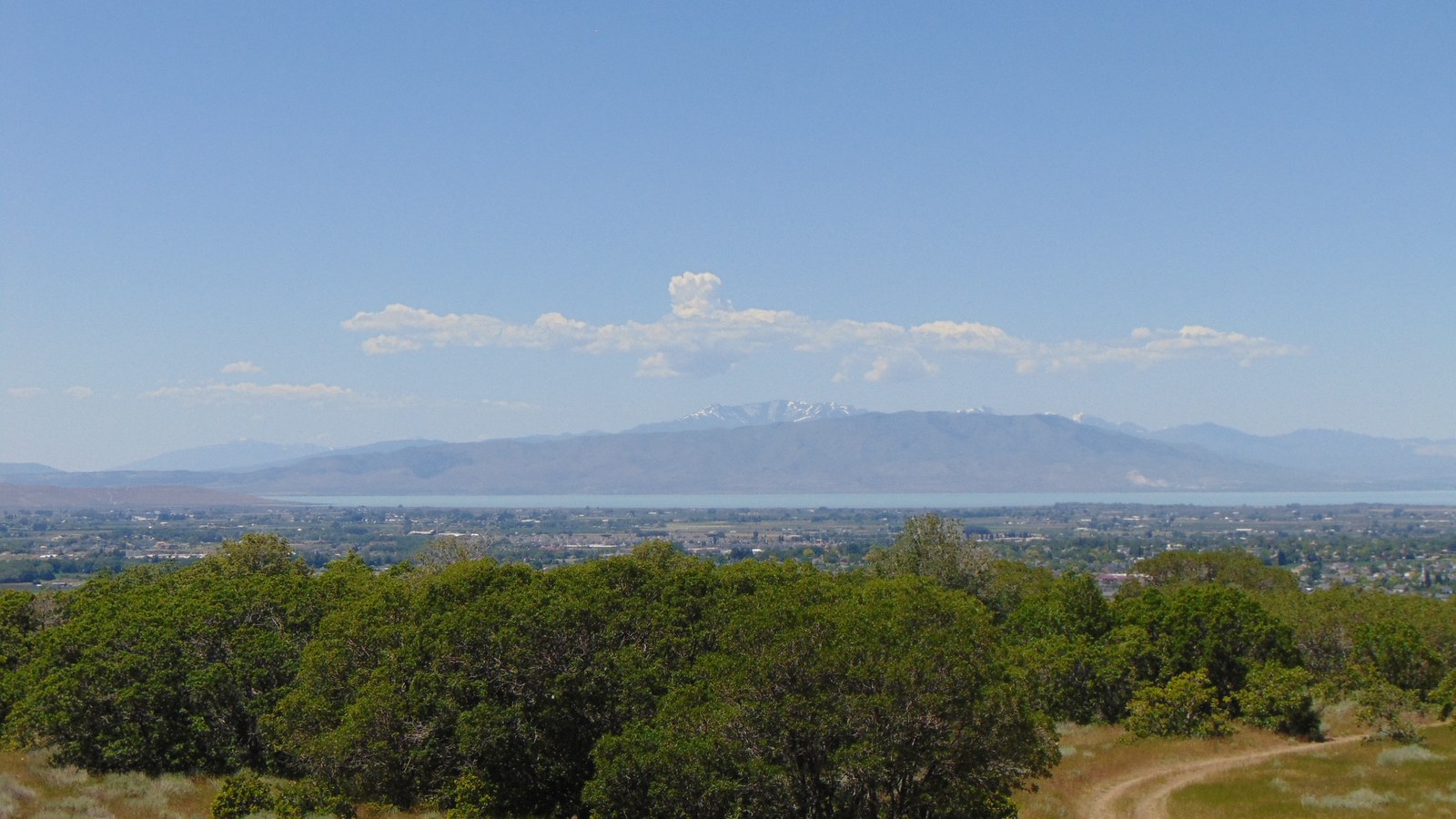
,_May_2017.jpg)
What Spanish Fork is actually like
Spanish Fork's name traces to 1776, when Franciscan friars Silvestre Vélez de Escalante and Francisco Atanasio Domínguez led an expedition down the canyon and stream that now carry the name, searching for an overland trade route from Santa Fe to Spain's California missions. The expedition never reached California -- it turned back toward New Mexico before completing that route -- but the Spanish Fork name stuck to the canyon, the river, and eventually the town anyway. Permanent Mormon settlement followed in 1851, and the city was incorporated on January 17, 1855 (Wikipedia).
Spanish Fork's defining physical feature is the canyon itself: a mountain pass carrying U.S. Highway 6 southeast toward Price and Green River, and south Utah County's main highway gateway out of the valley -- a genuinely different identity from the tech-corridor cities to the north. The city's growth has been real and sustained rather than a recent phenomenon: it grew 71.3% between 2000 and 2010 alone, from 20,246 to 34,691 residents, among the steepest growth rates in the state at the time (Wikipedia).
Spanish Fork's population reached an estimated 48,837 as of July 1, 2025, up 14.6% from the 2020 Census count of 42,602 (U.S. Census Bureau), and its 2024 median household income was $104,844 (Data USA) -- higher, notably, than American Fork's. The reputation of south Utah County as the metro's affordable option doesn't hold up cleanly against current Zillow figures either; see home_value_html below.
Home values in Spanish Fork
Zillow's Home Value Index for Spanish Fork was $505,027 as of December 31, 2025, up 2.6% year-over-year -- a few months older on Zillow's own page than the August 31, 2026 date attached to the other four cities in this cluster, worth flagging rather than treating as a directly comparable month-for-month figure (Zillow). Even on that slightly older reading, $505,027 runs higher than Provo's ZIP 84601 figure ($445,933) and lands almost identical to Orem's ($501,606) and close to American Fork's ($523,873) -- only Lehi, at $569,889, stands clearly apart from the rest of this cluster. Utah levies a flat 4.45% individual income tax rate (Tax Foundation). The state sales tax rate is 6.10%, with Utah's statewide average combined state-and-local sales tax rate at 7.19% (Tax Foundation) -- Utah County's own combined rate, confirmed identically across Provo, Orem, Lehi, American Fork, and Spanish Fork, runs a bit above that statewide average at 7.45%, built from a 4.85% base state rate, a 1% county option, a 0.5% county transit tax, and each city's own 1.1% local-option tax (Avalara). Property taxes run the other direction: Utah's signature residential feature is a constitutional 45% primary residential exemption, in place since 1982, that shields 45% of a primary (owner-occupied) home's fair market value from taxation entirely, so only 55% of assessed value is actually taxed -- a structural benefit tied to occupancy and use, not age or income, though county assessors periodically require a residential-status declaration to keep it active (Utah County Assessor). Utah's statewide average effective property tax rate runs low as a result -- the Tax Foundation puts it at roughly 0.48%, while other property-tax trackers put it closer to 0.58%, ordinary variance for a figure that depends on which year's assessed-value data a given source pulls (PropertyTaxPeek).
Evenings and weekends
Spanish Fork's nightlife is genuinely small: two bars anchor it. The Deerhunter Pub (2000 N 300 West, near the municipal airport), a log-cabin-style room with three sections, hosts karaoke on Thursdays and live local bands Friday and Saturday, plus patio concerts in summer, and draws some visitors from elsewhere in the county. Black Jacks (65 W 100 N) is a smaller, no-frills dive and karaoke bar downtown. Glade's Drive Inn (296 S Main Street), open since 1954 with no indoor seating, functions as an after-dark hangout for teenagers and families rather than an adult scene. The one dependable recurring gathering is Fiesta Days, a weeklong celebration around July 24 with a rodeo, parade, concerts, carnival rides, and fireworks. Outside that week and the two bars, Spanish Fork goes quiet early on weeknights; residents wanting more options drive north to Provo, about ten miles away.
Getting around
Downtown Spanish Fork's Main Street strip is walkable in isolated pockets (64 Walk Score), but the city's 30 citywide baseline means a car is standard for most trips. Without its own FrontRunner station, reaching UVX or FrontRunner service means driving north to Provo Central first, a genuine difference from the four cities to the north in this cluster.
Spanish Fork FAQ
How did Spanish Fork get its name?
From a 1776 Spanish expedition -- Franciscan friars Silvestre Vélez de Escalante and Francisco Atanasio Domínguez -- that came down the canyon looking for a trade route to California and never completed it, turning back toward New Mexico instead. The name stuck to the canyon, river, and eventual town anyway.
Is Spanish Fork actually cheaper than northern Utah County?
Not clearly, based on current Zillow figures: Spanish Fork's $505,027 home-value index runs higher than Provo's own university-area ZIP ($445,933) and is nearly identical to Orem's ($501,606). Only Lehi, at $569,889, stands meaningfully apart from the rest of this cluster -- Spanish Fork's reputation as the metro's affordable option doesn't hold up cleanly against those numbers.
Is Spanish Fork walkable?
Downtown Main Street scores a moderate 64 on Walk Score, but the city's own citywide average is a car-dependent 30. Spanish Fork also lacks its own FrontRunner station, unlike the four cities to its north in this cluster.
Does Spanish Fork flood?
The Spanish Fork River runs through the city toward Utah Lake's south end, so riverside parcels carry different flood designations than the rest of the city; Spanish Fork Canyon upstream carries its own separate flash-flood risk. Confirm a specific address via FEMA's Flood Map Service Center.
What school district serves Spanish Fork?
Nebo School District, the seventh-largest in Utah with 43,696 students as of 2024-25, covering all of southern Utah County including Spanish Fork, Payson, Salem, Springville, Mapleton, and Santaquin. Spanish Fork High School was the district's first high school.
How does Spanish Fork's growth compare to the rest of the county?
It's grown steadily but somewhat less explosively than Lehi or American Fork recently -- 14.6% between the 2020 Census and July 2025, versus Lehi's 25.6% and American Fork's 22.9% over the same period. Spanish Fork's steepest growth period was actually 2000-2010, when it grew 71.3%.
Nearby alternatives*We're not ranking these — every place has real trade-offs, and which ones matter is up to you.
Provo
About 10 miles north -- the nearest FrontRunner and UVX access point for Spanish Fork residents, since Spanish Fork has no rail station of its own.
American Fork
About 18 miles north, past Provo and Orem -- a similarly fast-growing Utah County city, though in Alpine rather than Nebo School District.
Orem
About 14 miles north, between Provo and American Fork -- home to Utah Valley University and, per current Zillow figures, an almost identical home-value index to Spanish Fork's.
See what makes Salt Lake City stand out — verified, named medical, dietary, sports, and other specialty resources you won't find in most metros.
Explore Specialty Resources →