Blue Springs, MO
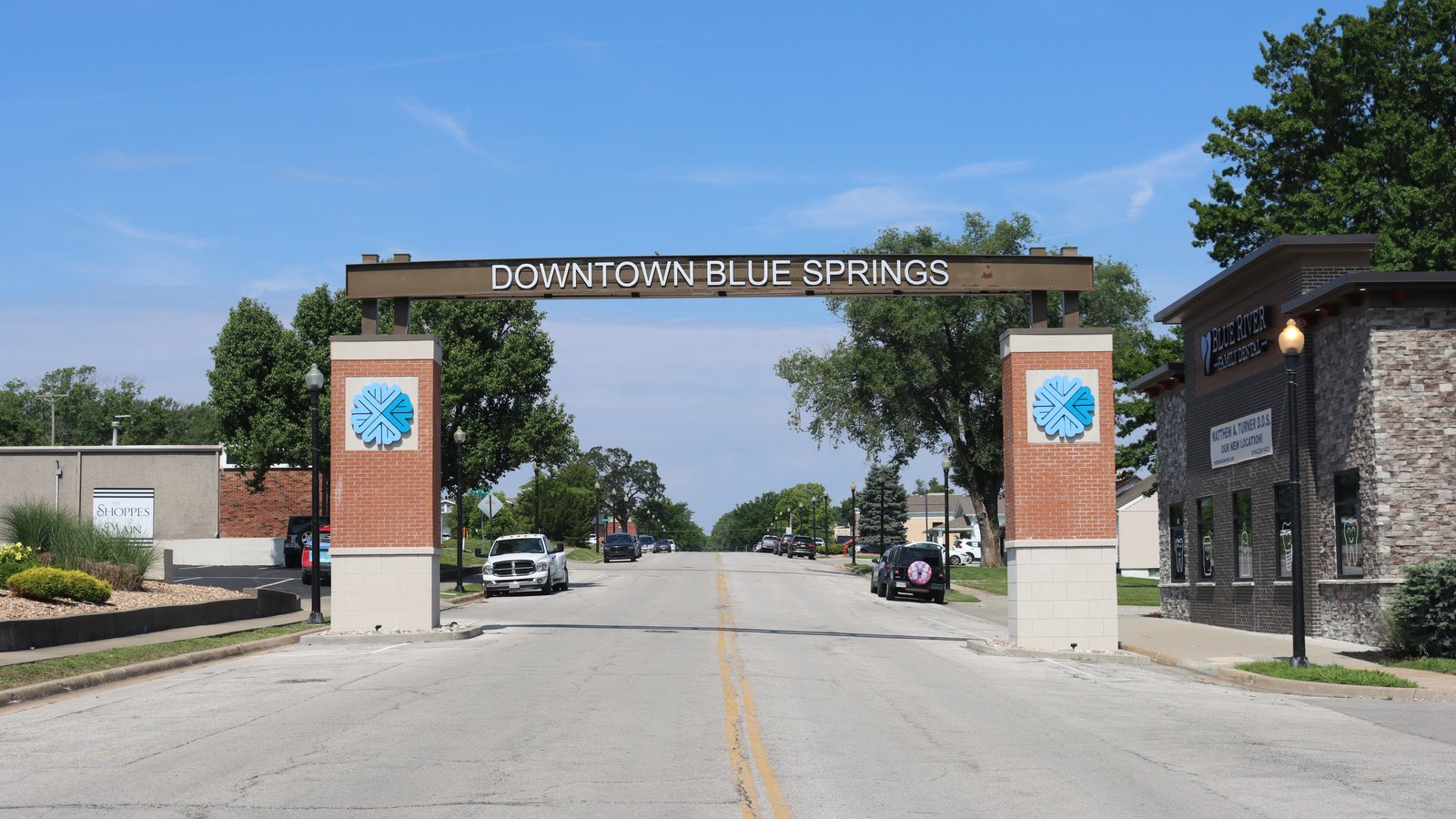

What Blue Springs is actually like
Blue Springs takes its name from a natural spring first noted as early as 1825, described as "a spring of water flowing from the side of a hill and falling into a tributary of Little Blue River" that was used by campers, traders and Santa Fe-bound wagon trains; settler Franklin Smith arrived from Virginia in 1838 and established the area's first post office in 1845, naming it for the springs, per Wikipedia's Blue Springs entry. The town incorporated on September 7, 1880 — the fourth settlement in Jackson County to do so — and became a fourth-class city in 1904.
Blue Springs is now the eighth-largest city in the Kansas City metro and the eleventh-largest in Missouri, with an estimated 61,246 residents in 2024, up from 58,603 at the 2020 census, per Wikipedia. It sits about 19 miles east of downtown Kansas City and covers 22.70 square miles.
The city's defining amenity is Fleming Park, a 7,809-acre Jackson County park containing both Blue Springs Lake and Lake Jacomo — together about 1,690 acres of water — built for flood control and recreation on the Little Blue River watershed, per Wikipedia. The 1878 Chicago & Alton Hotel is, per the same source, the city's oldest continuously operating business.
Home values in Blue Springs
The median home in Blue Springs sold for $333,556 (about $334K) over the three months ending July 2026, up 1.1% year-over-year, per Redfin's Blue Springs housing-market data. (Zillow's own ZHVI page could not be reached this session — see this file's module docstring.)
Evenings and weekends
The Blue Springs Fall Fun Festival is the city's signature community event — a mid-September weekend of multiple entertainment stages, a parade, a carnival, a petting zoo and festival food (turkey legs, funnel cakes, walking tacos), run by the Blue Springs Chamber of Commerce, per the festival's own site. Fleming Park's Blue Springs Lake and Lake Jacomo are the area's main outdoor draw year-round for fishing, boating and trails, per Wikipedia, and the Historic Downtown Blue Springs district holds its own smaller-scale events through the year.
Getting around
Blue Springs is built for driving — a citywide Walk Score of 25 out of 100 puts it solidly in car-dependent territory, there's no dedicated local KCATA fixed-route bus network, and most subdivisions were built without continuous sidewalks to shopping or schools. A car is effectively required for daily life here.
Blue Springs FAQ
How did Blue Springs get its name?
From a hillside spring first noted around 1825 that fed a tributary of the Little Blue River and watered Santa Fe Trail traffic, per Wikipedia's Blue Springs entry.
What school district serves Blue Springs?
Blue Springs has its own independent public school district, Blue Springs R-IV.
Is Blue Springs walkable?
No — Walk Score's citywide average is 25 out of 100 ("Car-Dependent"), so plan on driving for most errands.
What's the nearest hospital to Blue Springs?
St. Mary's Medical Center, a Prime Healthcare hospital at 201 NW R.D. Mize Road, sits inside the city.
Nearby alternatives*We're not ranking these — every place has real trade-offs, and which ones matter is up to you.
Lee's Summit
Lee's Summit borders Blue Springs to the south, sharing the Little Blue River watershed that also feeds Fleming Park's lakes.
Independence
Independence sits just west of Blue Springs along US-40/I-70, both eastern Jackson County suburbs of Kansas City.
Raytown
Raytown lies southwest of Blue Springs along the same Little Blue River corridor, closer in to Kansas City proper.
See what makes Kansas City stand out — verified, named medical, dietary, sports, and other specialty resources you won't find in most metros.
Explore Specialty Resources →