Littleton, CO

What Littleton is actually like
Richard Sullivan Little, a New Hampshire-trained engineer who had worked on Denver-area irrigation, platted the Village of Littleton in 1872 during the area's Pikes Peak Gold Rush-era settlement. The Rough and Ready Flour Mill opened in 1867; the Denver & Rio Grande Railroad arrived in 1871; the town incorporated in 1890 and became Arapahoe County's permanent seat in 1904. Post-WWII growth shifted the local economy toward manufacturing and aerospace (Martin Marietta), spurring mid-century residential expansion; Arapahoe Community College opened in 1972.
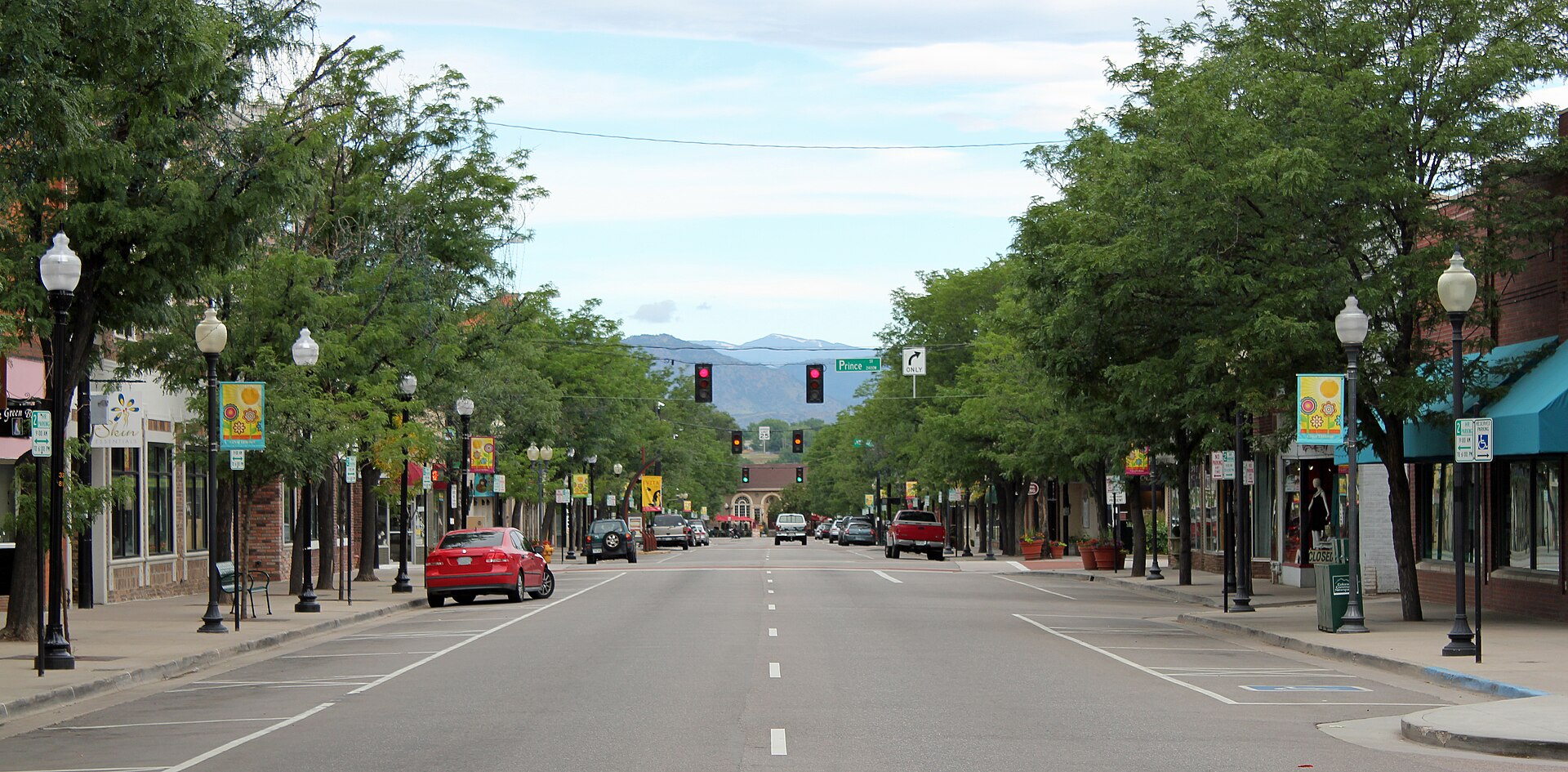
Today Littleton has about 45,652 residents (2020 Census, the 20th-most-populous Colorado municipality) and combines a historic Main Street/downtown core of brick storefronts with mid-century aerospace-boom subdivisions and newer South Platte-greenway infill. The Columbine High School tragedy (1999) is commonly associated with Littleton in the public mind, though the school itself sits in unincorporated Columbine and only carries a Littleton mailing address; a memorial stands in adjacent Clement Park.
Home values in Littleton
Zillow's home value index for Littleton put it at $625,520 as of July 31, 2026, down 2.1% year-over-year.
See what makes Denver stand out — verified, named medical, dietary, sports, and other specialty resources you won't find in most metros.
Explore Specialty Resources →Getting around
Littleton is one of the more transit-connected southern suburbs -- the D Line runs directly from Littleton–Mineral and Littleton–Downtown stations to Denver, about 10 miles and roughly 16 minutes away by car or a direct train ride. The historic Main Street core is genuinely walkable; outlying subdivisions are more car-dependent.
Littleton FAQ
Can I commute to downtown Denver by train from Littleton?
Yes -- the RTD D Line runs from Littleton–Mineral/Littleton–Downtown stations directly toward downtown, about 10 miles away.
Does Littleton flood?
The South Platte River, which runs through Littleton, produced a major documented flood on June 16, 1965, destroying dozens of homes and bridges; modern floodplain infrastructure has since been added.
Is the housing stock old or new?
A mix -- a historic downtown core plus mid-century (1950s-70s) subdivisions tied to the aerospace industry boom, with newer infill along the river greenway.
Is Columbine High School in Littleton?
It carries a Littleton mailing address but sits in unincorporated Columbine, adjacent to the city.
Nearby alternatives*
Highlands Ranch
About 15-20 minutes southeast, with no light rail access at all versus Littleton's direct D Line -- a higher typical value (around $701,000 versus Littleton's $626,000) and a planned-community layout rather than a historic downtown.
Lakewood
A comparable light-rail-connected western suburb (via the W Line, a separate line from Littleton's D Line) -- a somewhat lower typical value (Redfin's sale-price figure put it around $560,000) and its own distinct downtown district, Belmar.
Washington Park
About 20-30 minutes north into Denver proper, with no light rail station versus Littleton's D Line access -- a much higher typical value (around $1.26 million) in exchange for an urban, park-anchored setting.
*We're not ranking these — every neighborhood has real trade-offs, and which ones matter is up to you.