Downtown Denver, CO
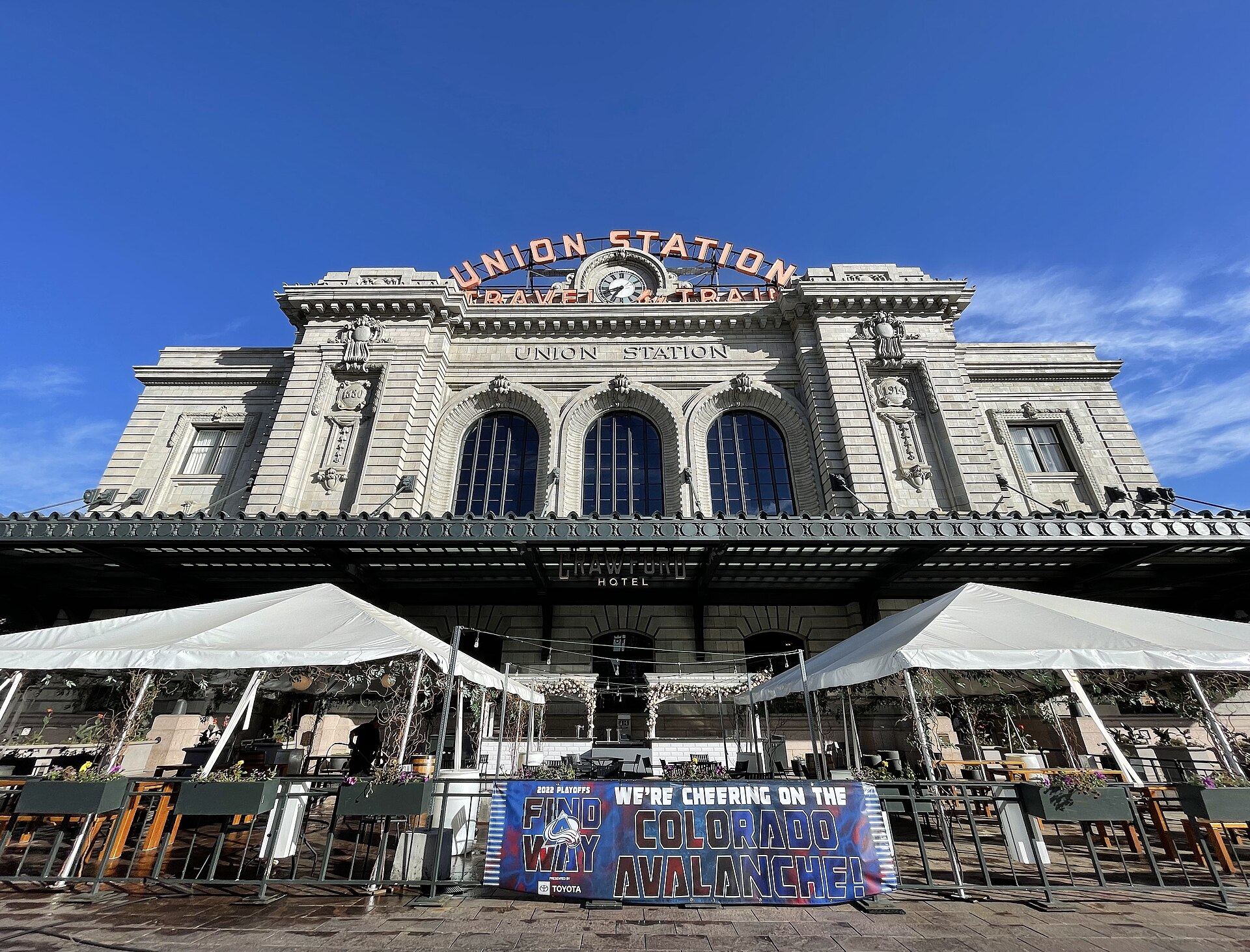

What Downtown Denver / Union Station is actually like
This neighborhood takes its name from Denver Union Station, the city's 1881 rail terminal (rebuilt in Beaux-Arts style in 1914), and today largely overlaps the Lower Downtown (LoDo) Historic District -- a dense grid of 19th-century brick warehouses just north of the South Platte River. A major public redevelopment beginning in 2002 spent roughly $500 million transforming about 19.5 acres around the historic station; by 2019 that had added a wave of new apartment towers, a 334-unit condo building, two full-size grocery stores, and the fully restored station itself, turning a semi-industrial rail yard into Denver's densest mixed-use core.
Today the area is defined by high-rise and mid-rise residential towers, converted brick warehouse lofts in the LoDo core, Coors Field (the Colorado Rockies' ballpark), and the 16th Street Mall pedestrian corridor, which terminates here before continuing northwest across the South Platte into the Highlands via three bridges. As the transit and employment hub of the entire metro -- Union Station is the terminal or transfer point for the A Line to the airport plus most of RTD's light rail network -- it draws professionals and empty-nesters chasing a walk-to-everything commute, alongside a growing luxury-condo segment in the newer towers.
Home values in Downtown Denver / Union Station
A local brokerage's live-listing data for the Union Station micro-area showed a median list price around $1.1 million (no dedicated Zillow or Redfin home-value index exists for this specific micro-neighborhood -- it's typically folded into broader Downtown/LoDo figures, so treat this as a directional, listing-based figure rather than a historical index).
See what makes Denver stand out — verified, named medical, dietary, sports, and other specialty resources you won't find in most metros.
Explore Specialty Resources →Getting around
This neighborhood is the most transit-rich part of the metro by a wide margin -- nearly every RTD light rail and commuter rail line either terminates or passes through Union Station, and the 16th Street Mall pedestrian corridor makes the core genuinely walkable. That walkability and transit density drop off quickly once you're a few blocks outside LoDo.
Downtown Denver / Union Station FAQ
Is this the same as "LoDo"?
Roughly -- the Union Station statistical neighborhood and the Lower Downtown (LoDo) Historic District overlap heavily, though their official boundaries don't align exactly.
Can I get to the airport without a car?
Yes -- the A Line commuter rail runs directly from Union Station to Denver International Airport, a 23.5-mile, roughly 37-minute ride.
Has this area flooded before?
Yes -- the June 16, 1965 South Platte River flood caused catastrophic, well-documented damage in and around downtown, Colorado's costliest flood on record.
What's the housing stock like?
Almost entirely high-rise and mid-rise apartment/condo towers built since the early 2000s redevelopment, plus a core of converted 19th-century brick warehouse lofts in LoDo.
Nearby alternatives*
Highlands / LoHi
About 1–1.5 miles across the South Platte via pedestrian bridges -- LoHi has no light rail station of its own, but trades Union Station's tower-and-loft density for worker-cottage-scale streets and a walkable restaurant strip along Tennyson Street.
Cherry Creek
A roughly 9-minute drive southeast, with no light rail access at all (Cherry Creek's RTD stop is bus-only) -- but a meaningfully higher typical home value, around $1.21 million versus this neighborhood's listing-based $1.1 million, and a quieter, retail-anchored character.
RiNo / Five Points
About 1–1.5 miles northeast on the same A Line, with a lower Zillow-tracked typical value (about $575,000) and a very different history -- Five Points was Denver's historic jazz-era Black cultural district, now overlapping the RiNo arts/brewery district.
*We're not ranking these — every neighborhood has real trade-offs, and which ones matter is up to you.
Compare Downtown Denver / Union Station to these side by side →