Downtown Orlando, FL
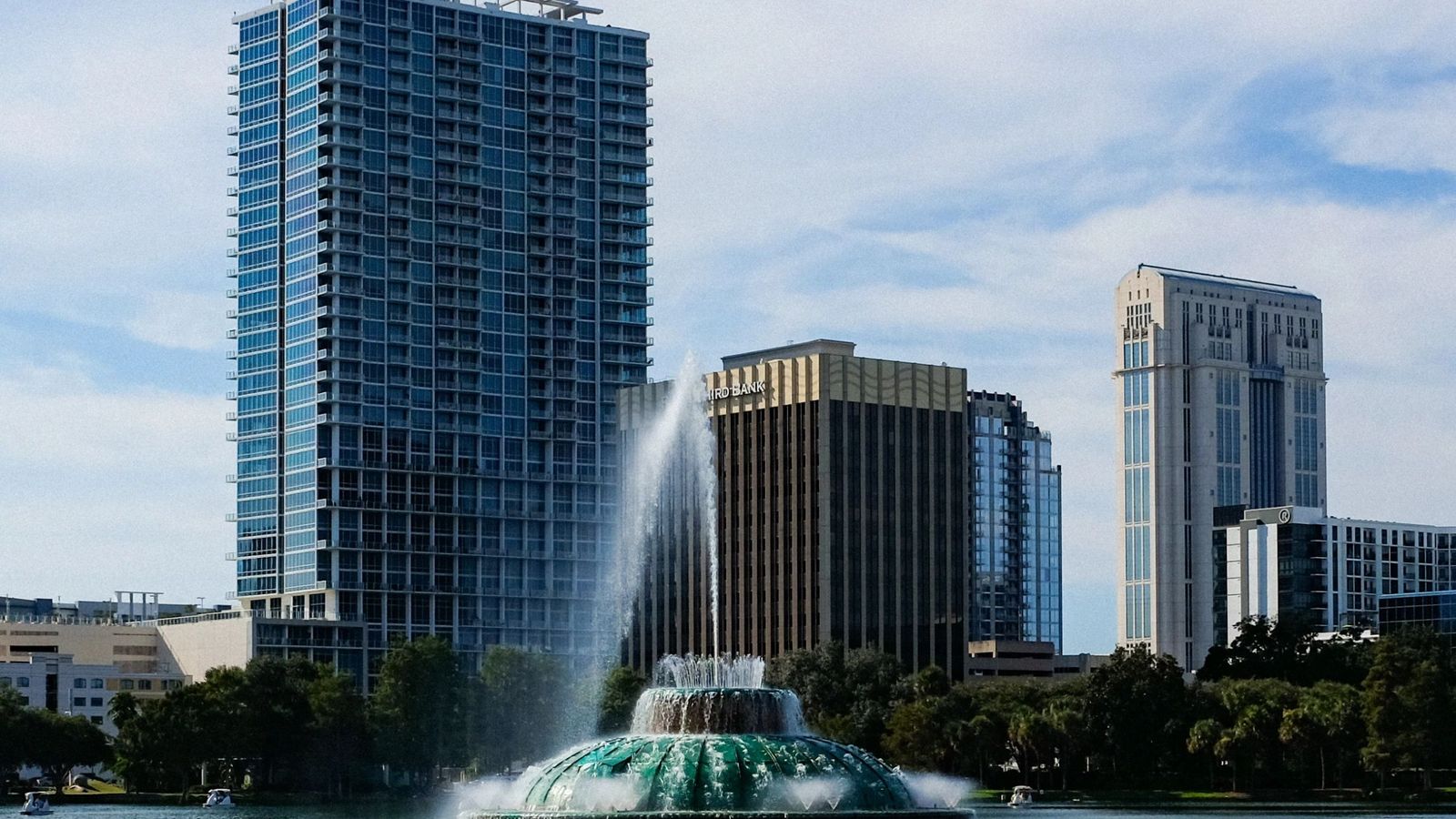
What Downtown Orlando is actually like
Downtown Orlando traces to 1843, when cattleman Aaron Jernigan settled land near Fort Gatlin and the small community took his name. It was incorporated as the Town of Orlando on July 31, 1875 — the renaming is most often credited to resident James Speer, who proposed naming the settlement after the lead character in Shakespeare's As You Like It, though a long-circulated legend about a soldier named Orlando Reeves has never been substantiated by historians. The defining event in the town's early built history came in 1884, when a fire nearly destroyed the entire wooden settlement, prompting the formation of Orlando's first organized fire brigade and a wave of more substantial rebuilding; the city was chartered in 1885, and the 1890 arrival of the Atlantic Coast Line Railroad shifted commerce from the old courthouse square to the new Church Street depot.
Today's downtown is really seven official neighborhoods packed into one Community Redevelopment Area: the Central Business District around Lake Lucerne and the Dr. Phillips Center; North Quarter, known for its arts and nightlife scene; the Lake Eola Heights Historic District, with some of the city's oldest homes on oak-lined brick streets; South Eola, wrapped around Lake Eola Park itself; Thornton Park, just east of the lake; Parramore, established in the 1880s as the historical hub of Orlando's Black community and now split into the Lake Dot, Callahan, and Holden sub-areas; and the Lake Cherokee Historic District to the south. A 1998-2000s building boom roughly doubled downtown's density, and the flight path into nearby Orlando Executive Airport is the reason no downtown tower has topped 441 feet since the SunTrust Center (now 200 South Orange) was completed in 1988.
Downtown's own resident count was last measured at 18,731 across all seven neighborhoods combined in the 2010 Census, with an estimated daytime population near 65,000 — both figures are dated and due for a refresh, but they capture a place that's historically leaned office and government by day and emptied out at night. The city of Orlando as a whole has kept growing since: an estimated 333,888 residents as of 2025 (U.S. Census Bureau), up from 307,573 at the 2020 Census.
Home values in Downtown Orlando
Zillow tracks home values city-by-city, not for every neighborhood within a city — Downtown Orlando is one of the pockets that doesn't get its own figure. Rather than publish a citywide number that might not reflect this specific part of town, we're leaving pricing out of this particular guide for now.
Downtown Orlando FAQ
Is downtown Orlando's population growing, or is it mostly offices and government buildings?
Historically the latter — downtown's own resident count was last put at 18,731 in the 2010 Census, against an estimated daytime population of 65,000, though both figures are old. The city of Orlando overall has grown steadily since, to an estimated 333,888 residents as of 2025.
Does downtown Orlando flood?
It's inland, not coastal, but Lake Eola itself overflowed into downtown streets during Hurricane Ian's record rainfall in September 2022. Always check the FEMA flood zone for a specific address before buying.
Who provides utilities downtown?
OUC (Orlando Utilities Commission) — a municipal utility running since 1923 — provides electric and water for downtown and the rest of the City of Orlando.
How do you get around downtown Orlando without a car?
LYMMO's four free bus lines run dedicated lanes through downtown, LYNX Central Station is the region's main bus hub, and a SunRail stop there connects north-south commuter rail — one of the few parts of the metro with real non-car options.
What school would my kids attend living downtown?
OCPS zoning splits by sub-neighborhood — Parramore has historically zoned to Jones High School, other parts of downtown to William R. Boone High School. Confirm the exact zoning for a specific address, since boundaries shift.