Grapevine, TX
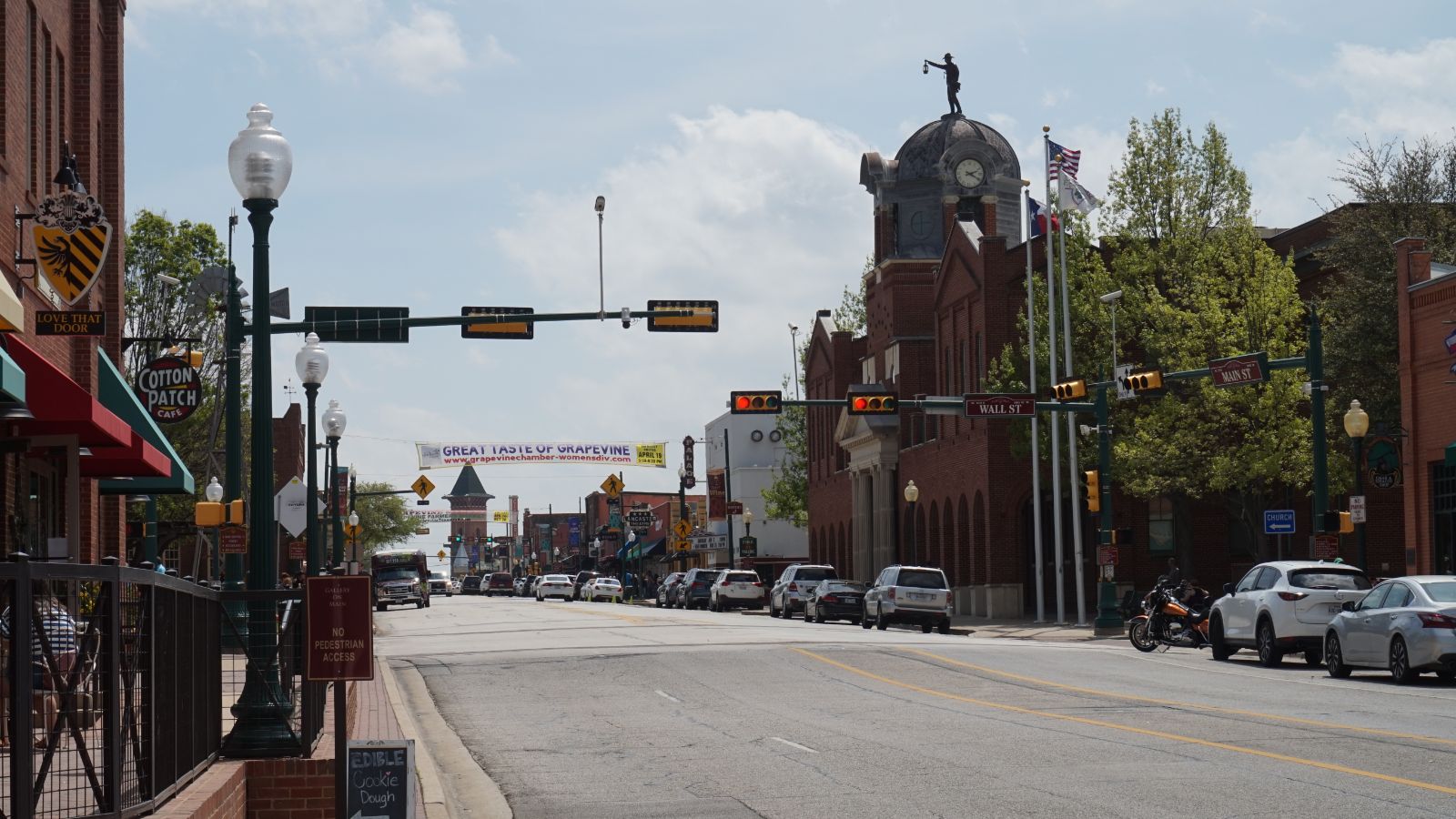
What Grapevine is actually like
Families from Missouri first settled along Denton Creek here in 1844 as part of the Peters Colony land grant, and around 1854 the area took the name Grape Vine for its location on "Grapevine Prairie" and its abundant wild mustang grapes — not, despite the name, a historic wine industry. The town incorporated in 1907, built its economy on cotton and then cantaloupe farming (Grapevine marketed itself as the "Cantaloupe Capital of the World" into the early 1970s), and was transformed when Dallas Fort Worth International Airport opened in 1974. The city ceded roughly 8,000 acres of its own land to the airport — acreage that sits inside Grapevine's city limits but generates no city property tax revenue — and grew from about 7,000 residents in 1974 to over 50,000 today as hospitality, retail, and convention business replaced agriculture.
Historic Main Street Grapevine is the centerpiece now: shops, restaurants, theaters, and an "Urban Wine Trail" of roughly nine tasting rooms, most sourcing grapes from established Texas wine-growing regions rather than growing them on Main Street itself. The Texas State Senate officially designated Grapevine the "Christmas Capital of Texas" in 2009, and the city now draws more than 2 million visitors during a 40-day, 1,400-plus-event holiday season each year. Lake Grapevine, an 8,000-plus-acre Army Corps of Engineers reservoir impounded in 1952, anchors recreation on the city's north side, and the Gaylord Texan Resort — Grapevine's largest employer at around 2,000 jobs — sits along its shore. The Grapevine Vintage Railroad (the "Tarantula Train") runs tourist excursions from the historic Main Street Depot to the Fort Worth Stockyards.
Home values in Grapevine
The typical home value in Grapevine currently runs $559,483, per Zillow — up 0.1% year-over-year as of May 2026.
Getting around
Trinity Metro's TEXRail stops at Grapevine/Main Street Station, running southwest to downtown Fort Worth and southeast to DFW Airport (both the North and Terminal B stations). There's no direct rail connection toward Dallas; most residents commute there by car via SH-114 or SH-121.
Grapevine FAQ
Is Grapevine's wine industry actually legit, or just a tourist gimmick?
It's a real, trade-press-covered destination — Wine Enthusiast has featured Grapevine's Main Street wine trail — though it's worth knowing most tasting rooms source grapes from established Texas wine regions rather than growing them downtown; think of it as an urban tasting-room district, not vineyard country.
Why is Grapevine called the "Christmas Capital of Texas"?
The Texas State Senate officially designated it that in 2009, citing over 1,400 holiday events; today the season draws more than 2 million visitors over about 40 days, and Newsweek has named it a top U.S. Christmas town in multiple recent years.
Does DFW Airport really sit partly inside Grapevine?
Yes — Grapevine ceded roughly 8,000 acres of its own land for the airport's 1974 construction, land that's within city limits today but doesn't generate city property tax revenue, since it's airport/government-owned.
How close is Grapevine to the airport?
Very — about 6 miles, and TEXRail's Grapevine/Main Street Station connects directly to DFW Airport's North and Terminal B stations by rail.
Nearby alternatives*We're not ranking these — every neighborhood has real trade-offs, and which ones matter is up to you.
Southlake
Grapevine's immediate northern neighbor. Zillow puts Southlake's typical home value at roughly $1.26 million, more than double Grapevine's $559,483, for a similar distance to DFW Airport and Fort Worth.
See what makes Dallas-Fort Worth stand out — verified, named medical, dietary, sports, and other specialty resources you won't find in most metros.
Explore Specialty Resources →