German Village, Columbus, OH
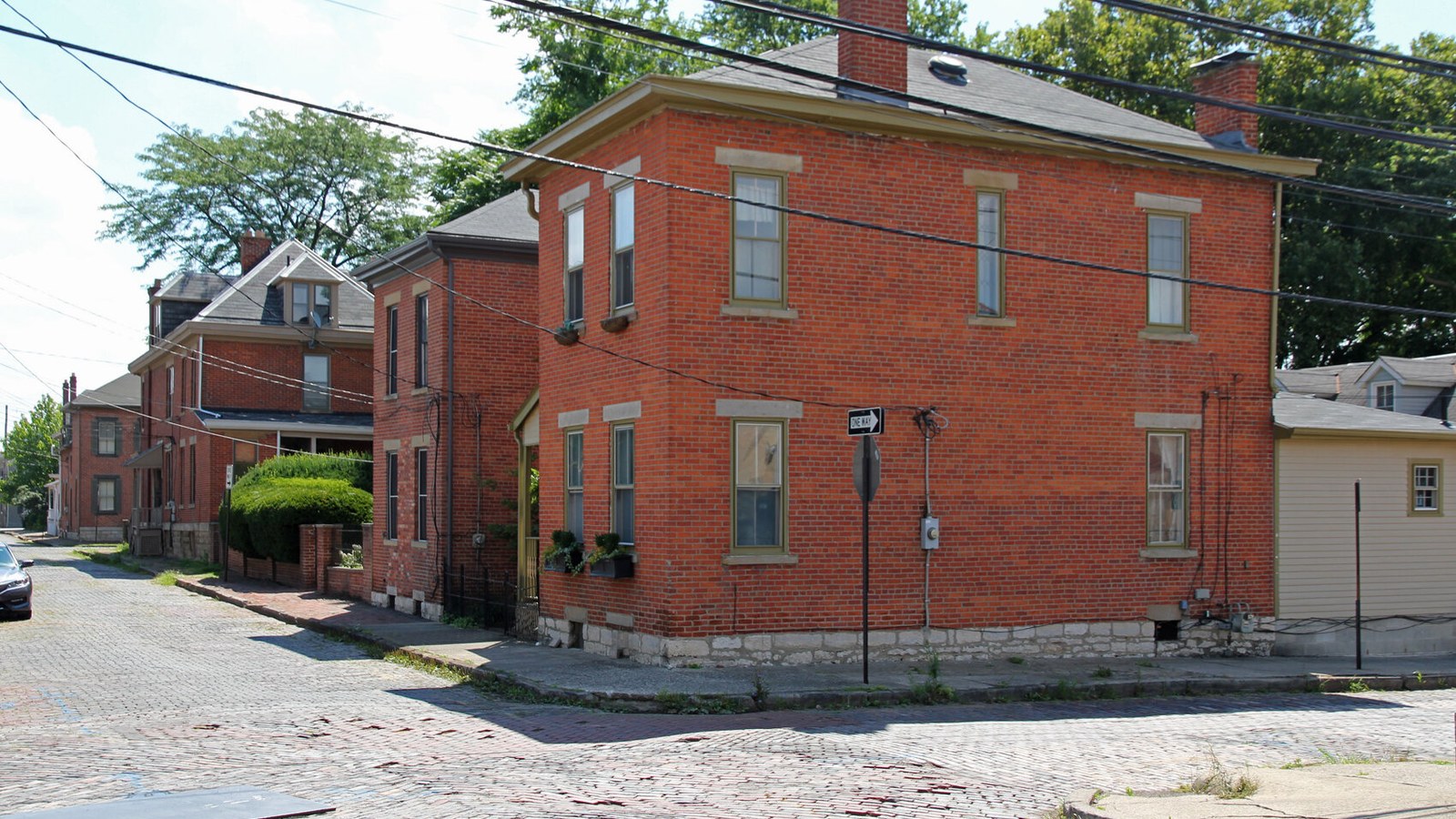

What German Village is actually like
In 1796 Congress set aside the Refugee Lands south of downtown Columbus for Revolutionary War veterans; John McGowan, one of those veterans, claimed 328 acres by 1802 and began selling tracts to arriving German immigrants. By 1814 a settlement had grown up there known as "Das Alte Südende" (the Old South End), and by 1830 German immigration to Columbus had become substantial; by 1865, roughly a third of the city's population was German, per Wikipedia's German Village entry.
The neighborhood's German character brought it decades of hardship in the 20th century — anti-German sentiment during World War I, brewery closures under Prohibition, encroaching industrial zoning, and material shortages during World War II — and by the 1950s the area had declined enough that the city planned to demolish about a third of it as slum clearance. That plan was headed off by Frank Fetch, who founded the German Village Society and held its first Haus und Garten Tour in June 1960; the roughly 233-block district was added to the National Register of Historic Places on December 30, 1974, with its boundary expanded in 1980, per Wikipedia and the German Village Society's own history page.
German Village is now one of the largest privately funded historic restoration districts in the country and Columbus's most walkable residential neighborhood by Walk Score, which rates it a 90 (Walker's Paradise) — third most walkable in Columbus behind Short North and downtown — with a mapped population of about 3,083, per Walk Score.
Home values in German Village
Zillow's home value index put German Village's typical home value at $542,212 as of July 31, 2026, essentially flat year-over-year (up 0.1%), per Zillow — among the higher figures of any City of Columbus neighborhood, reflecting the district's brick-street Italianate housing stock and historic-district protections.
Getting around
German Village's brick streets and narrow, tree-lined blocks are built at a pedestrian scale, and its 90 Walk Score bears that out — the Book Loft, Schiller Park and the neighborhood's restaurants are within easy walking distance of most housing. The brick streets themselves are original and uneven in places, which residents weigh against the historic character they protect.
German Village FAQ
Is German Village a good place to live?
It's consistently one of Columbus's most walkable neighborhoods (Walk Score 90) with strict historic-district protections on its brick-street housing stock, but that protection and demand come at a price — Zillow's typical home value was $542,212 as of July 2026.
Why are the streets brick in German Village?
The original 19th-century brick paving was preserved as part of the neighborhood's historic-district status; it's part of what the German Village Society's preservation campaign, dating to 1960, protected from the city's 1950s-era slum-clearance plan.
Is German Village good for families with kids?
It's zoned to Columbus City Schools like the rest of the city; confirm the specific zoned elementary, middle and high school for an address with the district's enrollment office, since the neighborhood's small lots and historic housing stock mean the buyer pool skews toward couples and empty-nesters as much as families.
Is German Village walkable without a car?
Yes for daily errands within the neighborhood — Walk Score rates it 90 — though most residents still keep a car for trips beyond walking distance, since Columbus has no rail transit.
Nearby alternatives*We're not ranking these — every place has real trade-offs, and which ones matter is up to you.
Downtown & Arena District
Downtown and the Arena District sit immediately north, an easy walk across the I-70/71 cap.
Franklinton
Franklinton is across the Scioto River to the west, connected via downtown's bridges.
Bexley
Bexley, a close-in Columbus suburb, sits about two miles east along Main Street.
See what makes Columbus stand out — verified, named medical, dietary, sports, and other specialty resources you won't find in most metros.
Explore Specialty Resources →