Dublin, OH
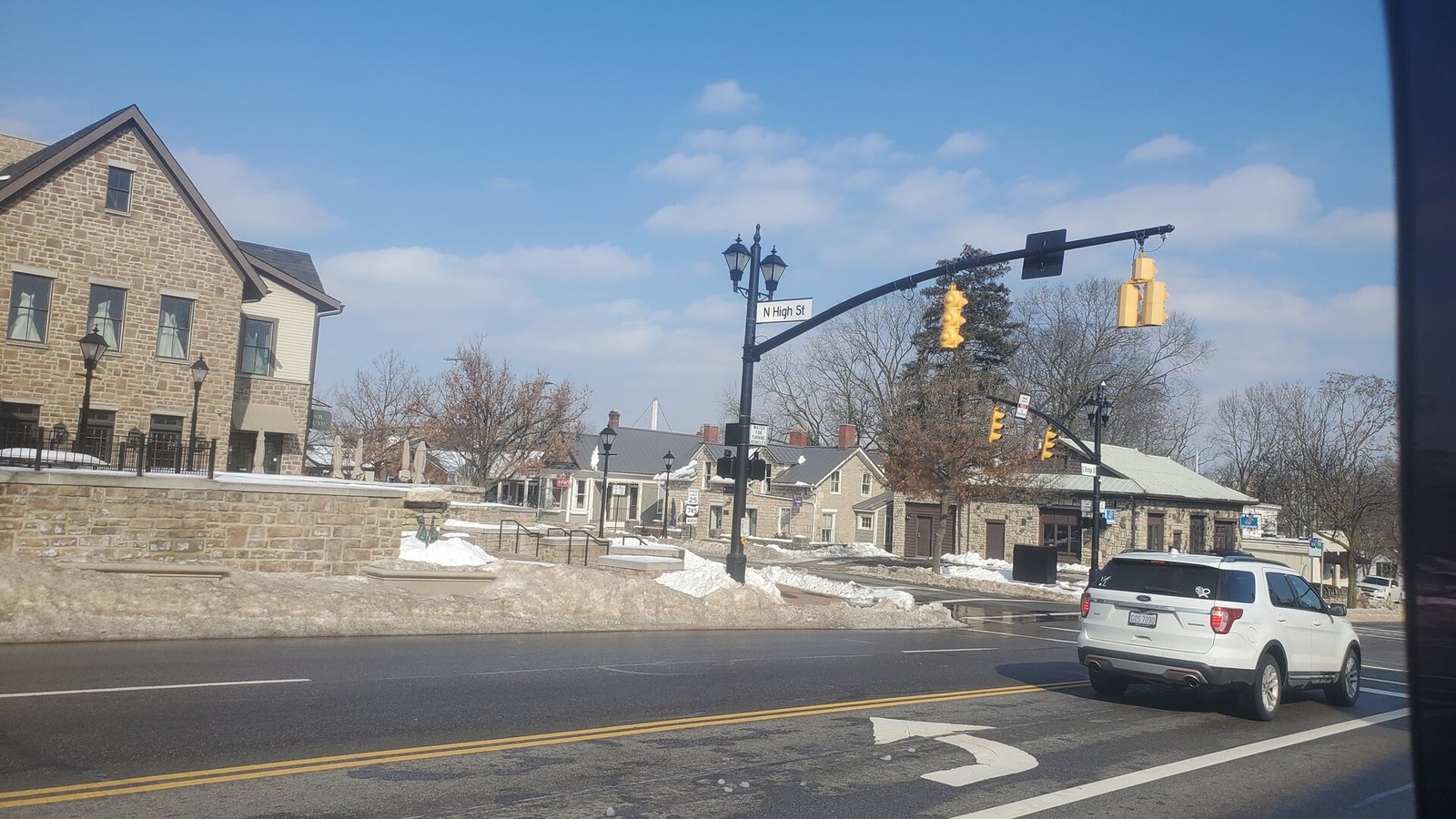

What Dublin is actually like
Peter, Benjamin and John Sells bought land along the Scioto River here in 1802, and in 1810 surveyor John Shields — an Irish immigrant who, according to local history, grew nostalgic looking out at the sunlit hills above the river — platted and named the settlement Dublin, even though few of its early families were actually Irish, per the City of Dublin and Visit Dublin Ohio.
Dublin remained a small crossroads village until the 1970s, when Ashland Chemical Company's relocation there, a new I-270 outerbelt interchange, and the Muirfield Village Golf Club development combined to trigger sustained growth; the village became a city in August 1987, per the City of Dublin. Corporate headquarters followed the growth: Cardinal Health, Wendy's, IGS Energy and OCLC are all headquartered in Dublin today, per Wikipedia.
Dublin had 49,328 residents at the 2020 U.S. Census, with a 2023 estimate of 48,923, spread across 25.04 square miles that extend beyond Franklin County into Delaware, Union and a small part of Madison County, per Wikipedia; most of the city's population and its historic core along the Scioto River sit in Franklin County.
Home values in Dublin
Zillow's home value index put Dublin's typical home value at $564,896 as of August 31, 2026, up 1.5% year-over-year, per Zillow.
Evenings and weekends
The Dublin Irish Festival, held every August, advertises itself as the largest three-day Irish festival in the world, per Wikipedia, and draws visitors well beyond the city itself.
Getting around
Historic Dublin's blocks along the Scioto River — Bridge Street, High Street — are genuinely walkable, with a 70 Walk Score near Bridge Street, but Dublin's much larger footprint of office parks, golf-course subdivisions and shopping centers farther from the river is heavily car-dependent, and central Ohio has no rail transit; COTA's Route 73 offers rush-hour express service to a park-and-ride rather than all-day local coverage.
Dublin FAQ
Is Dublin a good place to live?
Its A+-rated school district (ranked #1 among Columbus-area districts by Niche), major corporate employers like Cardinal Health and Wendy's, and Historic Dublin's riverfront core are the draw, but the city is large and mostly car-dependent outside that historic core; Zillow's typical home value was $564,896 as of August 2026.
What's the Dublin, Ohio school district like?
Dublin City Schools serves about 16,967 students across three high schools, carries an overall A+ grade from Niche (#1 in the Columbus area), and posts a 93% graduation rate with an average SAT score of 1,300.
Does Dublin span more than one county?
Yes — Dublin's municipal boundary extends beyond Franklin County into Delaware, Union and a small part of Madison County, which is also why utility providers vary by address: some Dublin addresses are served by AEP Ohio and Columbus water, others by FirstEnergy, Union Rural Electric Cooperative, or Del-Co Water Company.
Does Historic Dublin flood?
The Scioto River runs directly through Historic Dublin and has cut deep limestone gorges there, giving that river-adjacent core real flood exposure that Dublin's newer subdivisions farther from the water generally don't share; confirm flood-zone status for a specific address via FEMA's flood map tool.
Nearby alternatives*We're not ranking these — every place has real trade-offs, and which ones matter is up to you.
Hilliard
Hilliard, a major Columbus suburb, borders Dublin to the south.
Upper Arlington
Upper Arlington sits southeast along the Scioto River corridor.
Powell
Powell, an outer Columbus suburb, picks up northeast of Dublin.
See what makes Columbus stand out — verified, named medical, dietary, sports, and other specialty resources you won't find in most metros.
Explore Specialty Resources →